



A brand lands a feature in a national publication. The team celebrates, shares it on LinkedIn, and moves on. Two weeks later, nothing. No follow-up, no next story, no strategy. Just silence.
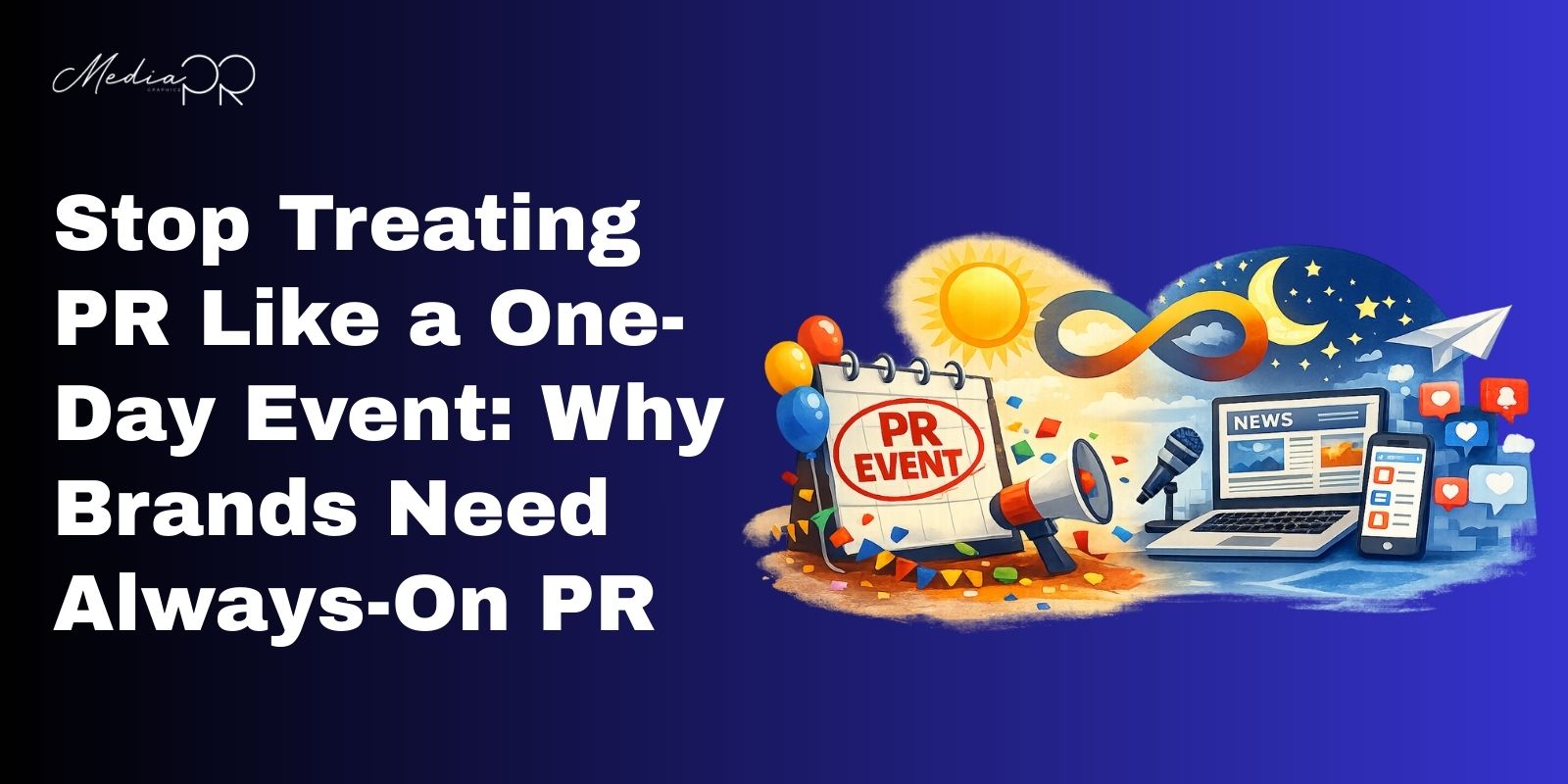
This is how most brands treat PR. Like a single event. Something you do once, tick off the list, and revisit when you need it again.
It doesn’t work that way. And the brands that keep getting featured, keep getting recognized, and keep attracting the right people—they know something the others don’t. Always-on PR isn’t optional. It’s the whole point.
One Media Moment Is Just the Starting Line
Getting featured is great. But a single press mention has a shelf life of maybe 48 hours unless you actively extend it.
Think about what one piece of coverage actually contains: a story, a quote, a point of view, and a proof point. That same piece of content can become a LinkedIn post, a website testimonial, a founder’s talking point in the next investor meeting, a reference in the next pitch deck, and a hook for the journalist’s next story.
The problem isn’t that brands don’t get coverage. It’s that they let it die the moment it goes live.
Always-on public relations means treating every media moment as fuel, not a finish line.
What Always-On PR Actually Looks Like
It’s not about being everywhere all the time. It’s about staying consistently visible to the right people, be they media, investors, customers, or industry peers, so that when they think of your category, your brand comes up.
Here’s what that looks like in practice:
| Always-On Activity | What It Builds |
|---|---|
| Regular media pitching | Consistent coverage across publications |
| Thought leadership articles | Founder and brand authority |
| Newsjacking trending topics | Timely visibility and journalist relationships |
| Repurposing existing coverage | Extended reach from every media win |
| Online reputation management | Trust that holds up under scrutiny |
None of this happens from a one-month campaign. It’s built week by week, story by story.
Why Brands Keep Making the PR Mistake
Most brands go to a PR agency when they have a launch, a funding round, or a crisis. That’s reactive PR, and it always costs more and delivers less than it should.
The brands that get the best results from strategic PR are the ones that stay in the game between the big moments. They’re pitching stories when there’s no announcement. They’re building journalist relationships when there’s nothing to sell. They’re creating content that keeps their brand in conversations that matter.
By the time the big moment arrives—the funding announcement, the product launch, the expansion—the groundwork is already laid. The journalists already know the brand. The credibility is already there. The story lands harder because it’s not coming from nowhere.
The Real Cost of Stopping and Starting
Brands that treat PR as a tap they turn on and off lose more than they realize:
- Media relationships go cold: journalists work with brands they hear from regularly, not ones that reappear every six months with an ask.
- Brand credibility gaps: inconsistent presence signals instability, even if the business is doing well.
- Lost momentum: every time you stop, you start from scratch. Always-on PR compounds. Stop-start PR doesn’t.
A consistent PR strategy isn’t just more effective; it’s more efficient. The longer you stay in it, the easier every next story becomes.
How MediagraphicsPR Keeps Your Brand Always Visible
Most brands know they need PR. What they struggle with is maintaining it without a dedicated team constantly pushing it forward.
That’s exactly what MediagraphicsPR does. Senior people, real media relationships, and strategies built to keep your brand in the right conversations, not just during launches, but between them.
Whether it’s media relations, thought leadership, newsjacking, or turning one media moment into 60 days of strategic visibility—the work never really stops. Because for the brands that take this seriously, neither does the result.
PR is not a one-day event. The brands that treat it like one will always be starting over. The ones that stay consistent will always be a step ahead!
FAQs
Q: We got featured once in a big publication; why didn’t it change anything for us?
~ One feature without follow-up is like showing up to a party, saying one thing, and leaving. People heard you, but then you disappeared. Coverage only builds momentum when there’s more coverage coming after it.
Q: What’s the difference between always-on PR and a PR campaign?
~ A campaign is built around a specific moment, such as a launch, an announcement, or an event. Always-on PR is the ongoing work that happens around and between those moments. Campaigns get louder when you already have a foundation of consistent visibility behind them.
Q: Our competitors keep showing up in the news. How are they doing it?
~ Honestly? They’re probably not waiting for something newsworthy to happen. Always-on PR means finding the angle in everyday business moments such as an opinion, a trend, or a response to industry news. There’s always a story. Most brands just don’t know how to find it.
Q: Can a small brand afford always-on PR? Isn’t it expensive?
~ Always-on PR doesn’t have to mean a massive retainer. It means being strategic and consistent with whatever resources you have. Even two or three strong media placements a month, paired with repurposing that coverage across other channels, can build significant brand credibility over time.