MediagraphicsPR

Author name: Vvihan Gulati

Vvihan Gulati is the Founder of MediagraphicsPR, a leading PR agency in India. With over 20 years of experience in public relations and digital storytelling, he has built a reputation for crafting powerful brand narratives that drive visibility and credibility. A strategist by passion and storyteller at heart, he has led campaigns for top global brands, startups, and industry changemakers.

Why Startups in Delhi Need Professional Media Relations
MediaPR

Why Startups in Delhi Need Professional Media Relations Support

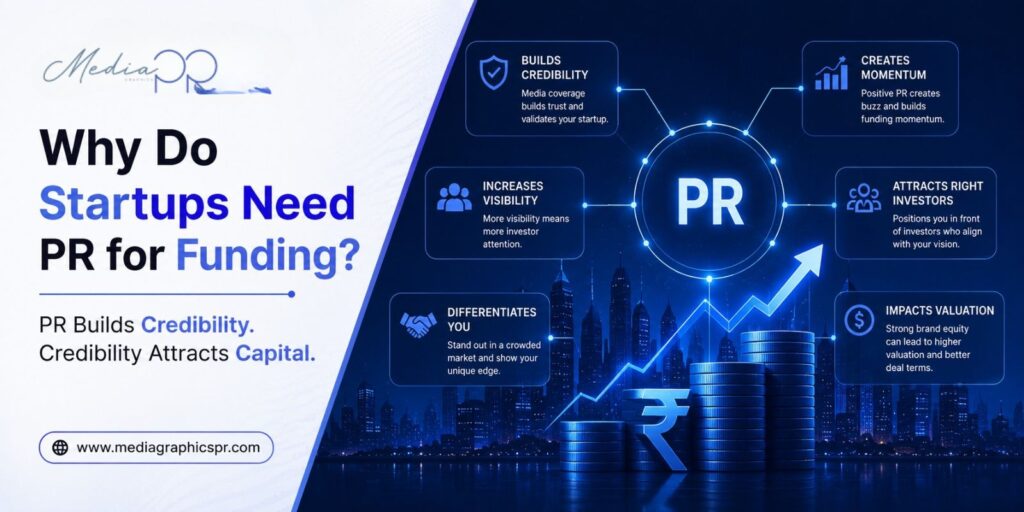
Delhi’s startup ecosystem doesn’t get enough credit. While Bangalore gets the headlines and Mumbai gets the fintech attention, Delhi-NCR has quietly built one of India’s most serious concentrations of early-stage companies across edtech, healthtech, D2C, SaaS, and enterprise software. And most of them have the same blind spot. The product is solid. The team is hungry. The funding conversation is happening. But nobody outside their immediate circle actually knows they exist. That’s not a product problem. That’s a startup media coverage problem. Why Media Relations Isn’t Optional for Delhi Startups There’s a version of this conversation where someone says—we’ll do PR when we’re bigger. When we have more to say. When the timing is right. That’s exactly backwards. The startups that build real credibility are the ones that start shaping their narrative early—before a fundraise, before a big hire, before a crisis forces the conversation. By the time most founders realize they need startup PR services, they’re already playing catch-up. Here’s what professional media relations actually changes for an early-stage Delhi startup: What You Get Why It Matters Earned media in credible publications Builds trust that paid ads simply can’t replicate Journalist relationships before you need them Means your fundraise announcement lands, not gets ignored Consistent brand narrative Investors hear the same story everywhere they look Crisis preparation You have a plan before something goes wrong Thought leadership coverage Positions your founders as voices worth listening to What Most Startups Get Wrong About PR They treat it like a one-time event. The press release goes out. Coverage happens, or it doesn’t. Move on. That’s not media relations; that’s a lottery ticket. Real startup media coverage is built over time through: Consistent story development: our brand narrative needs to evolve as your company grows, not stay frozen at the seed stage. Relationship-first pitching: journalists who know you will cover you. Journalists getting a cold pitch from a name they’ve never heard will not. News cycle awareness: the best time to pitch is when your story connects to something already moving in the news. Missing that window means waiting for the next one. Spokesperson preparation: founders who haven’t done media training often say the wrong thing, or nothing useful at all, when a journalist actually calls. Long-term visibility planning: one feature in a good publication is a start. A pattern of coverage across six months is a reputation. Why Delhi Specifically Delhi startups operate in a market where perception moves fast and competition is fierce. Enterprise buyers in Noida and Gurugram do their research before they sign anything. Investors in Connaught Place and Aerocity are seeing dozens of decks a week. Ready to get featured, not just advertised?Partner with MediagraphicsPR — the most trusted earned-first PR agency in Noida & Gurgaon. What makes your startup the one they remember? Not the deck but the story they’ve already heard about you before you walked in the room. That’s what startup PR services build: a presence that works before you even show up. A founder profile in a business publication. A product story in a tech outlet. A quote in a market trend piece that shows up when someone Googles your name. None of this happens by accident. And none of it happens from a single press release. How MediagraphicsPR Works With Delhi Startups We’ve worked with early-stage companies that had no media presence and needed to build one fast—for a fundraise, for a launch, for an enterprise sales push. And we’ve worked with growth-stage startups that had inconsistent coverage and needed a narrative that actually held together. In both cases the work starts the same way—understanding what the business actually needs from PR right now and building the strategy around that. Not around what’s easiest to pitch. Delhi’s startup scene is competitive enough that the brands getting noticed aren’t always the best funded or the most technically impressive. They’re the ones telling the clearest story to the right people at the right time. If that’s not your startup yet, that’s exactly what we fix. FAQs Q: At what stage should a Delhi startup start investing in media relations? Earlier than most founders think. If you’re approaching a Series A or preparing for enterprise sales, your media presence is already being checked. Starting six months before you need coverage is the minimum; a year is better. Q: What’s the difference between a PR agency and just hiring a freelance publicist? A freelance publicist can place stories. A PR agency builds a strategy—media relationships, narrative development, crisis preparation, thought leadership—that compounds over time. For startups building toward scale, the difference shows up quickly. Q: How do media relations help with fundraising specifically? Investors research founders and companies before taking meetings. Coverage in credible publications, especially thought leadership pieces, means they’ve already formed a positive impression before you pitch. It also signals that your story is compelling enough that journalists chose to cover it. Q: Can startup PR services work for a very niche B2B product? Absolutely. In fact, niche B2B products often benefit more from targeted media relations than broad consumer brands do because the right placement in one industry publication reaches exactly the buyers and partners you need, with no wasted reach. Need help? Call us +91-8448360900 Email Us on [email protected]

Tech Startup
MediaPR

10 Reasons Every Tech Startup Should Hire a PR Agency Early

Most tech founders put PR at the bottom of the list. Get the product right first. Close the next round. Hit the growth numbers. PR can wait. It can’t. And the startups that figure this out early are the ones that grow faster, raise easier, and build brands that actually last. Here’s the thing nobody tells you at the beginning—by the time most founders feel ready for PR, they’ve already missed the window where it would have done the most work. The narrative around your startup gets formed in the first twelve to eighteen months, whether you’re involved or not. The question is just whether you’re the one shaping it. HERE’S EXACTLY WHY. Your first impression is being formed whether you’re involved or not People are Googling your startup before they take a meeting with you. Investors, enterprise buyers, and potential hires—they’re all looking. If there’s nothing there, or worse, something inconsistent, that shapes the conversation before you’ve said a word. Startup PR fixes that. Fundraising gets easier when your narrative is already out there Investors see hundreds of decks. What makes yours land differently is when they’ve already seen your founder quoted in a publication they respect or read a story about your product that made sense. PR for tech startups builds the credibility that makes the pitch room warmer before you walk in. Early coverage compounds—late coverage doesn’t A feature in month three leads to another feature in month six. A founder article opens a speaking invite. A podcast appearance leads to an inbound enterprise inquiry. Tech startup media coverage compounds over time, but only if you start early enough to let it build. You control the narrative before someone else does Competitors, disgruntled early users, and industry critics: someone is going to define your brand if you don’t. A PR agency for startups makes sure the story people hear about you is the one you actually want them to hear. Thought leadership builds trust faster than any ad Your CTO knows things most people in your industry don’t. Your founder has a point of view worth hearing. A tech PR strategy turns that expertise into authored articles, expert commentary, and media features that position your team as people the industry genuinely respects. It makes hiring significantly easier The best talent researches companies before applying. A startup with consistent media presence and a founder who shows up in the right publications attracts better candidates and loses fewer offers to bigger names. Enterprise sales cycles shorten when buyers already know you B2B buyers do their research. If your brand shows up credibly in the publications they read, such as industry outlets, business media, and sector-specific press, you’re already halfway through the trust-building process before the first call. Crisis hits early-stage startups harder A data issue, a negative review that goes viral, a competitor narrative that sticks—early-stage companies have less goodwill to absorb hits with. Having a startup PR agency means having a plan before anything goes wrong, not scrambling after. It signals seriousness to your entire ecosystem Consistent media presence tells investors, partners, and customers that your startup is here to stay. It signals stability, momentum, and ambition—things that matter enormously at an early stage when everyone is still deciding whether to bet on you. The window for early-mover PR advantage closes fast In most tech verticals, two or three startups end up owning the media narrative for years. The brands that move early on tech startup public relations are the ones journalists call when they need a quote, feature when they’re covering the space, and reference as the category leaders. The window to be that brand doesn’t stay open forever. What This Looks Like When It All Comes Together The startups that get PR right early don’t just get coverage; they get a reputation that works for them around the clock. Their founders get called for expert quotes. Their fundraise announcements land in the right rooms. Their enterprise prospects show up to the first call already half-convinced. None of that happens by accident. It happens because someone made the decision to start building tech startup public relations before the pressure came and gave it enough time to compound into something real. How MediagraphicsPR Works With Tech Startups We’ve worked with funded startups at every stage, from pre-Series A companies with no media presence to growth-stage businesses that needed a sharper, more consistent narrative before their next raise. The work always starts the same way. Understanding what the business actually needs from PR right now. Not a template, or a press release calendar, but a strategy built around where you are and where you’re going. The startups that hire a PR agency early don’t just get coverage. They get a head start on every conversation that matters with investors, buyers, talent, and the market. That head start compounds. And by the time your competitors think about PR, you’re already the brand people have heard of. FAQs Q: How early is “early” when it comes to hiring a PR agency for a tech startup? If you’re approaching your first raise or about to launch, you’re already at the right moment. Ideally six to twelve months before a major milestone so the narrative has time to build. Q: Can a bootstrapped startup afford PR? Yes, and early-stage PR doesn’t always mean a full retainer. Starting with thought leadership and targeted media placements is often enough to build meaningful presence without a large budget. Q: What should a tech startup look for when choosing a PR agency? Industry understanding, real media relationships, and senior people actually working on your account. An agency that asks smart questions about your business before pitching services is worth far more than one with a long client list. Q: How do we measure whether startup PR is actually working? Not by press release count. By the quality of publications, whether coverage is reaching the right audiences, and whether it’s supporting real business outcomes—better investor conversations, faster enterprise sales cycles, and stronger inbound

Why Brands in Delhi Need a PR Agency
MediaPR

Why Brands in Delhi Need a PR Agency to Grow Faster

Delhi doesn’t reward the quiet ones. This is a market where perception moves fast, competition is everywhere, and the brands that grow are the ones people have already heard good things about before they even show up. A great product gets you in the door. What people say about you in the press, online, and in industry circles determines whether you stay. And the thing about Delhi is that conversation is already happening. In boardrooms, in newsrooms, in investor meetings, on LinkedIn feeds. The only question is whether your brand is part of it or not. Most businesses don’t realize how much ground they’re losing simply by being absent from those conversations. That’s exactly what a PR agency in Delhi fixes. The Delhi Market Is Different Other cities let you build slowly. Delhi doesn’t really work that way. Whether you’re a D2C brand trying to break into a crowded space, a SaaS startup approaching its first enterprise sale, or a funded company preparing for its next raise—your reputation in this market is being formed whether you’re managing it or not. The brands that grow faster in Delhi aren’t always the best funded or the most technically impressive. They’re the ones with the clearest story and the most consistent presence in the right places. Business Stage What PR Does For You Early Stage Builds credibility before your sales team needs it Growth Stage Puts your brand in front of investors, partners, and enterprise buyers Funded Startup Shapes the narrative around your raise and what comes next Established Brand Protects reputation and keeps you relevant in a shifting market What a Delhi PR Agency Actually Does Day to Day Most founders think public relations in Delhi means press releases and event coverage. That’s maybe 10% of it. Here’s what the real work looks like: Media Relations Getting your brand in front of journalists who actually cover your space, in publications your audience reads. Thought Leadership Turning your founders’ expertise into authored articles, expert commentary, and interviews that build real authority. Crisis Communication  Having a plan before things go wrong so a difficult moment never becomes a lasting reputation problem. Influencer Marketing Connecting your brand with creators who genuinely align with what you do, not just whoever has the biggest following. Funding PR Shaping your fundraise into a market signal that attracts investor attention and enterprise credibility. Launch PR Making sure your product’s or brand’s entry into the market lands with the coverage and momentum it deserves. The Cost of Not Having PR This is the conversation most brands avoid until it’s too late. Every month without a Delhi PR strategy is a month your competitors are building media presence and you’re not. Every fundraise without PR support is a harder conversation than it needed to be. Every crisis without a communications plan is a reputation risk that doesn’t have to be that bad. The brands that come to a top PR agency in Delhi after something goes wrong always say the same thing: they wish they’d started earlier. Because PR that’s reactive is always more expensive and less effective than PR that’s been building for six months. The brands that figure this out early don’t just grow faster, they grow with less friction. Sales conversations are easier when the prospect already knows your name. Hiring is easier when your founders are seen as credible voices in the industry. Fundraising is easier when investors have already read something about you before the first meeting. PR isn’t one part of the growth puzzle. For Delhi brands, it’s often the part that makes everything else work better. What Good PR Actually Looks Like in Practice It’s not a press release going out every week. It’s not chasing every journalist with the same pitch. Good public relations in Delhi looks like a founder getting quoted in an Economic Times piece because a journalist already knew their name. It looks like a funded startup’s announcement landing in four publications on the same day because the groundwork was laid two months before. It looks like a brand that shows up consistently in the right places—so by the time a potential customer, investor, or partner goes looking, the story is already there waiting for them. Why MediagraphicsPR There’s no shortage of agencies in Delhi promising media coverage. What’s harder to find is a team that actually understands your business before they start pitching it. At MediagraphicsPR, every engagement starts with the strategy, not the press release. We spend time understanding where your brand is, what it needs from PR right now, and what the right story looks like to get you where you’re going. Senior people work on your account from day one. Real media relationships. No templates. Delhi PR services that actually move your business forward—that’s what we’re here for. If your brand isn’t growing as fast as it should be in this market, PR isn’t the last thing to fix. It’s often the first. FAQs Q: Does a Delhi brand really need PR if it’s already running paid ads? Paid ads stop the moment the budget stops. PR builds something that stays, which is a media presence, a reputation, and a narrative that works even when you’re not actively spending. Q: Can PR help a Delhi brand that has no media presence at all? That’s actually the best time to start. Building from scratch means the narrative gets shaped right from the beginning, so there are no wrong impressions to correct later. Q: How often should a brand appear in the media to see real impact? Consistency matters more than frequency. One strong placement a month in the right publication does more than five random mentions across outlets your audience doesn’t read. Q: Is PR only useful during a launch or fundraise? Those are the moments brands feel they need PR most, but the brands that benefit most are the ones running it consistently between those moments too. Q: What’s the first thing a PR agency

PR Campaigns
MediaPR

Why Most PR Campaigns Fail Before They Even Start

Here’s something nobody in the industry likes to say out loud: most PR campaigns don’t fail because of bad execution. They fail because of what happened, or didn’t happen, in the weeks before anything went live. The brief was vague. The story wasn’t actually there. The timing was off. The agency started pitching before they understood the brand. Pick any one of these and you’ve already lost. If you’ve ever run a public relations campaign that didn’t deliver what you expected, there’s a good chance the problem wasn’t the coverage—it was the foundation. The Most Common Reasons PR Campaigns Fail Most of these have nothing to do with media relationships or pitch quality. They’re strategic mistakes made before a single journalist is contacted. What Goes Wrong Why It Kills the Campaign No clear objective The team optimizes for coverage volume instead of the right coverage Story is built around the brand, not the audience Journalists don’t care about your product. They care about what it means for their readers Wrong timing Pitching into a crowded news cycle or a slow period with no hook Misaligned expectations Client wants brand awareness; the agency is measuring clip counts No narrative thread Each press release reads like a standalone event instead of a building story Starting too late A good PR campaign strategy needs runway—last-minute campaigns almost always underdeliver The Strategy Problem Nobody Talks About Most brands treat PR like a tap. Turn it on when you need coverage, and turn it off when the budget gets tight. That’s not a public relations strategy; that’s a hope. A real strategy starts with three questions most campaigns never bother to answer properly: Who actually needs to hear this? Not your target customer in a broad sense. The specific journalists, publications, and audiences whose attention will move your business forward. What do we want them to think, feel, or do after seeing coverage? If you can’t answer this, you don’t have a strategy yet. What’s the story that connects what we do to what’s happening in the world right now? Relevance isn’t optional, it’s the entire pitch. Skip these and you’re sending a well-written press release into a vacuum. What the Best PR Campaigns Actually Have in Common Look at any list of best PR campaigns, and you’ll notice the same things showing up every time: A single, clear narrative that ran consistently across every touchpoint Timing that was either reactive to something real in the news cycle or proactive with enough lead time to build momentum Media relationships that existed before the campaign, not ones being cold-pitched for the first time Metrics that were agreed on before the campaign started, not invented after to justify the spend A brand that was actually ready, with spokespeople prepared, assets in place, and a website that was not embarrassing None of this is complicated. All of it gets skipped when campaigns are rushed. Where MediagraphicsPR Comes In A PR campaign strategy that works isn’t built in a day. It’s built by people who understand your business, your industry, and the media landscape well enough to know which story to tell, to whom, and when. At MediagraphicsPR, every campaign starts with the strategy, not the pitch list. We spend time understanding where your brand is, where it needs to go, and what the right narrative looks like to get it there. The media relationships come after. Because when the story is right, the coverage follows. Most PR campaigns fail before they start because nobody stopped to ask the right questions early enough. We ask them first. Every time. If your last campaign didn’t deliver what you expected, the problem probably wasn’t the coverage. Let’s fix what was. FAQs Q: How long should a PR campaign run to see real results? Most well-structured campaigns need at least three to four months before the compounding effect kicks in, where one placement leads to another and your brand starts showing up consistently in the right places. Q: Should a small business invest in PR before it has significant revenue? Yes, and often the earlier the better. Getting your narrative right before you scale means you’re not fixing a messy brand story later when the stakes are much higher. Q: How do you measure whether a PR campaign actually worked? Not by clip count. By whether the coverage reached the right audiences, shifted brand perception, supported a business goal—a fundraise, a launch, an enterprise sale—and whether the quality of publications matched where your target audience actually pays attention. Q: Can a brand run PR without an agency? Technically yes. But the media relationships, the speed of response to news cycles, and the experience of knowing which stories will land—those take years to build. Most in-house teams find the gaps quickly.

India's SaaS IPO Wave
MediaPR

India’s SaaS IPO Wave: Why Startups Are Rushing to Go Public in 2026

Something significant is happening in India’s startup ecosystem right now, and it’s moving fast. For the first time, a wave of Indian SaaS companies is lining up for domestic IPOs. Not overseas listings. Not NASDAQ dreams. Home ground. Names like Amagi, Zenoti, BusinessNext, and LeadSquared have either begun IPO preparations or are seriously considering public listings—all within the next 12 to 18 months. If this plays out, it marks India’s first real SaaS IPO wave, a historic shift away from consumer-focused listings toward enterprise software companies that have spent years building quietly and profitably. The question worth asking is, why now? And why the urgency? The Window Is Real. But It Won’t Stay Open Long. This isn’t a comfortable, well-timed move. It’s a calculated race against a closing window. Factor What It Means for SaaS IPOs SaaS valuations post-Covid Have reset significantly—lower multiples than 2021 peaks Domestic market appetite Investors are ready for enterprise software stories AI-native competitors Closing in fast on legacy SaaS players Post-Covid growth slowdown Harder to show hypergrowth numbers Regulatory environment More predictable for domestic listings than overseas The companies moving now understand something important, which is that the market appetite for enterprise SaaS listings in India exists today. It may not exist in the same form two years from now. Why Domestic Over Overseas? For years the default playbook for ambitious Indian SaaS startups was to build in India and list overseas. NASDAQ was the destination. Dollar valuations were the goal. That thinking has shifted for a few reasons: Indian public markets have matured: institutional investors now understand SaaS business models, recurring revenue, and NRR in a way they didn’t five years ago. Overseas listing costs and compliance have become harder to justify for companies whose core customer base is increasingly in India and Southeast Asia. Domestic visibility matters: a BSE or NSE listing puts your brand in front of enterprise buyers, potential hires, and partners in a way a foreign listing simply doesn’t. Valuation realism: post-2022 correction, domestic markets are pricing SaaS companies more rationally than some overseas markets were at peak. What This Means for the SaaS Ecosystem This wave, if it lands, changes things beyond just the companies going public. It creates a benchmark. When Indian SaaS companies start listing domestically and trading well, it gives every mid-stage SaaS startup a clearer path and a more legible valuation framework. It also signals to global investors that India’s enterprise software sector is serious, scaled, and investable. But the pressure is real. AI-native startups are building faster and cheaper than traditional SaaS architectures allow. Companies like Amagi and LeadSquared need to demonstrate not just current revenue but also defensibility. Why will their customers still be with them in five years when AI tools are doing in hours what their platforms do in days? That’s the story every SaaS IPO in this wave will need to tell convincingly—to analysts, to institutional investors, and to the media that shapes public perception of the listing. Where PR Fits Into This Picture An IPO isn’t just a financial event. It’s the single biggest brand moment a company will ever have. The way your company is perceived in the months leading up to listing—by investors, by enterprise buyers, by potential hires—shapes the valuation conversation before the roadshow even begins. Funding PR, thought leadership, and strategic media positioning aren’t nice-to-haves at this stage. They’re part of the listing infrastructure. At MediagraphicsPR, we’ve worked with funded startups navigating exactly this kind of high-stakes visibility moment. Getting the narrative right before it’s set in stone is the difference between a listing that builds long-term confidence and one that just makes news for a week. This IPO wave won’t wait. And when that window opens, the brands that get the most out of it won’t be the ones who started preparing after the listing; they’ll be the ones who built the right narrative long before it. There’s no better time to get that story straight. And there’s no better team to tell it than us. MediagraphicsPR offers PR services for SaaS companies, helping you build trust, attract users, gain media coverage, & stand out in a competitive market. FAQs Q: Which Indian SaaS companies are going public in 2026? Amagi, Zenoti, BusinessNext, and LeadSquared are among the names actively preparing or evaluating domestic IPOs in the next 12 to 18 months. Q: What makes a SaaS IPO succeed beyond the numbers? Narrative. How your company is perceived by investors, enterprise buyers, and media in the months before listing shapes the valuation conversation before the roadshow even starts. Q: Do Indian SaaS companies lose anything by not listing on NASDAQ? Some global visibility, yes. But what they gain: lower compliance costs, a more familiar investor base, and domestic brand credibility is increasingly worth more for companies whose real growth story is in India and Southeast Asia. Q: How early should a SaaS startup start building its IPO narrative? At least 12 to 18 months before the listing. By the time the roadshow starts, the story should already be familiar to the people whose opinion moves markets. Q: What happens to SaaS companies that miss this IPO window? They wait—possibly years—for the next one. Valuations shift, competitors scale, and the market moves on. Timing in public markets isn’t everything, but it’s close. You can take a look at one of our case studies, which is in the SaaS industry and located in Bangalore. The company name is “LeadSquared.”

PR Momentum
MediaPR

The Fastest Way to Kill Your PR Momentum (And How to Avoid It)

Here’s something nobody tells you when PR starts working: the hardest part isn’t building momentum. It’s not killing it yourself. A brand lands a few good placements. Journalists start reaching out. Opportunities come in. And then, slowly, the brand starts getting picky. “That outlet isn’t big enough.” “I don’t want to talk about that topic right now.” “Can we push this to next month?” And just like that, the momentum dies. The phone stops ringing. The journalists move on. The opportunities dry up. Not because the brand did anything dramatically wrong. Just because they stopped showing up. PR Compounds, But Only If You Keep Going Here’s what most brands fundamentally misunderstand about public relations: it’s not a tap you turn on when you need it. It’s a flywheel. And the only way to keep it spinning is to keep showing up. Every placement leads somewhere. A journalist sees you quoted in one publication and adds you to their source list. A producer sees you on one show and books you on another. An investor reads a feature and puts your name in their notes. You never know which “small” placement is the one that puts you in front of exactly the right person at exactly the right time. PR momentum builds the same way trust does—slowly, then suddenly. But it only works if you don’t interrupt it. The Mistake Brands Make When Things Start Going Well It sounds counterintuitive, but the most dangerous phase in a PR strategy is when it starts working. That’s when brands start filtering too hard. They only want tier-one national coverage. They decline niche industry publications because “our audience doesn’t read that.” They postpone interviews because the timing doesn’t feel perfect. What they don’t realize is that every “no” sends a signal—to journalists, to producers, to the media ecosystem that was starting to warm up to them. And that ecosystem has a long memory. What Brands Think What Actually Happens “This outlet is too small for us” A bigger journalist was watching that outlet “We’ll wait for a better opportunity” The story gets picked up by someone else “This topic doesn’t fit our message” The journalist stops thinking of you as a source “Let’s push this to next month” Next month, they’ve moved on Say Yes More Than You Think You Should The brands with the strongest media presence aren’t necessarily the ones with the biggest budgets. They’re the ones that kept saying yes when others got selective. Say yes to the trade publication with 2,000 readers. Say yes to the podcast that’s just getting started. Say yes to the regional newspaper. Say yes to the industry panel that feels a little below your level right now. Because here’s the truth: you never know who’s watching. You never know which appearance leads to the big one. The brands that figure this out early build a brand reputation that becomes genuinely hard to compete with. PR isn’t a buffet where you pick only the prime cuts. It’s a relationship game. And relationships are built by showing up consistently, not just when it’s convenient. Protect the Momentum You’ve Built If your PR campaign has started gaining traction, the single most important thing you can do is protect it. That means: Staying responsive to media enquiries because fast responses keep you on journalists radars. Taking opportunities even when the timing isn’t perfect. Keeping your spokesperson available and prepared. Not going quiet between big announcements because there’s always a story if you look for it. Treating every placement, big or small, like it matters. Because it does. Momentum is way easier to lose than it looks. And rebuilding it from zero is significantly harder than maintaining it. How MediagraphicsPR Keeps Your Brand in the Game Most brands don’t lose PR momentum because they stop caring. They lose it because nobody’s actively managing it—keeping the pitches going, the relationships warm, and the opportunities flowing between the big moments. That’s exactly what MediagraphicsPR does. Senior people, real media relationships, and a team that treats every opportunity—big or small—like it could be the one that changes things. Because sometimes it is. PR momentum is one of the most valuable things a brand can build and one of the easiest things to accidentally destroy. Keep showing up, keep saying yes, and let the compounding do what it does. Because the brands that keep showing up are the ones that keep winning. Let’s make sure yours is one of them! FAQs Q: What counts as a “good” PR opportunity? How do we evaluate what to say yes to? ~ If it puts your brand in front of a new audience, adds a credible mention to your media trail, or builds a relationship with a journalist or platform—it’s worth saying yes to. The filter shouldn’t be “Is this big enough?” It should be “Does this keep us visible and credible?” Q: How do we stay media-ready between big announcements when there’s nothing obvious to pitch? ~ There’s always something, be it an industry trend your founder can comment on, a data point from your business, or a contrarian take on a popular narrative in your sector. Good PR teams find the story in the everyday. That’s actually most of the job. Q: How long does it take to rebuild PR momentum once it’s been lost? ~ Longer than it took to build it the first time. Journalist relationships that went cold take time to warm up again. Rebuilding from a period of silence usually takes 3 to 6 months of consistent effort before things start flowing naturally again. Q: Should we be saying yes to international media even if our market is India? ~ Absolutely—especially for investor-facing PR. International coverage carries significant weight with global investors and partners, even if your primary audience is domestic. Don’t filter it out just because the readers aren’t your customers.

Three Pillars of PR
MediaPR

The Three Pillars of PR: Story, Response, and Consistency

Most people think PR is about posting for brands. Nice captions, pretty flyers, maybe a press release here and there. Then reality hits. You can have the best product, the cleanest design, and the smartest founder and still lose in the market because people misunderstand you. That’s not a product problem. That’s a public relations problem. PR isn’t just publicity. It’s perception. It’s positioning. It’s protecting the story before the story has a chance to protect you. And it runs on three things—story, response, and consistency. Get all three right, and your brand becomes very hard to ignore. Pillar 1. Story: What People Say When You’re Not in the Room The most honest definition of brand reputation is this: what people say about you when you’re not there to influence the conversation. You don’t control that directly. But you do control the inputs. Every media placement, every founder interview, and every thought leadership piece shapes the narrative people carry about your brand. Leave it to chance, and someone else fills in the blanks, usually not the way you’d want. Story-driven PR means being intentional about: What your brand stands for and how that’s communicated publicly Which publications and platforms your story lives in How your founders and leadership are perceived in their industry What a journalist, investor, or customer finds when they search your name The story is always being written. The question is whether you’re writing it or someone else is. Pillar 2. Response: How Your Brand Behaves Under Tension Every brand faces a difficult moment eventually. A negative review that goes viral. A product issue that gets picked up by the media. A competitor narrative that starts sticking. A funding story that gets misreported. How your brand responds in those moments—and how fast—determines whether the moment defines you or passes. Crisis communication isn’t just damage control. It’s a test of whether your brand has real values or just good marketing. Audiences are sharper than most brands give them credit for. They can tell the difference between a brand that genuinely responds and one that just manages optics. The brands that handle difficult moments well almost always have one thing in common, which is that they had a PR strategy in place before the crisis arrived. They weren’t figuring out what to say under pressure. They already knew. Brand Without PR Ready Brand With PR Ready Responds slowly, inconsistently Responds fast, with one clear voice Statement feels defensive Statement feels human and accountable Story gets worse before it gets better Narrative stabilized within 24–48 hours Credibility takes a bit longer Trust often recovers stronger than before Pillar 3. Consistency: The Gap Between What You Say and What You Do This is the one most brands underestimate. You can have a great story and handle crises well, but if there’s a visible gap between how your brand presents itself and how it actually behaves, people notice. And in today’s environment, that gap gets shared. Consistent PR means the same values showing up in your media coverage, your founder’s interviews, your social presence, your customer communications, and your internal culture. When all of those things say the same thing, that’s when brand trust actually builds. Inconsistency, on the other hand, creates confusion. And confused audiences don’t convert, don’t invest, and don’t stay loyal. Here’s the uncomfortable truth: your brand is doing PR every single day, whether you’re intentional about it or not. Every public-facing action is shaping perception somewhere. The real question isn’t whether to do PR. It’s whether you’re managing the narrative or leaving it to chance. How MediagraphicsPR Helps You Get All Three Right At MediagraphicsPR, we work with brands that understand PR isn’t a one-time thing, it’s an ongoing commitment to how the world sees you. As a full-service PR agency, we know what it takes to build a story that sticks, respond when things get tense, and show up consistently enough that your brand becomes the one people actually remember. We put your founders in thought leadership conversations that matter. We get your story in front of the journalists, investors, and audiences who are actually paying attention. And we make sure your brand communicates credibility at every touchpoint, not just when there’s something to announce. PR is perception. Perception is built through story, response, and consistency—not through a single campaign or a one-off press release. The brands that get this right become the ones people genuinely trust. FAQs Q: How do we figure out what our brand’s actual story is—we’ve never defined it clearly? ~ Start with what your best customers say about you unprompted. That’s usually closer to your real story than anything your marketing team has written. A good PR team helps you find it, sharpen it, and make sure it’s the version that travels. Q: What if our brand has been inconsistent in the past? Can PR fix that? ~ Yes, but it takes time, and it has to be genuine. PR can help reshape a narrative, but only if the underlying behavior actually changes. Trying to spin inconsistency without fixing it usually makes things worse, not better. Q: Does every brand need crisis communication planning, even if nothing has gone wrong yet? ~ Especially if nothing has gone wrong yet. The brands that handle crises best are the ones who thought about it before they needed to. Having a basic response framework, identified spokespeople, and a trusted PR team already in place makes an enormous difference when something does happen. Q: How do we know if our brand’s story is actually landing with the right people? ~ Look at who’s responding to your coverage, who’s reaching out after a media feature, and how journalists describe your brand when they write about you. If the language doesn’t match what you’re trying to build, then the story needs work.

Stop Treating PR Like a One-Day Event
MediaPR

Stop Treating PR Like a One-Day Event: Why Brands Need Always-On PR

A brand lands a feature in a national publication. The team celebrates, shares it on LinkedIn, and moves on. Two weeks later, nothing. No follow-up, no next story, no strategy. Just silence. This is how most brands treat PR. Like a single event. Something you do once, tick off the list, and revisit when you need it again. It doesn’t work that way. And the brands that keep getting featured, keep getting recognized, and keep attracting the right people—they know something the others don’t. Always-on PR isn’t optional. It’s the whole point. One Media Moment Is Just the Starting Line Getting featured is great. But a single press mention has a shelf life of maybe 48 hours unless you actively extend it. Think about what one piece of coverage actually contains: a story, a quote, a point of view, and a proof point. That same piece of content can become a LinkedIn post, a website testimonial, a founder’s talking point in the next investor meeting, a reference in the next pitch deck, and a hook for the journalist’s next story. The problem isn’t that brands don’t get coverage. It’s that they let it die the moment it goes live. Always-on public relations means treating every media moment as fuel, not a finish line. What Always-On PR Actually Looks Like It’s not about being everywhere all the time. It’s about staying consistently visible to the right people, be they media, investors, customers, or industry peers, so that when they think of your category, your brand comes up. Here’s what that looks like in practice: Always-On Activity What It Builds Regular media pitching Consistent coverage across publications Thought leadership articles Founder and brand authority Newsjacking trending topics Timely visibility and journalist relationships Repurposing existing coverage Extended reach from every media win Online reputation management Trust that holds up under scrutiny None of this happens from a one-month campaign. It’s built week by week, story by story. Why Brands Keep Making the PR Mistake Most brands go to a PR agency when they have a launch, a funding round, or a crisis. That’s reactive PR, and it always costs more and delivers less than it should. The brands that get the best results from strategic PR are the ones that stay in the game between the big moments. They’re pitching stories when there’s no announcement. They’re building journalist relationships when there’s nothing to sell. They’re creating content that keeps their brand in conversations that matter. By the time the big moment arrives—the funding announcement, the product launch, the expansion—the groundwork is already laid. The journalists already know the brand. The credibility is already there. The story lands harder because it’s not coming from nowhere. The Real Cost of Stopping and Starting Brands that treat PR as a tap they turn on and off lose more than they realize: Media relationships go cold: journalists work with brands they hear from regularly, not ones that reappear every six months with an ask. Brand credibility gaps: inconsistent presence signals instability, even if the business is doing well. Lost momentum: every time you stop, you start from scratch. Always-on PR compounds. Stop-start PR doesn’t. A consistent PR strategy isn’t just more effective; it’s more efficient. The longer you stay in it, the easier every next story becomes. How MediagraphicsPR Keeps Your Brand Always Visible Most brands know they need PR. What they struggle with is maintaining it without a dedicated team constantly pushing it forward. That’s exactly what MediagraphicsPR does. Senior people, real media relationships, and strategies built to keep your brand in the right conversations, not just during launches, but between them. Whether it’s media relations, thought leadership, newsjacking, or turning one media moment into 60 days of strategic visibility—the work never really stops. Because for the brands that take this seriously, neither does the result. PR is not a one-day event. The brands that treat it like one will always be starting over. The ones that stay consistent will always be a step ahead! FAQs Q: We got featured once in a big publication; why didn’t it change anything for us? ~ One feature without follow-up is like showing up to a party, saying one thing, and leaving. People heard you, but then you disappeared. Coverage only builds momentum when there’s more coverage coming after it. Q: What’s the difference between always-on PR and a PR campaign? ~ A campaign is built around a specific moment, such as a launch, an announcement, or an event. Always-on PR is the ongoing work that happens around and between those moments. Campaigns get louder when you already have a foundation of consistent visibility behind them. Q: Our competitors keep showing up in the news. How are they doing it? ~ Honestly? They’re probably not waiting for something newsworthy to happen. Always-on PR means finding the angle in everyday business moments such as an opinion, a trend, or a response to industry news. There’s always a story. Most brands just don’t know how to find it. Q: Can a small brand afford always-on PR? Isn’t it expensive? ~ Always-on PR doesn’t have to mean a massive retainer. It means being strategic and consistent with whatever resources you have. Even two or three strong media placements a month, paired with repurposing that coverage across other channels, can build significant brand credibility over time.

Professional PR Services
MediaPR

10 Reasons Brands Should Always Invest in Professional PR Services

Most brands think about PR when something goes wrong. A bad review goes viral, a product launch falls flat, or a competitor starts getting all the press coverage you should be getting. That’s usually when the phone calls start. But the brands that are genuinely hard to ignore—the ones that show up in the right publications, whose founders people actually recognize, whose names carry weight in a room—they didn’t get there by accident. They invested in professional PR services consistently, long before they needed them. Here’s why that investment always pays off. 1. Credibility That Paid Ads Simply Can’t Buy Anyone can run an ad. Not everyone can get featured in the Financial Express or have their founder quoted in a national business publication. Media coverage through PR carries a level of trust that advertising never will because it’s not you saying you’re good. It’s someone else saying it. 2. Your Brand Story Gets Told the Right Way Left to chance, people will form their own narrative about your brand, and it may not be the one you want. A PR agency helps you control that story. Not by spinning facts, but by making sure the right things are being said, to the right people, at the right time. 3. PR Builds Reputation Over Time, and It Compounds Every media mention, every thought leadership piece, every interview your founder gives: it all adds up. Unlike an ad that disappears when the budget runs out, brand reputation built through PR stays. It compounds. Six months of consistent PR work builds something that keeps delivering long after the campaign ends. 4. Investors Notice Brands With Strong Media Presence If you’re raising a round, the first thing most investors do is Google you. A strong PR strategy means they find credible coverage in respected publications, not just your own website and social media. That changes the conversation before it even starts. 5. Thought Leadership Puts You Ahead of Competitors Your competitors are probably selling the same thing you are. What separates category leaders from everyone else is often perception. Thought leadership PR, such as expert articles, panel appearances, and media commentary, positions your founders and leadership team as the people worth listening to in your industry. 6. Crisis Communication Can Save Everything Bad news travels fast. How a brand responds in the first 24 hours of a crisis often determines whether it recovers or doesn’t. Brands with a professional PR team already in place respond faster, communicate more clearly, and protect their reputation before the damage spreads. Brands without one are usually still figuring out what to say while the story runs away from them. 7. PR Supports Every Other Marketing Channel When your brand has been featured in top publications, that coverage works across everything else, be it your website, pitch decks, social media, or sales conversations. Public relations gives every other marketing effort a credibility backbone it wouldn’t otherwise have. 8. It Gets Your Brand in Front of Audiences You Can’t Target With Ads Certain audiences, such as journalists, industry analysts, policymakers, and senior investors, don’t respond to paid ads the way consumers do. Strategic media relations is often the only way to genuinely reach them. And once you’re in their radar, the doors those relationships open are hard to quantify. 9. Launch Moments Hit Harder With PR Behind Them A product launch, a funding announcement, and a new market entry: these are one-shot moments. Done right, they create momentum that carries for months. Done without PR, they’re a press release nobody reads. Launch PR turns a business milestone into a market signal that people actually talk about. 10. Long-Term Brand Equity Is Built Through Consistent PR Short-term campaigns get short-term results. The brands with real staying power—the ones that have become household names in their category—built that through years of consistent, strategic public relations. It’s a long game, and the brands that play it win in ways that are very hard to replicate. How MediagraphicsPR Helps Brands Get There Most brands know they need PR. What they don’t always know is where to start or why their current efforts aren’t sticking. That’s exactly where MediagraphicsPR comes in. Media relationships here are real and built over decades, not scraped from a directory. And every strategy is built around where your brand is actually headed, not a template recycled from the last client. Whether you need to build visibility from scratch, get your founders into thought leadership conversations, handle a reputation challenge, or make a funding announcement land properly—the team knows what it takes and has done it before. The brands that invest in PR consistently are the ones that become impossible to ignore. Let’s make sure yours is one of them! FAQs Q: Can PR help if my brand has already had a negative media moment? ~ Yes; the sooner you bring in a professional team, the better. Crisis PR is about controlling the narrative, responding clearly, and rebuilding credibility in a structured way. It’s rarely too late, but speed matters. Q: Does PR still matter when a brand already has strong social media? ~ Very much so. Social media is your brand talking about itself. PR is everyone else talking about your brand. Both matter, but earned media coverage carries a credibility that even a million followers can’t replicate. Q: Should a brand have an in-house PR team or hire an agency? ~ Depends on the scale. Early-stage and mid-sized brands almost always get better value from an agency, as you get a full team, existing media relationships, and cross-industry experience for a fraction of what an in-house team costs. In-house makes more sense once PR becomes a daily operational need at scale. Q: Can PR help a brand that has no media presence at all? ~ That’s actually the most common starting point. Building from zero is completely doable because it just requires a clear narrative, the right media targets, and consistent effort over the first few months. Most brands see meaningful traction within 6 to 8 weeks.

Funding Trends Emerging from India AI Summit 2026
MediaPR

Funding Trends Emerging from India AI Summit 2026

The India AI Impact Summit 2026 didn’t just generate headlines; it generated commitments. Real money, from real players, pointed directly at India’s AI ecosystem. Total infrastructure pledges crossed $250 billion. An additional $20 billion was earmarked specifically for deep tech startups in India. For AI startups trying to figure out where the next wave of capital is coming from, this summit gave a very clear answer. The Big Numbers—At a Glance Investor Commitment  Focus Area Reliance/Jio $110 billion Sovereign compute infrastructure Adani Group $100 billion Renewable-powered AI data centers by 2035 Google $15 billion Full-stack AI hub, Visakhapatnam Microsoft $50 billion (by 2030) AI infrastructure, Global South Blackstone $600 million Equity stake in Neysa (AI cloud startup) Yotta Data Services $2 billion Asia’s largest AI computing hub Indian Government $1.1 billion State-backed VC fund for AI startups AMD + TCS 200 MW capacity AI infrastructure partnership 3 Funding Trends Every AI Startup Should Know 1. Infrastructure Is Getting Built—And Startups Get Cheaper Access All this capital flowing into data centers, GPUs, and compute capacity has a direct benefit for smaller players. The IndiaAI Compute Portal is already offering GPUs at ₹65/hour versus the global rate of ₹210–250. With 20,000 more GPUs being added to the existing 38,000, that access only gets better. Building in India just got significantly more affordable. 2. Government Capital Is Actually Moving The $1.1 billion state-backed VC fund isn’t a promise; it’s a budgeted commitment specifically for AI funding in India and advanced manufacturing startups. For early-stage teams, this is real dry powder. Add to that the $18 billion in approved chip projects and the IndiaAI Global Initiative placing 10 Indian startups at Station F, Paris—the government is not just talking, it’s writing cheques. 3. Private Capital Is Following the Infrastructure Story Blackstone’s $600 million bet on Neysa, Peak XV’s $15 million Series A in Bengaluru-based C2i, and the broader surge in AI investment in India signal one thing clearly, which is that private investors are no longer on the fence about India. The 890+ GenAI startups already operating here, with 89% of 2024’s new startups embedding AI in their products, have given investors enough proof points to move with conviction. What This Means for Early-Stage AI Startups The funding environment has genuinely shifted. But here’s the honest reality: capital chases credibility. Investors at this scale aren’t just looking at decks. They’re looking at whether your brand shows up in the right places, whether your founders are part of the right conversations, and whether your AI brand visibility holds up to scrutiny. This is exactly where most early-stage AI startups leave opportunity on the table. The product is ready. The pitch is ready. But the public narrative, the strategic communication around who you are, what you stand for, and why you’re the team to back—that part gets skipped. In a market where $250 billion just landed and everyone is suddenly calling themselves an AI company, standing out is a communication challenge as much as a product one. How MediagraphicsPR Helps You Capture This Moment At MediagraphicsPR, we work specifically with AI startups and tech brands navigating exactly this kind of inflection point. As a specialist AI PR agency, we understand what post-summit investor media looks like, which publications matter, and how to position your brand so it earns the right attention, not just more attention. We build AI PR strategies that put your founders in thought leadership conversations, get your story in front of the outlets investors actually read, and make sure your brand communicates credibility at every touchpoint. PR for tech startups done right isn’t just about press coverage now; it’s about making sure the wave of AI investment in India 2026 doesn’t pass your brand by because nobody knows your name. This is the moment. We help you show up in it properly. FAQs Q: The summit pledged $250 billion, but how much actually reaches startups? ~ Most of it is infrastructure: data centers, GPUs, and compute. Direct startup funding comes from the $1.1 billion government VC fund and private investors. Startups also benefit indirectly through cheaper compute access via the IndiaAI portal. Q: Which sectors are getting the most AI funding right now? ~ Cloud infrastructure, voice AI, multilingual models, healthtech, and energy-efficient compute are leading. If your startup sits in any of these, your investor pitch has a ready-made tailwind right now. Q: I’m pre-revenue. Is this relevant for me? ~ Yes. The government VC fund is specifically built for early-stage deep tech startups in India. Pre-revenue doesn’t mean pre-fundable in this environment, especially if your narrative is strong. Q: How do I get noticed by investors active in this space? ~ It’s a strategic communication challenge as much as a networking one. Investors are watching media, thought leadership, and brand presence. Being visible in the right places is often what gets you on the shortlist. Also Read – AI Summit 2026: A PR Playbook for Tech Companies

Scroll to Top
logo

Get In Touch

Please enable JavaScript in your browser to complete this form.