






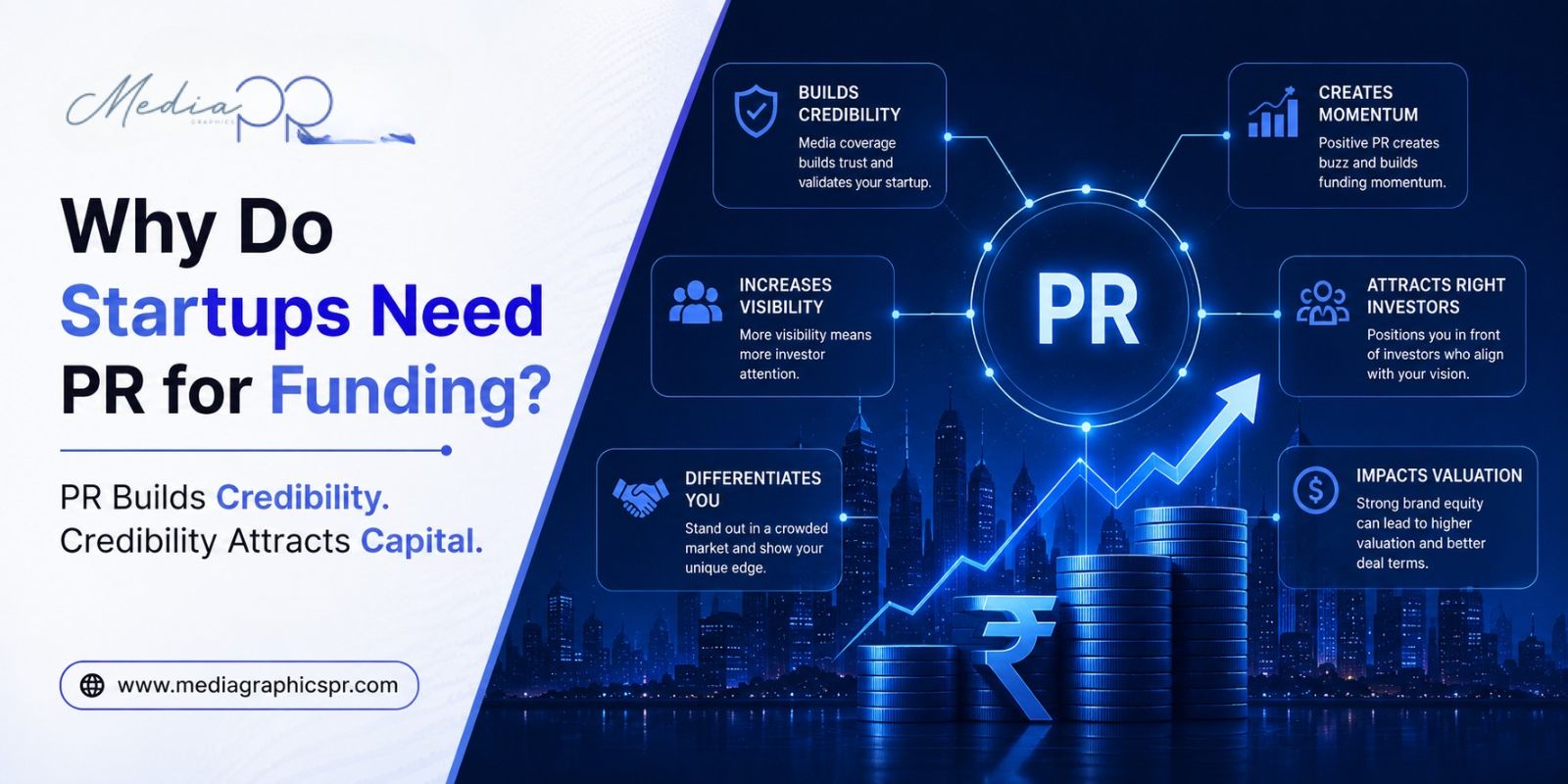
Startups need PR for funding because investors don’t just evaluate decks, they research founders, track media narratives, and form opinions about companies long before a first meeting. A startup with consistent, credible media presence in the right publications starts every investor conversation from a position of pre-built trust. One that’s invisible starts from zero, and in a competitive fundraising environment, starting from zero is a disadvantage that’s entirely avoidable.
That’s the short answer. The longer one explains why the gap between those two starting positions is wider than most founders realize, and what to do about it.
The Way Investors Actually Make Decisions
Most founders prepare for fundraising by perfecting the deck. The financials. The market size slide. The team page. All of that matters. But there’s a step that happens before any of that, and it happens without the founder in the room.
Investors research you.
They Google the company. They look up the founder on LinkedIn. They check what publications have written about the business. They ask their network whether anyone has heard of the team. And they do all of this before agreeing to a first call, during the call while you’re talking, and after the call before they decide whether to proceed.
What they find in that research shapes the conversation in ways that are very hard to change once a first impression is formed. A founder who shows up in three relevant publications over the past six months, whose perspective on the market has been quoted by journalists, whose company has been mentioned in the same breath as a sector trend—that founder arrives at the table with credibility that was built before they walked in.
A founder with no media presence asks investors to form their opinion entirely from the pitch. That’s a harder job.
What PR Does That a Pitch Deck Can’t
A pitch deck is something you made about yourself. It says exactly what you want it to say, in exactly the order you chose, with exactly the metrics you selected to include.
Investors know this. They read hundreds of decks. They’ve seen every version of the hockey stick chart. They know what a TAM calculation looks like when it’s been reverse-engineered to justify a valuation. The deck is necessary, but it’s not sufficient for trust.
Earned media is different. When a journalist at Economic Times writes about your company, they didn’t do it because you asked them to. They did it because an editor decided the story served their readers. That independence is the entire point. It tells an investor that someone with no financial stake in the outcome independently decided your company was worth their audience’s attention.
That’s not a claim you made. That’s a third party validating that your story is real.
What a pitch deck says: “We are the leading platform in this category”
What earned media says: “This company is worth paying attention to—an editor with no financial stake decided so”
One is self-reported. One is independently validated.
Investors weigh these very differently.
The Research Gap—Where Most Startups Lose Before They Know It
Here’s what actually happens during a typical investor evaluation process in India:
Founder sends cold intro or gets warm referral
↓
Investor receives it
↓
Before responding: Googles the company, the founder, the market
↓
Checks LinkedIn—founder’s presence, network quality, thought leadership
↓
Searches for media coverage: what’s been written, who’s covered it
↓
Asks the network, has anyone heard of this company?
↓
Forms initial impression
↓
Decides whether to take the call
Most founders assume this process happens after the first meeting. It happens before.
The startups that raise most efficiently are the ones whose names investors have already encountered—in Inc42, in Mint, in a sector-specific publication, in a LinkedIn thread where a credible founder was sharing a genuine perspective on the market. By the time the founder pitches, the credibility conversation is already partially done.
Why Timing Matters More Than Most Founders Realize
PR for funding isn’t something you start when you’re raising. That’s the most common mistake, and it’s expensive.
The media presence that influences investors during a fundraise is almost always built in the six to twelve months before the raise starts. Journalist relationships take time. A narrative takes time to establish. The compounding effect, where one placement leads to a journalist filing you as a credible source, which leads to another placement, which leads to an analyst mention, doesn’t happen in three weeks.
| If You Start PR… | What Investors Find During Your Raise |
|---|---|
| 12 months before | Consistent media presence, established founder voice, and a recognizable brand narrative. |
| 6 months before | Steady media coverage, an emerging founder profile, and growing market credibility. |
| When the raise starts | Very little visibility or rushed, generic media placements that fail to build investor confidence. |
| After the raise | Too late to influence investor perception for the current funding round. |
The founders who say “we’ll do PR after we close” are setting up their next raise to start from zero again.
What Good Pre-Raise PR Actually Looks Like
It’s not a press release every week. It’s not chasing every publication. It’s not a PR agency sending mass emails to a journalist list.
Good pre-raise PR looks like a founder being quoted in an Economic Times piece about their sector, because a journalist already knew their name. It looks like an Inc42 story about the company’s traction that lands two months before a funding announcement. It looks like a LinkedIn post from the founder about a non-obvious market insight that gets shared by three investors who’d never heard of the company before.
The components that matter most:
- Founder thought leadership: authored articles and expert commentary that establish genuine domain authority. Not product promotion. Real perspective on where the market is heading
- Category narrative: consistent positioning around the problem the company solves, so that when investors research the space, the startup’s name comes up as part of the conversation
- Milestone coverage: product launches, customer wins, and growth metrics communicated through earned media rather than just internal announcements
- Analyst visibility: for startups targeting enterprise or B2B buyers, getting mentioned in analyst reports from IDC, Gartner, or India-specific research bodies builds a different kind of credibility than media coverage alone
The Funding Announcement—A Different Kind of PR Problem
When the round closes, the announcement itself becomes a PR challenge that most startups underinvest in.
A funding announcement handled without strategy is a press release that trends for 48 hours and disappears. A funding announcement handled as a proper PR moment is a coordinated market signal—targeted journalist relationships, embargo strategy, coordinated owned and earned coverage—that changes how investors, buyers, and talent see the company for the next twelve months.
What separates a well-handled announcement from a poorly handled one:
| Poorly Handled | Well Handled |
|---|---|
| Generic press release sent to a mass journalist list | Targeted pitching to 8–10 journalists covering the specific sector |
| Announcement disappears within 48 hours | Supported by founder thought leadership and ongoing momentum coverage |
| Coverage in publications that investors rarely read | Coverage in Mint, The Economic Times, Inc42, and Business Standard |
| No pre-built credibility behind the announcement | 6–12 months of consistent media presence that strengthens the announcement |
| Every funding round starts from scratch | The next raise begins with a brand investors already recognize |
The companies that get the most from their funding announcements aren’t the ones with the biggest rounds. They’re the ones whose story was already in the right places before the wire hit.
The Compounding Effect—Why Starting Early Matters So Much
This is the part of PR for startup funding that’s hardest to explain to a founder who hasn’t experienced it, and the most important to understand.
PR compounds. Not in a vague, theoretical way. In a very specific, measurable way.
First placement in relevant publication
↓
Journalist files the founder as a credible source
↓
Next relevant story, journalist calls for a quote
↓
Quote leads to a second placement
↓
Analyst sees the coverage, mentions the company in a report
↓
Investor reads the analyst mention—researches the company
↓
Inbound interest from investor who wasn’t being pitched
↓
Credibility compounds, each placement makes the next one easier
The startups that look like they’re everywhere—in every relevant publication, on every investor’s radar, part of every market conversation—didn’t get there through one great press release. They got there by starting the loop early and keeping it running consistently.
The ones that start PR when they’re already in the fundraise are trying to compress twelve months of compounding into six weeks. It rarely works.
What Investors Actually Say About Media Presence
This isn’t theoretical. Talk to investors in India’s startup ecosystem and a consistent pattern emerges.
Founders with no media presence get asked more basic credibility questions in first meetings—who are you, why should I believe you understand this market, what makes you different from the other companies pitching me the same idea. Those questions take time to answer and create friction in a conversation that should be about the opportunity.
Founders with established media presence get different questions—about the specific market thesis, about expansion plans, about what the team would do with the capital. The credibility questions are already answered. The conversation starts further along.
That difference doesn’t show up on a slide deck. It shows up in how many investor meetings end in a second meeting, and how many don’t.
Building PR Into the Fundraising Timeline
Most fundraising timelines look like this: decide to raise, start preparing deck, start investor outreach, run the process, close. PR sits outside that timeline entirely, something to do “after.”
A fundraising timeline that actually works looks different:
12 months out: Start founder thought leadership and journalist relationship building
9 months out: Secure first consistent placements in target publications
6 months out: Build category narrative, company starts showing up in market conversations
3 months out: Increase cadence, more placements, more founder visibility, stronger narrative
Raise begins: Investors encounter a company they’ve already heard of
Announcement: Lands on a foundation of credibility, generates meaningful momentum
Post-close: Narrative compounds into the next phase—hiring, enterprise sales, next raise
Every step in this timeline requires work that starts before the pressure arrives. The founders who build PR into their fundraising timeline from the beginning raise faster, on better terms, and find the next raise significantly easier than the last.
How MediagraphicsPR Helps Startups Raise
At MediagraphicsPR, we’ve spent 25 years building the kind of media relationships and narrative infrastructure that makes fundraises go differently.
We work with founders who are serious about building credibility, not just coverage, and we start that work before the raise, not during it. Our approach connects PR for startup funding directly to the investor research process: understanding which publications your target investors read, what narratives resonate in your sector, and how to build a founder voice that journalists want to quote and investors want to back.
We’ve placed funded startup clients in Economic Times, Mint, Business Standard, Inc42, Forbes India, and sector-specific publications across fintech, SaaS, healthtech, and enterprise technology. We don’t measure success in clip counts, we measure it in whether the right investors had already heard of our clients before the first meeting.
If you’re planning a raise in the next six to twelve months and your media presence doesn’t reflect the quality of what you’ve built, that’s the conversation worth having now.
Frequently Asked Questions
How early before a fundraise should a startup start investing in PR?
Six to twelve months is the honest minimum. The media presence that influences investors during a raise is built in the months before it starts—journalist relationships take time, narrative takes time to establish, and the compounding effect doesn’t happen in three weeks.
Does PR actually influence investor decisions or is it just nice to have?
It influences the research investors do before deciding whether to take a meeting. Since most investors research companies before responding to any outreach, what they find shapes their initial impression. A startup with consistent, credible coverage starts that research process on better footing than one that’s invisible.
What kind of media coverage matters most for fundraising?
Publications your specific target investors read—Mint, Economic Times, Business Standard, Inc42 for most Indian institutional investors. Sector-specific publications matter if your target investors are thesis-driven. Consumer media coverage carries significantly less weight in investor conversations.
Should we do PR before we have product-market fit?
Founder thought leadership and narrative building can start before product-market fit — and often should. Investor-facing PR is about the founder’s domain expertise and market insight as much as the product. A founder who’s been consistently publishing genuine perspective on their market for six months has something real to show by the time they raise.
What’s the difference between PR for fundraising and PR for customer acquisition?
Different audiences, different publications, different messages. Fundraising PR targets investor-facing business media and positions the founder as a credible market expert. Customer acquisition PR targets sector-specific publications that buyers read. Many startups need both simultaneously, which is why the strategy has to be built around specific audience goals, not generic coverage.
Can a startup handle pre-raise PR without hiring an agency?
Founder-led PR—direct journalist outreach, LinkedIn thought leadership, targeted relationship building—can work at early stage. The ceiling is lower without established journalist relationships, and the time investment is significant when founders are also running the business. The question is whether the opportunity cost of doing it yourself is higher or lower than the cost of getting professional help.
Ready to Build the Credibility Investors Are Already Looking For?
Fundraising PR isn’t about press releases you send out when you’re ready to raise. It’s about the media presence investors find when they research you, weeks or months before you ever get on a call.
Visit MediagraphicsPR to see how we help founders build that presence ahead of a raise, not during it.
Need to speak to someone now?
📞 Call us: +91-8448360900 📧 Email us: info@mediagraphicspr.com
We respond within 24 hours.