





Let’s be honest about something. You could have the best product in your category. A team that’s worked harder than anyone else in the space. Traction numbers that would make most founders jealous. And still lose a deal, a fundraise, or a key hire to a competitor that’s built a stronger public narrative.
That’s not unfair. That’s just how markets work. People don’t make decisions in a vacuum. They go with the name they’ve already heard, the founder they’ve already read about, and the brand that showed up in a publication they trust last month. In 2026, India’s startup ecosystem is crowded enough that being good at what you do isn’t enough on its own. The startups breaking through aren’t always the most technically impressive; they’re the ones whose story is already in the right rooms before the conversation even starts.
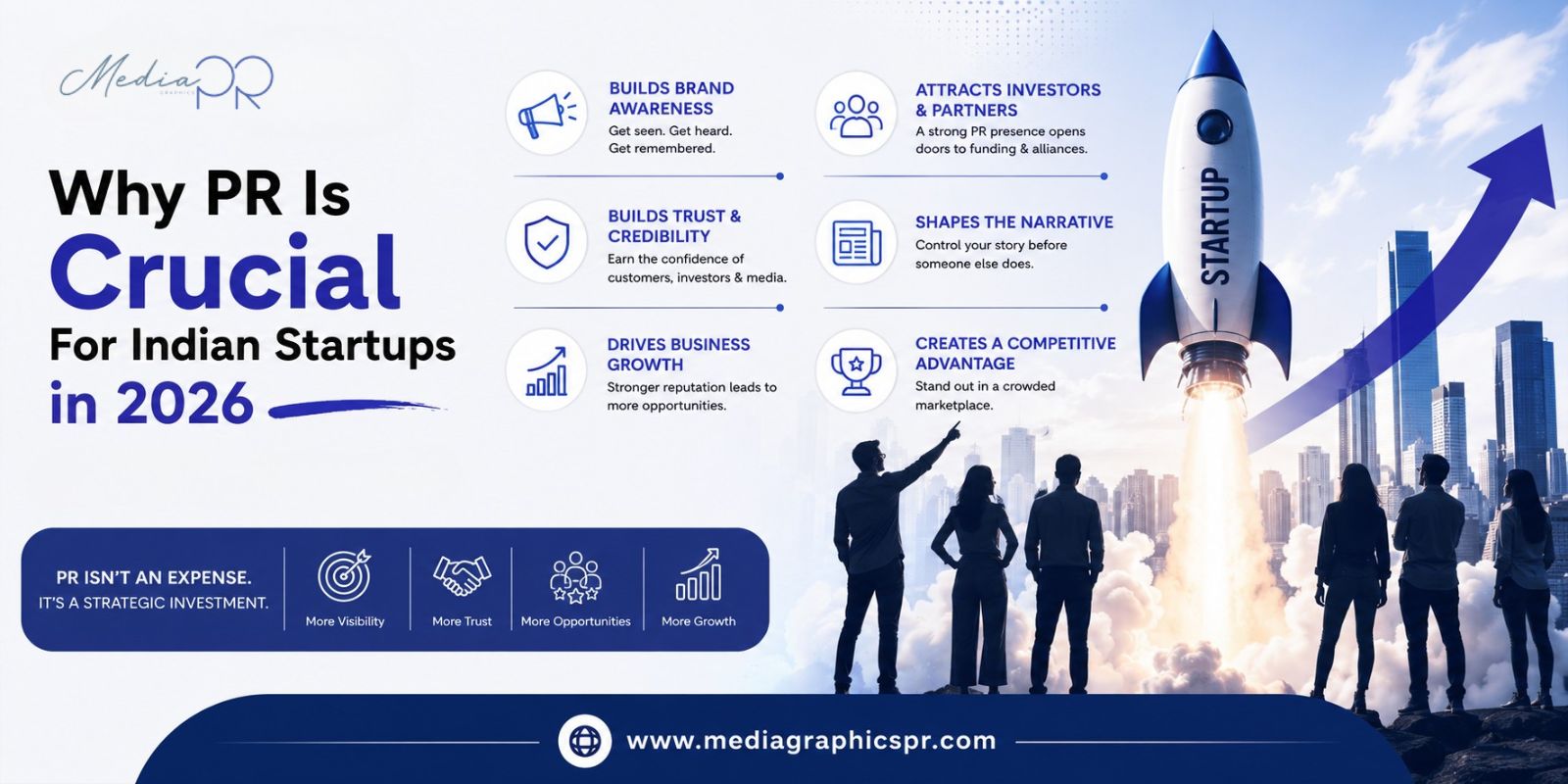
That’s exactly what startup PR does. And here’s why it’s more important this year than ever before.
What’s Actually Changed for Indian Startups in 2026
The landscape has shifted significantly. Three things are happening simultaneously that make PR for startups a genuine strategic priority, not a nice-to-have.
1. The funding environment is more selective
After the correction years, investors are doing deeper due diligence than they were in 2021. They’re researching founders more carefully, checking media presence, and forming impressions before the first meeting. A startup with no media narrative is invisible in that process. A startup with consistent, credible coverage is already halfway through the trust conversation before the pitch begins.
2. Enterprise buyers are more cautious
India’s B2B market has matured. Procurement heads at large enterprises are researching vendors thoroughly before responding to anything. Your startup’s media presence (or absence) is part of that evaluation now in a way it simply wasn’t five years ago.
3. Competition for talent is fierce
The best engineers, product managers, and operators in India have options. They research companies before applying. A startup that shows up credibly in the right places attracts better candidates and retains them longer because the employer brand means something.
Why Most Indian Startups Get PR Wrong
Before getting into what works, it’s worth being clear about what doesn’t.
| Common Startup PR Mistake | Why It Doesn’t Work |
|---|---|
| Sending press releases with no journalist relationships | Cold outreach to journalists who don’t know you produces almost nothing |
| Only doing PR around funding announcements | One moment of coverage doesn’t build a sustained narrative |
| Chasing big publications too early | A feature in a publication your audience doesn’t read is activity, not outcome |
| Treating PR as marketing | PR builds credibility—it doesn’t replace sales or advertising |
| Starting PR too late | By the time you feel you need it, the compounding has already been delayed |
Most startups that say “PR didn’t work for us” made at least three of these mistakes. The discipline isn’t the problem; the approach was.
What PR Actually Does for an Indian Startup in 2026
Builds the Credibility That Opens Doors
Every investor, enterprise buyer, and senior hire Googles your startup before deciding whether to engage. What they find shapes the conversation before you’ve said a word.
Consistent startup PR—founder thought leadership, product coverage, milestone announcements in the right publications—means they find something that builds confidence rather than a gap that creates questions.
Makes Fundraising Significantly Easier
The startups raising rounds most efficiently in India right now aren’t necessarily the ones with the best decks. They’re the ones whose names investors have already encountered in publications they respect.
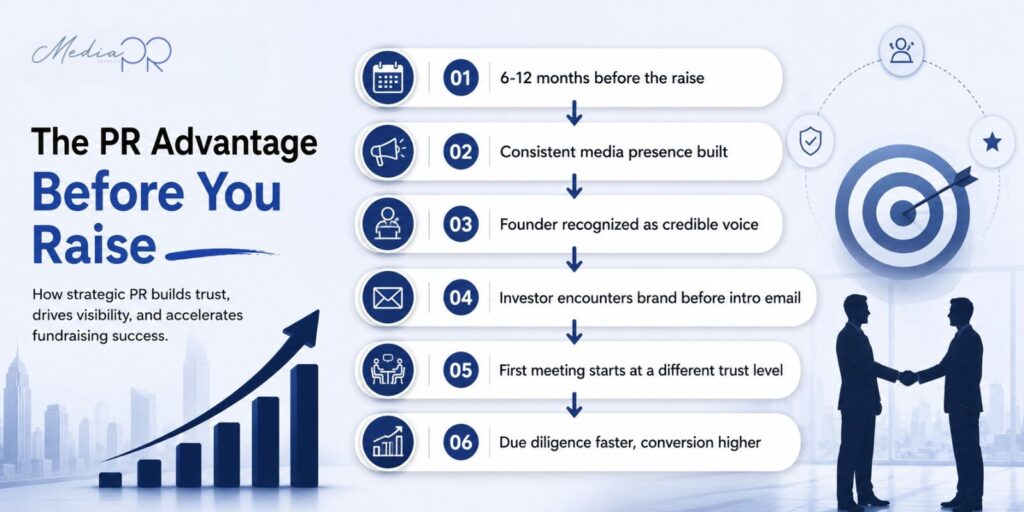
PR doesn’t replace the pitch. It makes the pitch land in a room where the credibility work is already partially done.
Earns Coverage That Compounds
This is what most startups don’t account for. PR for startups compounds the way good software compounds. The first placement leads to a journalist filing your founder as a credible source. That leads to a quote in the next related story. That leads to a feature. That feature leads to an inbound investor inquiry.
None of that chain happens if the first placement doesn’t exist. And none of it happens from a single press release.
Defines Your Category Before Someone Else Does
In most Indian startup categories, two or three companies end up owning the media narrative. The ones that get there first—consistent coverage, founder positioned as an expert, brand mentioned whenever journalists cover the space—build a competitive moat that’s genuinely hard to close.
The startups that wait until they feel ready to invest in Indian startup PR almost always find that a competitor who started earlier is already in that position.
Builds the Employer Brand That Wins Talent
Strong candidates research companies before applying. In 2026, a startup with no media presence competing against one with consistent coverage for the same senior hire is at a real disadvantage, regardless of which company actually has the better culture or the more interesting work.
PR for startups that builds employer brand—founder presence in startup ecosystem media, company milestone coverage, and team culture stories—directly affects hiring quality and speed.
The Right PR Approach for Indian Startups at Each Stage
| Startup Stage | PR Priority | What To Focus On |
|---|---|---|
| Pre-seed / Seed | Medium | Founder thought leadership, narrative building |
| Pre-Series A | High | Media credibility before investor conversations |
| Post-funding | Very High | Announcement momentum, category positioning |
| Growth stage | High | Consistent presence, employer brand, enterprise credibility |
| Pre-IPO | Critical | National media, investor relations, reputation management |
The pattern is consistent across every stage; the startups that invested in startup PR earlier have significantly more to work with at each subsequent milestone.
What Indian Startups Should Actually Do in 2026
Getting PR for startups right doesn’t mean a full agency retainer from day one. It means being deliberate about a few things that compound over time:
- Start with the narrative
Before any press release goes out, be clear about what story you’re telling. What does your startup do? in one sentence, no jargon. Why does it matter right now? What makes your approach different? That narrative has to be consistent everywhere.
- Build journalist relationships before you need them
Follow the journalists covering your space. Engage genuinely with their work. Offer yourself as a source for stories they’re already working on. The relationships that make a funding announcement land are built months before the announcement.
- Run owned and earned simultaneously
Founder LinkedIn content, thought leadership articles, and journalist pitching should all run at the same time, not sequentially. Each channel reinforces the others.
- Target publications your audiences actually read
Investor-facing PR needs business press. Enterprise buyer PR needs trade publications. Talent-facing PR needs startup ecosystem media. Match the publication to the audience, not to the name that sounds most impressive.
- Be consistent between big moments
The startups that get the most from PR aren’t the ones with the biggest launches. They’re the ones that stay in the conversation between launches, so when the next big moment comes, the credibility is already there waiting for it.
How MediagraphicsPR Works With Indian Startups
Indian startups in 2026 are building in one of the most competitive, most watched, and most opportunity-rich markets in the world. The ones that break through won’t just have the best product—they’ll have the clearest story, the most consistent presence, and the credibility that makes investors, buyers, and talent choose them over equally capable competitors.
At MediagraphicsPR, we work as the startup PR agency that Indian founders come to when they want PR that actually moves the business forward, not just clip counts. As a PR agency in Delhi with 23+ years of real media relationships across India’s most important publications, we build PR for startups around where you are and where you’re genuinely trying to go.
Senior people on your account from day one. A narrative built around your business before anything goes to a journalist. Media relationships that make your story land, not just get sent.
2026 is too competitive a year to let your startup’s story tell itself.
Ready to build the kind of PR that actually moves your startup forward in 2026?
Let’s talk about where your brand is right now and what the right narrative looks like from here.
📞 +91-8448360900 | 📧 info@mediagraphicspr.com
FAQs
Q: When is the right time for an Indian startup to invest in PR?
Earlier than most founders think. If you’re six months from a raise or about to launch enterprise sales, your media presence is already being checked. Starting before the pressure arrives is always better than starting during it.
Q: Can a bootstrapped Indian startup benefit from PR without a big budget?
Yes, the founder thought leadership and targeted journalist relationships cost more time than money at an early stage. Many Indian startups build a serious media presence this way long before they can afford a full retainer.
Q: How is startup PR different from regular business PR?
Startup PR moves faster, needs to serve more audiences simultaneously—investors, buyers, talent—and has to build credibility quickly in categories that are often new or crowded. The strategy and the urgency are both different from those of an established business.
Q: What’s the single most important thing a startup founder can do for PR right now?
Get the narrative right. Everything else—the pitches, the placements, and the journalist relationships—works significantly better when the core story is clear, consistent, and genuinely worth telling.