






Fintech is the only industry where your product can work perfectly and still fail, because a customer who doesn’t trust you with their money won’t use it, no matter how good it is.
Think about that for a second. A SaaS product can win on features. A D2C brand can win on design. A logistics company can win on pricing. Fintech has to win on something harder and more fundamental—the belief that your company is safe, credible, and worth trusting with someone’s financial life.
That’s not a product problem. That’s a perception problem. And perception is exactly what fintech PR is built to solve.
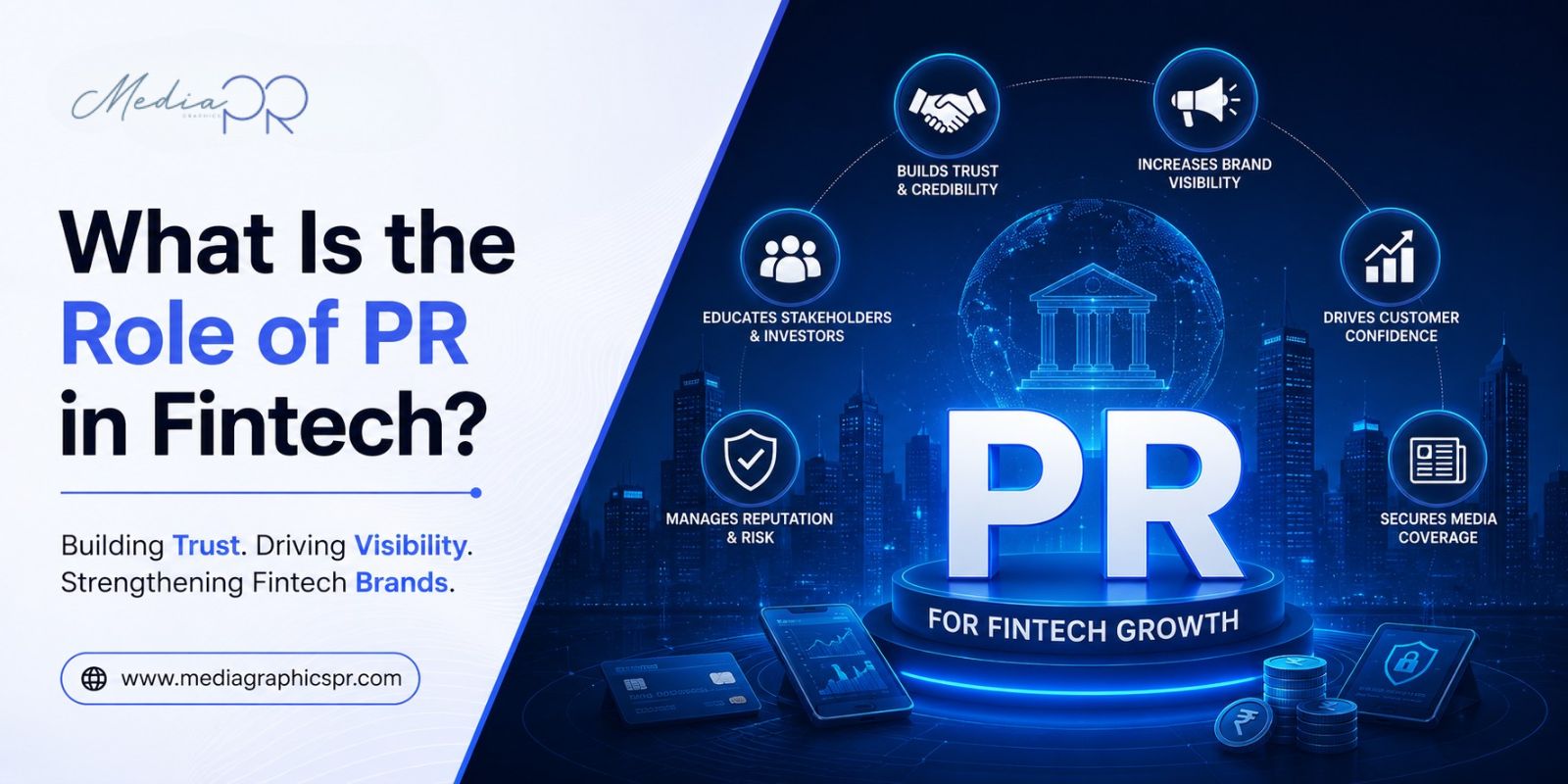
The role of PR in fintech covers five distinct functions: building regulatory credibility with policymakers and compliance audiences, establishing trust with retail customers who are sceptical of new financial products, creating investor confidence before and during fundraising conversations, supporting enterprise sales by making B2B buyers comfortable with vendor risk, and managing reputation when something goes wrong—which in fintech, eventually always does. Every fintech company needs all five working simultaneously. Most have none of them working properly.
Why Fintech Is the Hardest Sector to Build Trust In
Every industry has a trust problem to some degree. Fintech’s trust problem is structural.
Money is personal in a way that most products aren’t. A bad food delivery experience costs someone forty minutes and a refund. A bad fintech experience, like a failed transaction, a frozen account, or a data breach can affect someone’s ability to pay rent, make payroll, or access savings they need immediately. The stakes are categorically different.
This shapes how fintech customers evaluate products. They don’t make decisions based on features alone. They make decisions based on whether the company feels safe, whether it looks credible, whether it’s been written about in publications they trust, whether other people they respect have validated it.
That validation process, the one that happens before a customer signs up, before an investor meets the founder, before an enterprise buyer agrees to a demo, is almost entirely driven by media presence and earned credibility. Not advertising. Not product demos. What people find when they research the company independently.
This is the core role of PR in fintech. It builds the credibility that makes the product viable, not by changing the product, but by changing how people perceive the company behind it.
The Five Functions of Fintech PR
Regulatory Credibility
Fintech operates inside one of the most regulated environments in Indian business. RBI guidelines, SEBI regulations, IRDAI frameworks, data localisation requirements, PPI licensing—the regulatory landscape is complex, constantly evolving, and directly affects what fintechs can build and how fast they can grow.
Fintech PR plays a specific role here that most companies underestimate. Regulators read business media. Policy teams track how companies communicate publicly. A fintech that consistently demonstrates regulatory literacy through thought leadership, through accurate public communication about compliance, through founder commentary that shows genuine understanding of the policy environment, builds credibility with regulators that no lobbying meeting can replicate.
More practically: when a regulatory development affects the fintech sector, the companies whose founders are quoted in response are the ones regulators perceive as serious, engaged, and worth consulting. That perception has real commercial value.
Regulatory news breaks (RBI circular, SEBI update, new IRDAI framework)
↓
Fintech PR team identifies the relevant angle for the company
↓
Founder perspective drafted: genuine, accurate, specific
↓
Pitched to financial and policy journalists already covering the story
↓
Company quoted in coverage alongside larger, established players
↓
Regulatory credibility builds—perceived as serious market participant
↓
Regulators encounter the company as a credible voice in the space
Customer Trust at Scale
Retail fintech faces a specific challenge that B2B fintech doesn’t, the customer making the trust decision is often someone who has been burned before. Chit fund scams. UPI fraud. Lending apps with predatory terms. Indian retail customers have legitimate reasons to be cautious about new financial products, and that caution doesn’t disappear because a product has a good UI.
Fintech PR builds customer trust in the way paid advertising simply can’t. When a respected financial journalist at The Hindu or Mint writes about a lending platform, when a consumer protection reporter at NDTV investigates and finds nothing wrong, when a fintech is cited as a credible example in a broader story about financial inclusion—those signals tell a potential customer something fundamentally different than an Instagram ad does.
The customer’s internal logic: “If a journalist I trust has written about this company positively, and nothing bad has come up, it’s probably safe to try.”
That trust transfer, from credible publication to customer decision, is what fintech PR is building every time it secures earned media coverage in the right outlets.
Investor Confidence Before the Pitch
India’s fintech investment ecosystem is sophisticated and competitive. Institutional investors doing due diligence on fintech companies look at more than the deck—they look at regulatory track record, public credibility, founder communication quality, and whether the company has demonstrated the kind of market seriousness that justifies capital.
A fintech with no media presence asks investors to form their opinion entirely from what the company says about itself. A fintech with consistent, credible earned media in Mint, Economic Times, and sector-specific financial publications arrives at the investor conversation with independent validation already in place.
| Investor Research Stage | What They Find With Strong Fintech PR | What They Find Without It |
|---|---|---|
| Google the Company | Multiple credible publications, consistent brand narrative | Company website, maybe a single press release |
| Search Founder Name | Thought leadership articles, expert quotes, industry commentary | LinkedIn profile only |
| Check Regulatory Mentions | Public engagement with policy and compliance credibility | Nothing found |
| Ask the Network | “Yes, I’ve seen them featured in the news.” | “Never heard of them.” |
| Read Analyst Reports | Company referenced in sector analysis and market reports | Not mentioned |
The last row matters enormously for fintech. Analyst mentions from firms like RedSeer, Bernstein India, or CLSA don’t happen by accident. They’re the result of consistent media presence and credibility that makes analysts confident including a company in their sector coverage.
Enterprise B2B Sales Support
For fintechs selling to banks, NBFCs, insurance companies, or enterprise clients, the sales cycle is long, the evaluation committee is large, and vendor risk assessment is thorough.
A compliance officer at an NBFC evaluating a lending technology vendor is asking one fundamental question: can we trust this company with our customers’ financial data and our regulatory exposure?
Fintech PR answers that question before the sales conversation starts. A company that’s been covered in Business Standard, that has a founder quoted in Economic Times as a fintech expert, that appears in industry association discussions, passes the initial credibility filter that many fintechs fail before the first demo.
The sales team at a fintech with strong earned media coverage spends less time establishing basic credibility and more time discussing the actual product. In a sales cycle that can run six to eighteen months, that difference is significant.
Reputation Management When Things Go Wrong
Fintech doesn’t get the benefit of the doubt.
A transaction failure at a retail app becomes a Twitter thread. A data concern becomes a regulatory investigation. A customer complaint about a lending product becomes a consumer protection story. The media scrutiny that comes with handling people’s money means that fintech companies face reputation challenges that other sectors simply don’t encounter at the same frequency or intensity.
The companies that came through these moments with their reputation intact, and the fintechs that did it well, have one thing in common: they had credibility infrastructure in place before the crisis hit.
Pre-existing journalist relationships, an established positive narrative, and a founder with a track record of accurate and transparent public communication are what give a fintech company something to absorb a difficult moment with. The ones that don’t have this infrastructure find that a single bad news cycle can create regulatory attention, investor concern, and customer churn simultaneously.
What Good Fintech PR Looks Like in Practice
Here’s the reality of what consistent fintech PR produces over twelve months for a company that approaches it properly:
Month 1-2:
Narrative built, journalist relationships started, first pitches in financial and fintech publications
Month 3-4:
First placements secured: founder quoted in policy stories, product coverage in relevant fintech media
Month 5-6:
Journalist familiarity builds, reactive commentary requests start
Founder recognized as credible voice in the sector
Month 7-9:
Consistent presence across multiple publications Investor due diligence conversations getting easier
Enterprise buyers referencing coverage in early sales calls
Month 10-12:
Analyst mentions starting Inbound media requests arriving without pitching
Regulatory recognition as a serious market participant
None of this happens from a single press release. All of it compounds from consistent, strategic work over time.
The Fintech Publications That Actually Matter
Not all coverage serves the same purpose. A fintech PR strategy that targets the wrong publications, even if it generates high clip counts, won’t move investors, regulators, or enterprise buyers.
| Audience | Right Publications |
|---|---|
| Institutional Investors | Mint, Economic Times, Business Standard, Forbes India |
| Retail Customers | Times of India, NDTV, Consumer Finance Publications |
| Enterprise B2B Buyers | BFSI-specific Trade Media, BankTech India, IBS Intelligence |
| Regulators and Press | ET Financial Services, Business Standard Banking, Policy Press |
| Fintech Ecosystem | Inc42, YourStory, The Ken |
| Global Investors | Bloomberg Quint, Reuters India, Financial Express |
The founder who wants investor credibility needs Mint and Economic Times. The founder who wants to build retail customer trust needs mainstream publications their customers read. These are different audiences, different publications, and different pitches. A fintech PR strategy that doesn’t segment by audience is wasting most of its effort.
What Journalists Covering Fintech Actually Want
This is the gap between most fintech PR and effective fintech PR.
Financial journalists in India are covering one of the most important sectors in the country. They’re writing for readers who include regulators, investors, enterprise buyers, and sophisticated consumers. They need stories that are:
- Accurate: fintech journalists fact-check financial claims rigorously. A pitch with a number that doesn’t hold up damages the relationship immediately
- Specific: “we process significant transaction volumes” is not a story. “We processed ₹2,800 crore in UPI transactions in Q1” is
- Policy-connected: the best fintech stories connect company developments to the regulatory and policy environment. Journalists who cover financial services think in policy terms
- Human: even technical fintech stories benefit from a specific customer story, a real founder moment, or a concrete example of what the product does for an actual person
The pitches that get covered:
- Funding announcements with specific investor names and concrete use of funds
- Original platform data that reveals something non-obvious about financial behaviour in India
- Founder perspective on a regulatory development that demonstrates genuine policy understanding
- Customer stories that illustrate financial inclusion or product impact with real numbers
- Crisis response that’s transparent, specific, and demonstrates accountability
The pitches that get deleted:
- Generic product announcements without news hooks
- Claims about being “India’s leading” anything without supporting data
- Press releases that read like marketing copy
- Pitches to financial journalists that don’t demonstrate understanding of the regulatory context
The Specific PR Challenges Indian Fintechs Face
Regulatory communication is the most distinctive challenge. Unlike most sectors, fintech companies have to communicate about their products in ways that are accurate under RBI, SEBI, and other regulatory frameworks. A marketing claim that’s technically a breach of RBI communication guidelines, even if unintentionally creates problems that go well beyond bad PR.
Good fintech PR agency work includes understanding these constraints and building communication strategies that are compelling and compliant simultaneously. Not every PR agency can do this. It’s one of the specific reasons sector expertise matters in fintech more than in most industries.
The trust deficit in lending is the second challenge, and it’s a real one. Indian lending fintechs have spent the last few years working against a backdrop of NBFC collapses, predatory lending exposés, and apps getting pulled from stores altogether. For any lending fintech, even one with genuinely responsible practices, overcoming the category’s trust deficit requires PR that specifically addresses it through transparency, third-party validation, and founder communication that’s more honest than promotional.
The speed of regulatory change is the third. What’s true about a fintech company’s regulatory position today may be different in three months. PR strategies that lock in claims about compliance, licensing, or product capabilities can become problems when the regulatory environment shifts. Building flexibility into fintech communication, with statements that are accurate across regulatory scenarios, requires genuine sector understanding.
How MediagraphicsPR Works With Fintech Companies
Fintech PR done well requires understanding money, regulation, and media simultaneously. Most PR agencies understand one of those three. A few understand two. The ones that understand all three are the ones that actually move the needle for fintech companies.
At MediagraphicsPR, we work with fintech companies at every stage, from pre-Series A companies building credibility for their first institutional raise, to growth-stage fintechs managing the transition from startup to regulated financial services company. We’ve placed fintech PR clients in Economic Times, Mint, Business Standard, Forbes India, and sector-specific BFSI publications across lending, payments, insurance tech, and wealth management.
Our approach to financial services PR starts with understanding the regulatory environment your company operates in, the specific audiences whose trust you need to build, and the narrative that’s both compelling and compliant. We don’t send generic pitches. We build fintech media strategy around the specific credibility challenges your company faces, because in fintech, those challenges are never generic.
If your fintech is building something that deserves to be trusted, and you need the right people to know about it, that’s the conversation worth having.
Frequently Asked Questions
How is fintech PR different from regular startup PR?
Fintech PR has to serve multiple audiences simultaneously: retail customers who need trust signals, regulators who need to see compliance credibility, investors who need sector-specific validation, and enterprise buyers doing thorough vendor risk assessment. Most startup PR focuses on one or two audiences. Fintech PR has to get all four right at the same time, with messaging that’s both compelling and accurate under financial regulation.
Does a fintech startup need PR before it has a significant user base?
Yes, particularly if it’s planning to raise institutional funding or sell to enterprise clients. Both of those audiences research companies thoroughly before engaging. A fintech with no media presence asks investors and enterprise buyers to trust a company they can’t independently validate. Building that media presence before the fundraise or enterprise sales push is significantly more effective than trying to build it during.
How should a fintech handle PR during a regulatory investigation or negative coverage?
The companies that come through regulatory scrutiny with their reputation intact are almost always the ones that respond quickly, accurately, and transparently, not the ones that go quiet. Having a PR infrastructure in place before a difficult moment means the response is calm and credible rather than reactive and defensive. The specific response depends on the situation, but the general principle is: don’t disappear, don’t be vague, don’t make claims you can’t support.
What traction does a fintech need before it’s worth pitching to major financial publications?
There’s no fixed threshold, but here’s what tends to work: financial journalists in India respond to numbers they can actually verify, not numbers that sound impressive. Transaction volumes, customer counts, disbursement figures, AUM, growth rates, the kind of specifics a journalist can fact-check in five minutes. A fintech doing ₹100 crore a month with 50,000 active users has a real story. A fintech that says it’s seeing “significant growth” doesn’t. The more specific the number, the more credible the story.
How long does it take for fintech PR to build meaningful regulatory credibility?
Longer than most other PR outcomes, typically twelve to eighteen months of consistent engagement before regulators meaningfully perceive a company as a credible market participant. This is why starting early matters so much. Companies that begin building regulatory credibility through media and policy engagement well before they need a regulatory conversation are in a fundamentally different position than those who start when they’re already under scrutiny.
Should fintech companies pitch consumer media or financial trade publications first?
Depends on the immediate business priority. If the goal is retail customer acquisition and trust, consumer-facing media like Times of India, NDTV, and mainstream digital publications matter most. If the goal is investor credibility or enterprise sales, Mint, Economic Times, and BFSI trade publications take priority. Most fintechs eventually need both, but running them simultaneously from the beginning without a clear audience priority usually means neither is done well.
Ready to Build the Trust Your Fintech Needs Before Investors, Regulators, and Customers Start Asking Questions?
In fintech, credibility isn’t something you claim, it’s something you have to earn in public, well before anyone signs up, invests, or approves your compliance. The companies that get this right start building that credibility months before they need it, not during the moment they’re already being scrutinised.
Visit MediagraphicsPR to see how we approach fintech and financial services PR.
Need to speak to someone now?
📞 Call us: +91-8448360900 📧 Email us: info@mediagraphicspr.com
We respond within 24 hours.