





One bad story can undo years of good work. And the worst part is that it doesn’t even have to be true.
A journalist runs a piece that misrepresents something your company did. A former employee’s complaint gets picked up by three publications before you’ve had a chance to respond. A product issue that affected two customers becomes a Twitter thread that becomes a news story that becomes a regulatory inquiry. You wake up on a Tuesday morning, and your company is the subject of the kind of coverage you’d been hoping would never happen to you.
Recovering brand reputation after negative press isn’t something most founders or communications teams have a playbook for, because most of them have never needed one before. And the moment you need it is exactly the wrong moment to be figuring it out from scratch.
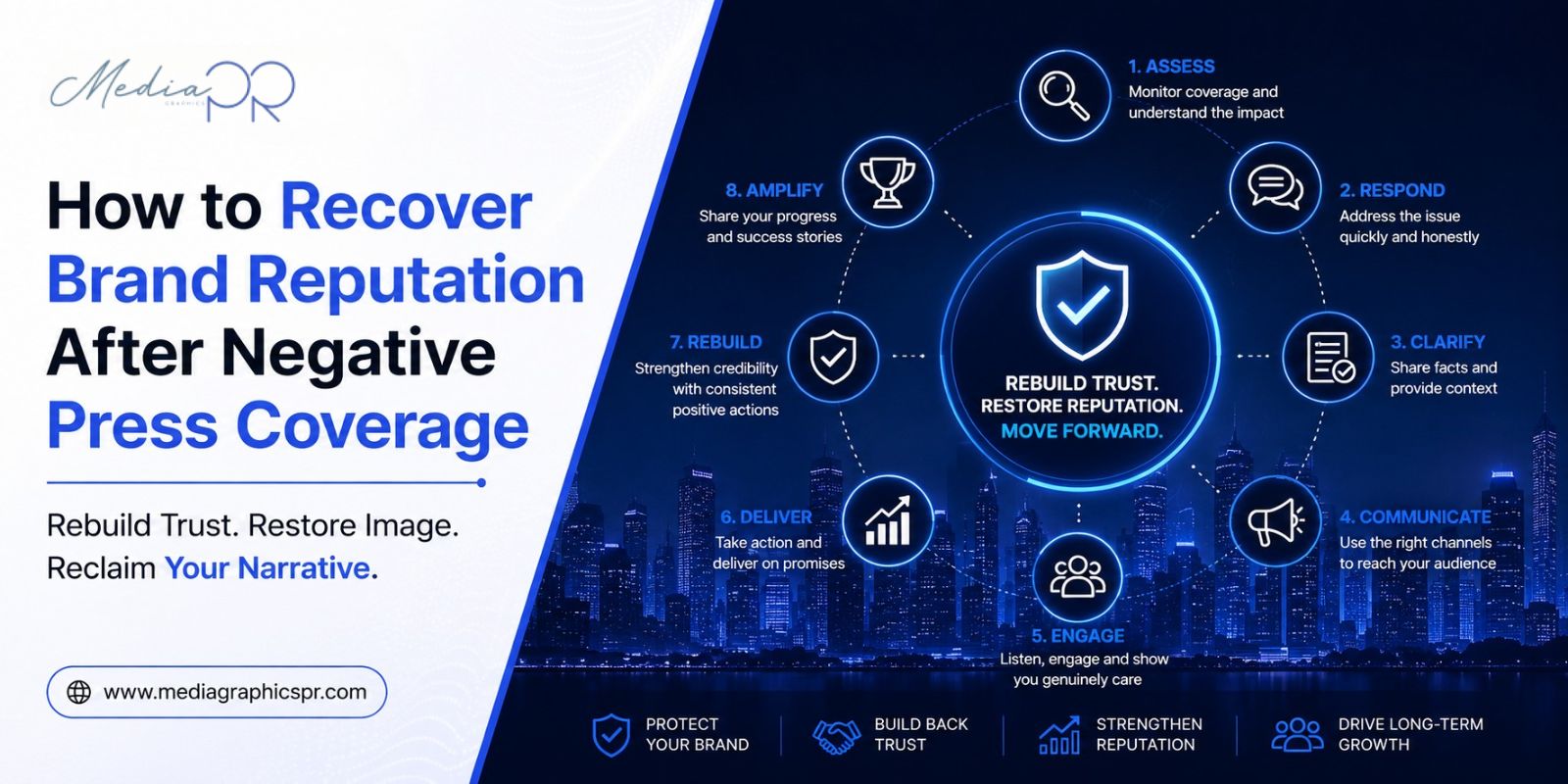
Brand reputation recovery after negative coverage involves five stages: immediate response, narrative assessment, strategic counter-communication, sustained positive presence, and long-term credibility rebuilding. The brands that come through difficult media moments with their reputation intact almost always follow some version of this sequence, whether they knew that’s what they were doing or not. The ones that don’t follow it tend to make the original problem worse.
This guide covers every stage in detail, including what to do, what to avoid, and what the realistic timeline looks like.
Why Negative Press Hits Differently in 2026
Before the playbook, understand what you’re actually dealing with.
Negative press coverage in 2026 doesn’t behave the way it did ten years ago. A single article used to have a shelf life determined by when the newspaper stopped being in circulation. Now it stays indexed, searchable, and discoverable permanently. An investor researching your company six months after a negative story will still find it on page one of Google. A potential enterprise buyer doing due diligence on your brand will still see it. A senior candidate considering an offer will still read it.
The second shift is speed. A story that would have taken two days to gain traction in 2015 can hit ten thousand shares in four hours in 2026. By the time a brand’s communications team has convened a meeting to discuss the response, the narrative is already set in enough people’s minds that changing it requires significantly more work than it would have if the response had come faster.
The third shift is the ecosystem. One piece of negative coverage in an established publication is not just one piece anymore. It gets picked up by digital aggregators, referenced in other journalists’ stories, shared in WhatsApp groups, and used as source material by people writing opinion pieces. The original article becomes the seed of a much larger narrative.
All of this means brand reputation recovery in 2026 is a more complex and more urgent problem than it used to be, and the brands that handle it well are the ones that understand that complexity before they’re in the middle of it.
Stage 1. The First 24 Hours: Don’t Make It Worse
The most expensive mistakes in reputation recovery happen in the first 24 hours. Not because of what companies say, but because of what they do wrong while panicking.
What not to do in the first 24 hours:
- ✘ Issue a defensive press release that contradicts the story without addressing the underlying concern
- ✘ Go completely silent. No response is a response, and audiences interpret silence as confirmation
- ✘ Have multiple spokespeople say different things to different journalists
- ✘ Attack the journalist or publication publicly
- ✘ Make specific promises you can’t be certain you can keep
- ✘ Involve lawyers as the primary public-facing response. Legal language reads as defensive and creates more story
What to do in the first 24 hours:
Hour 1-2: Assess the situation accurately
↓
Read the full story carefully. What exactly was claimed? What is factually accurate and what is not?
↓
Hour 2-4: Identify the stakeholders who need immediate direct communication
Investors, enterprise clients, key partners—before they read it elsewhere
↓
Hour 4-8: Draft a holding statement. Acknowledges the coverage, commits to taking it seriously, doesn’t concede anything that isn’t true
↓
Hour 8-24: Decide the response strategy. Full rebuttal, partial acknowledgement, or no comment—based on the facts, not on what feels least painful
The holding statement is the most underused tool in crisis communications. It buys time without silence. It signals seriousness without concession. And it lets the internal team properly assess the situation before committing to a position publicly.
Something like this tends to work well as a starting point:
“We’ve seen the coverage published today about [specific issues]. We’re looking into it properly and taking it seriously. Once we’ve had time to go through everything, we’ll come back with a complete response. For now, [contact name] can be reached at [email] if you have questions.”
It’s short, it doesn’t concede anything on facts, and it signals accountability without making the situation worse.
Stage 2. Narrative Assessment: What Are You Actually Dealing With?
Not all negative press is the same. The recovery strategy depends on which type you’re facing.
| Types of Negative Coverage | What It Requires |
|---|---|
| Factually inaccurate story | Formal correction request to the publication, a clear rebuttal supported by evidence, and legal action if necessary. |
| Accurate story about a real problem | Acknowledge the issue, explain what happened, and outline the concrete steps being taken to resolve it. |
| Partial truth with missing context | Provide supplementary communication that presents the complete picture without attacking the publication. |
| Opinion piece or commentary | In most cases, it’s better to let it pass, as responding can unintentionally amplify the coverage. |
| Viral social media-driven story | Speed is critical. Respond quickly with clear, transparent, and human communication. |
| Regulatory-triggered coverage | Legal and communications teams must work together. Neither should lead the response alone. |
Getting this assessment wrong leads to the wrong response, which can be more damaging than the original story. A brand that issues a full rebuttal to a story that was mostly accurate looks worse than the story made them look. A brand that acknowledges an inaccurate story as partially true has created a legal and reputational problem it didn’t have before.
Stage 3. Strategic Counter-Communication
Once the immediate response is handled, the real reputation recovery work begins. This is the stage most brands either rush through or skip entirely, and it’s where the long-term outcome gets determined.
The Principles That Actually Work:
➤ Lead with facts, not feelings.
A brand that says “we feel this coverage was unfair” invites debate about fairness. A brand that says “here is what actually happened, supported by these specific facts” changes the conversation from opinion to evidence.
➤ Get your existing advocates on record.
Customers, partners, investors, and team members who have direct experience of the company are the most credible voices available. A client willing to say “this doesn’t match our experience of working with them” does more for brand reputation recovery than any press release ever could. Not manufactured testimonials, but genuine, named, specific voices.
➤ Create new, legitimate news.
One of the most effective counter-communication strategies is giving journalists something genuinely newsworthy to write about that has nothing to do with the negative story. A significant customer wins. A product milestone. A partnership that matters. The goal is to create a second page-one result when someone searches your company name, one that’s positive.
➤ Use owned channels deliberately, not defensively.
A LinkedIn post from the founder that’s honest, specific, and human, not PR-polished, not defensive, and not attacking the coverage, reaches investors, potential hires, and customers directly without the filter of another journalist. The tone matters enormously. Angry reads as guilty. Calm, clear, and factual writing reads as credible.
Stage 4. Sustained Positive Presence
This is the stage that separates brands that genuinely recover from ones that just survive the immediate cycle.
Brand reputation recovery isn’t complete when the negative story drops off the first page of search results. It’s complete when the first thing someone finds when they research your company is something credible, positive, and genuinely representative of what the brand is.
That requires a sustained period of positive media presence, not manufactured, not forced, but consistent.
Negative story published (page 1 of search results)
↓
Holding statement and direct stakeholder communication
↓
Factual rebuttal or acknowledgement depending on type
↓
Owned channel communication: founder LinkedIn, email
↓
New legitimate news: customer wins, product launches, milestones
↓
Thought leadership: founder commentary in relevant publications
↓
Consistent earned media over 3-6 months
↓
Search results start showing a balanced picture
↓
12 months of sustained positive presence
↓
Brand reputation rebuilt, with the negative story becoming one result among many
The timeline is realistic. There’s no shortcut to this stage. A brand that was covered negatively in February and wants its reputation fully rebuilt by April is expecting something that doesn’t happen, regardless of how well the immediate response was handled.
Stage 5. Long-Term Credibility Rebuilding
The final stage of reputation recovery is the most important and the least talked about.
What caused the negative coverage? Was it a real problem, a product failure, a governance issue, or a communication mistake, or was it an external attack or misrepresentation? The answer determines what long-term credibility rebuilding looks like.
If the coverage reflected a real problem:
The only credible long-term recovery is demonstrating that the problem has been fixed. Talking about it isn’t enough. The changes have to be real, verifiable, and communicated through third parties, not just through the brand’s own channels.
A fintech that had a data issue needs to show independent security certification, not just announce that security has been improved. A D2C brand that had a product quality problem needs third-party testing results, not just a statement that quality controls are now in place. The credibility of the recovery depends on the credibility of the evidence.
If the coverage was inaccurate or unfair:
The long-term rebuilding involves building enough positive credibility that the negative story becomes a footnote rather than a defining moment. This happens through consistent earned media, genuine thought leadership, and the kind of sustained positive presence that makes the negative story look like an anomaly in an otherwise clear track record.
What the Brands That Recover Well Have in Common
Across every sector and every type of negative coverage, the brands that come through reputation crises with their credibility intact share a handful of characteristics.
➤ They respond fast but not recklessly.
Speed matters in the first 24 hours. But fast and wrong is worse than slightly slower and right. The brands that do this well have a process for rapid assessment, not a slow consensus-building meeting that takes three days.
➤ They communicate directly with the stakeholders who matter most.
Investors, enterprise clients, and key partners should hear from the brand before they read the story. A personal email or call from the founder or CEO, not a PR press release, but genuine direct communication, preserves relationships that mass communication can’t.
➤ They don’t disappear.
The instinct in a crisis is to go quiet. The worst thing a brand can do is disappear from public view for three weeks after negative coverage. Silence looks like confirmation. The brands that recover fastest stay visible, carefully, deliberately, but visibly.
➤ They use the moment to demonstrate character.
The most counterintuitive truth about brand reputation recovery: handled genuinely well, a crisis can actually improve a brand’s credibility. A founder who responds to negative coverage with honesty, accountability, and visible action demonstrates character that normal times don’t require. Some of the most trusted companies in India today built that trust partly through how they handled something that went wrong.
How MediagraphicsPR Helps Brands Recover
Recovering brand reputation properly requires more than a good response on day one. It requires a communications strategy that’s built to compound, creating enough positive, credible presence over time that the negative story becomes one data point in a much larger picture rather than the defining thing people find.
At MediagraphicsPR, we work with brands navigating brand reputation recovery at every stage, from the immediate holding statement to the twelve-month positive presence strategy that genuinely rebuilds what was damaged. As a PR agency in Delhi with 25 years of genuine media relationships across India’s most important business and sector publications, we know which journalists to approach, what counter-narrative actually lands, and how to build the kind of crisis PR strategy that changes search results rather than just managing the immediate news cycle.
We’ve handled reputation management for startups, fintech companies, D2C brands, and enterprise technology businesses across every type of negative coverage from factual inaccuracies to genuine product failures. The work is different each time. The principle is the same: respond fast, communicate honestly, build something positive that lasts.
If you’re in the middle of a reputation problem right now, or you want to build the infrastructure so you’re never caught unprepared, that’s the conversation worth having today.
FAQs
How long does brand reputation recovery actually take after negative press?
Realistically, six to twelve months for meaningful recovery, meaning the negative story is no longer the first or most prominent thing someone finds. The timeline depends on the severity of the coverage, how quickly the brand responded, and how consistent the positive presence has been in the months after. There is no shortcut to this.
Should we ask the publication to take the negative story down?
Rarely the right move and usually makes things worse. Most publications won’t remove stories that are factually accurate. Even when they’re not fully accurate, a formal takedown request often generates additional coverage about the dispute. Requesting a correction for specific factual errors is legitimate. Demanding removal of an opinion piece is not.
Is it better to respond publicly or stay quiet?
Depends on the type of coverage and its reach. A viral story with thousands of shares requires a public response. A niche industry story that most of your stakeholders won’t see may be better handled through direct communication rather than a public statement that draws more attention to it. The call should be based on reach and audience, not on whichever option feels less uncomfortable in the moment.
How do we handle investors and enterprise clients who reach out after negative coverage?
Directly, personally, and quickly. A personal call or email from the founder or CEO before they have to ask is significantly more effective than a formal PR statement. Be specific about what happened, what’s being done, and why the relationship isn’t at risk. Don’t oversell the resolution. If the problem isn’t fully solved yet, say so.
What if the negative coverage was actually accurate?
Acknowledge what’s true, add context where it genuinely helps, and put the focus on what’s being done rather than trying to soften what happened. Brands that recover fastest from real mistakes are almost always the ones that show accountability instead of getting defensive. A straightforward acknowledgement backed by real corrective action will always land better than a carefully hedged statement that avoids actually admitting anything.
Can PR genuinely rebuild a damaged reputation, or does the damage last permanently?
Most reputations are recoverable with the right strategy, enough time, and genuine underlying improvement where the coverage reflects a real problem. The brands that don’t recover are usually the ones that either didn’t respond credibly in the first place, had the same problem happen twice, or never built the sustained positive presence needed to change what people find when they search the company. Recovery is possible. It’s just not fast, and it requires consistent work over time.
Ready to Protect Your Brand Before the Next Story Breaks, or Recover From the One That Already Did?
Reputation recovery isn’t about getting through one bad news cycle. It’s about building enough genuine credibility over time that a single story never gets to define your brand.
Visit MediagraphicsPR to see how we approach reputation and crisis communications.
Need to speak to someone now?
📞 Call us: +91-8448360900 📧 Email us: info@mediagraphicspr.com
We respond within 24 hours.