



Your founder just got a call from a journalist at the Economic Times. They want a comment on a breaking story in your industry. You have 20 minutes.
Does your founder know what to say? More importantly, do they know what not to say?
This is the moment media training is built for. And it’s the moment most founders realize they’ve never actually prepared for it. A journalist call without preparation isn’t just a missed opportunity; it’s a risk. One wrong answer, one off-the-cuff comment, and one moment of going off-script can shape how thousands of readers perceive your brand. And unlike a bad ad, you can’t pull it once it’s published.
Media training is how you make sure that when the moment comes—and it will—your spokesperson handles it in a way that builds your brand instead of creating a problem for your PR team to fix.
What Is Media Training?
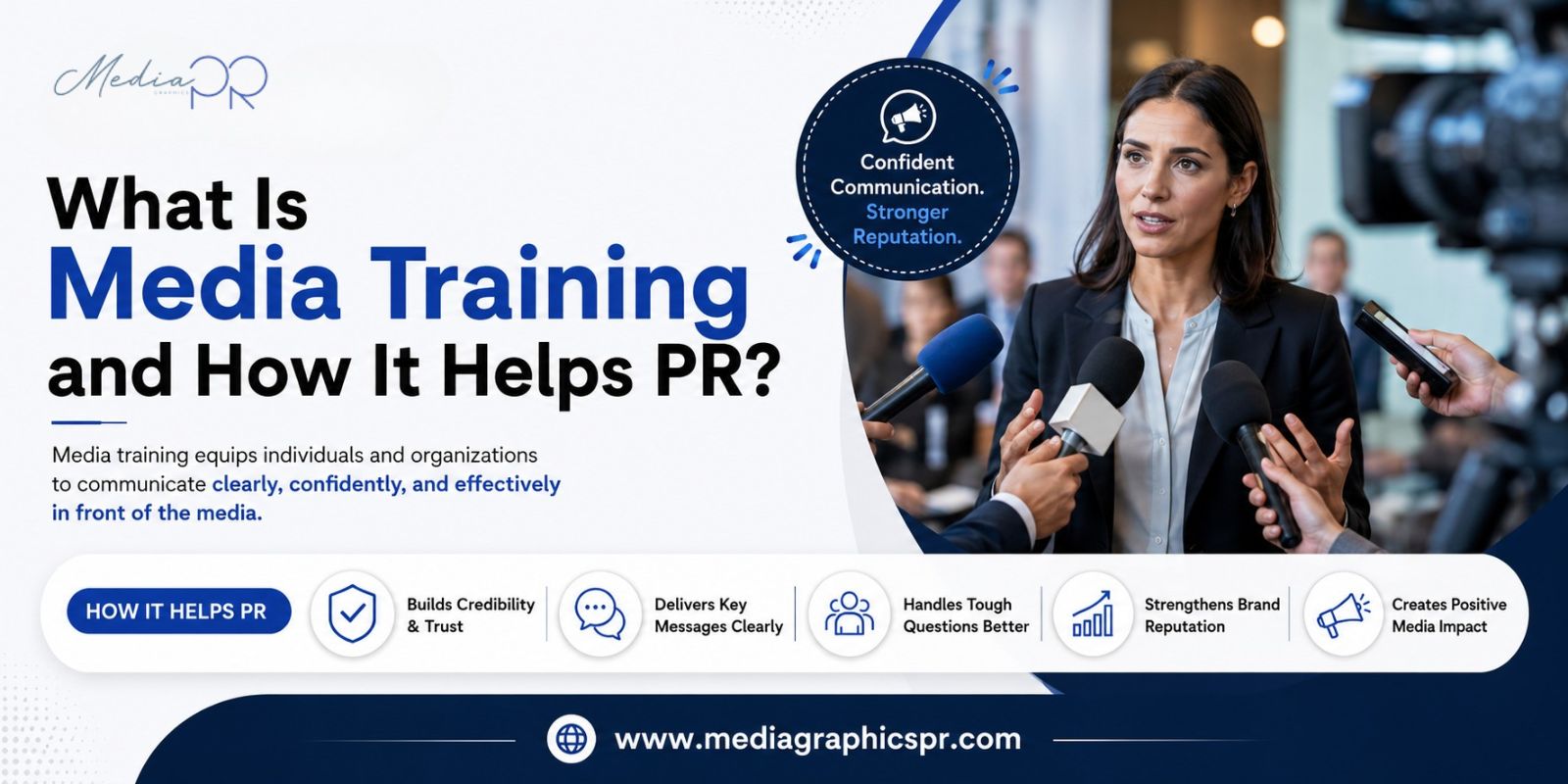
Media training is the process of preparing founders, executives, and company spokespeople to communicate effectively with journalists—in interviews, press calls, live TV or radio appearances, and panel discussions.
It’s not about teaching someone to be fake or corporate. It’s about helping them say what they actually mean, in a way journalists can use, without accidentally saying something they don’t mean at all.
A good media training programme covers:
- How to structure answers so they land clearly
- How to bridge from a question you don’t want to answer toward a point you do
- How to handle hostile or trick questions without getting defensive
- How to speak in sound bites—short, quotable, memorable
- How to stay on message without sounding like you’re reading from a script
- What to do when you don’t know the answer
- Body language and tone for video and broadcast interviews
Why Media Training Matters More Than Most Companies Think
Most founders are brilliant at their product. They can talk about what they’ve built for hours: the technology, the problem it solves, the market opportunity. Put a journalist in front of them, and that clarity sometimes disappears entirely.
Not because they don’t know their stuff. Because a journalist interview is a different kind of conversation. The journalist isn’t there to understand your product; they’re there to find an angle for their story. Those are two very different things. And without media training, founders often answer the question they wish they’d been asked rather than the one they were actually asked.
The result: quotes that miss the point, comments that get taken out of context, or worse, silence when a strong response would have built real credibility.
How Media Training Directly Improves PR Results
Media training isn’t separate from PR strategy; it’s one of the things that makes PR strategy actually work. Here’s how:
Better Quotes Mean Better Coverage
Journalists build stories around quotes. A strong, specific, opinionated quote gets used prominently. A vague, hedge-everything quote gets cut or buried. Media-trained spokespeople consistently get better placement in the stories that feature them, because they give journalists something worth publishing.
Journalist Relationships Strengthen
Journalists remember which founders are good to talk to. Clear answers, genuine insight, no PR fluff—that’s what journalists come back for. A founder who’s been through proper media training becomes a source journalists call again. That’s how media relationships compound over time.
The Brand Message Stays Consistent
Without media training, different spokespeople say different things about the same company. One founder describes the product one way. The COO describes it another way. The communications head has a third version. Journalists notice inconsistency, and so do investors and buyers reading the coverage.
Media training aligns every spokesperson around the same core narrative so the brand message is consistent no matter who’s in the room.
| Without Media Training | With Media Training |
|---|---|
| Answers ramble and lose the key point | Answers are structured and quotable |
| Off-the-cuff comments create problems | The spokesperson stays on message under pressure |
| Different spokespeople say different things | Brand narrative is consistent across all voices |
| Hostile questions throw the interview | Bridging techniques keep control of the conversation |
| Opportunity to build credibility gets missed | Every interview becomes a brand-building moment |
Crisis Moments Are Handled Better
A journalist calling about something negative—a data issue, a regulatory question, a competitor claim—is not the time to improvise. Media training prepares spokespeople for exactly these moments. What to say, what not to say, how to acknowledge a concern without creating a bigger story, and how to redirect the conversation without appearing evasive.
The companies that come through difficult media moments with their reputations intact almost always have spokespeople who knew what to do before the call came.
What Good Media Training Actually Looks Like
Media training isn’t a one-hour workshop where someone runs through talking points. The kind that actually changes how a spokesperson performs looks like this:
Step 1: Message Development
Clarify the 3-5 key messages the spokesperson needs to land in any interview regardless of the questions asked.
Step 2: Interview Simulation
Real mock interviews—print, broadcast, hostile questions, off-the-cuff scenarios—with genuine pressure applied.
Step 3: Playback and Feedback
Video review of responses—what landed, what didn’t, what needs to change before the real thing.
Step 4: Bridging Practice
Moving from a question you don’t want to answer to a point you actually want to make, without sounding like you’re dodging. This takes real practice before it feels natural.
Step 5: Scenario Preparation
Crisis scenarios, product-specific questions, competitor comparisons—preparing for the conversations most likely to happen.
Step 6: Ongoing Refreshers
Before a funding announcement, a big launch, or any moment where the stakes are high.
Who Really Needs Media Training?
Short answer: anyone who speaks to journalists on behalf of the brand. In practice, that usually means:
- Founders and CEOs, the primary spokespeople for most media conversations
- COOs and CTOs increasingly called for product and operational interviews
- Heads of marketing and communications managing media relationships directly
- Subject matter experts called for specialist commentary in their domain
- Board members, especially relevant for publicly listed or pre-IPO companies
A common mistake is assuming only the CEO needs media training. The moment a journalist speaks to anyone at the company—at a conference, at a product launch, in a LinkedIn DM—that person is representing the brand. Preparation across the leadership team is what prevents the gaps.
Media Training and PR—How They Work Together
Media training and PR strategy aren’t two separate disciplines; they’re two sides of the same coin.
PR creates the opportunities—the journalist relationships, the story angles, and the placements that put your brand in front of the right audiences. Media training ensures that when those opportunities arrive, the spokesperson who walks into the interview actually makes the most of them.
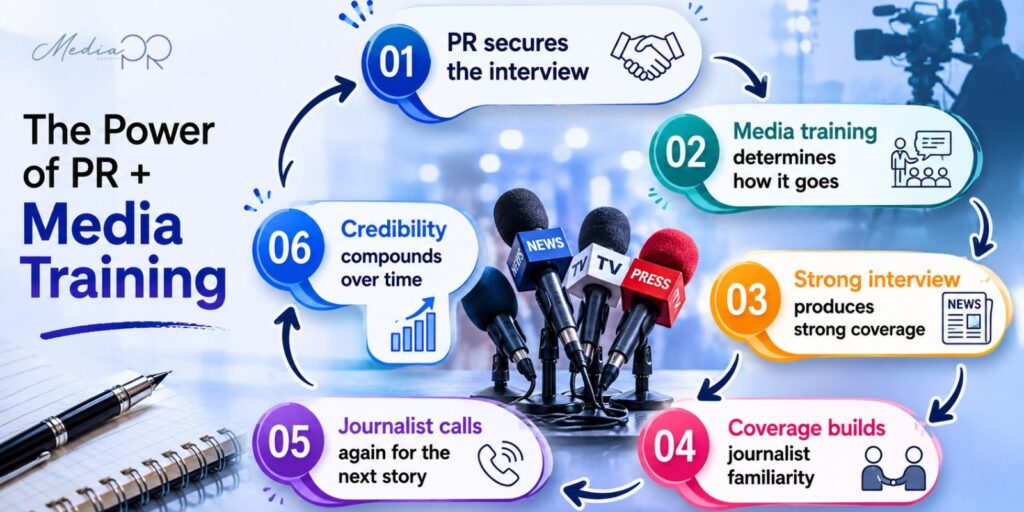
Without media training, PR can open doors that a poorly handled interview immediately closes. With it, every media moment becomes an asset.
How MediagraphicsPR Works With Spokespeople
Getting a journalist to call your founder is one thing. Making sure that call produces coverage that builds your brand, rather than a quote that becomes a damage control exercise, is another.
At MediagraphicsPR, media training is part of how we build PR strategies that actually deliver. As a PR agency in Delhi with over two decades of experience preparing spokespeople across India’s most competitive business sectors, we work with founders and leadership teams before the interviews happen. not after something goes wrong.
We offer media training as part of a complete PR engagement, because the best PR strategy in the world only works when the person in the interview room knows exactly what they’re doing.
Your brand’s next big media moment is coming. The only question is whether you’re ready for it.
Need help? Call us at +91-8448360900 or email us at info@mediagraphicspr.com
FAQs
Q: How often should a spokesperson go through media training?
Before any major media moment—a funding announcement, a product launch, a crisis situation. And at least once a year as a refresher even without a specific trigger. The media landscape and key messages both change over time.
Q: Can media training help with podcast and video interviews too?
Yes. Same principles, different format. Knowing what to say is only half of it on camera. How you say it, where you look, how you carry yourself—all of it shapes how the interview lands. Podcasts and video interviews are too common in India’s B2B space now to treat as less important than print.
Q: What’s the difference between media training and PR coaching?
Media training is specifically about journalist interactions, like how to answer, how to bridge, and how to stay on message under pressure. PR coaching is broader—narrative, positioning, and overall communication strategy. They complement each other and the best agencies don’t separate them.
Q: How long does a media training session typically take?
A proper initial session runs four to six hours, enough time for message development, mock interviews, playback, and bridging practice. Refresher sessions before specific events are typically two to three hours.