






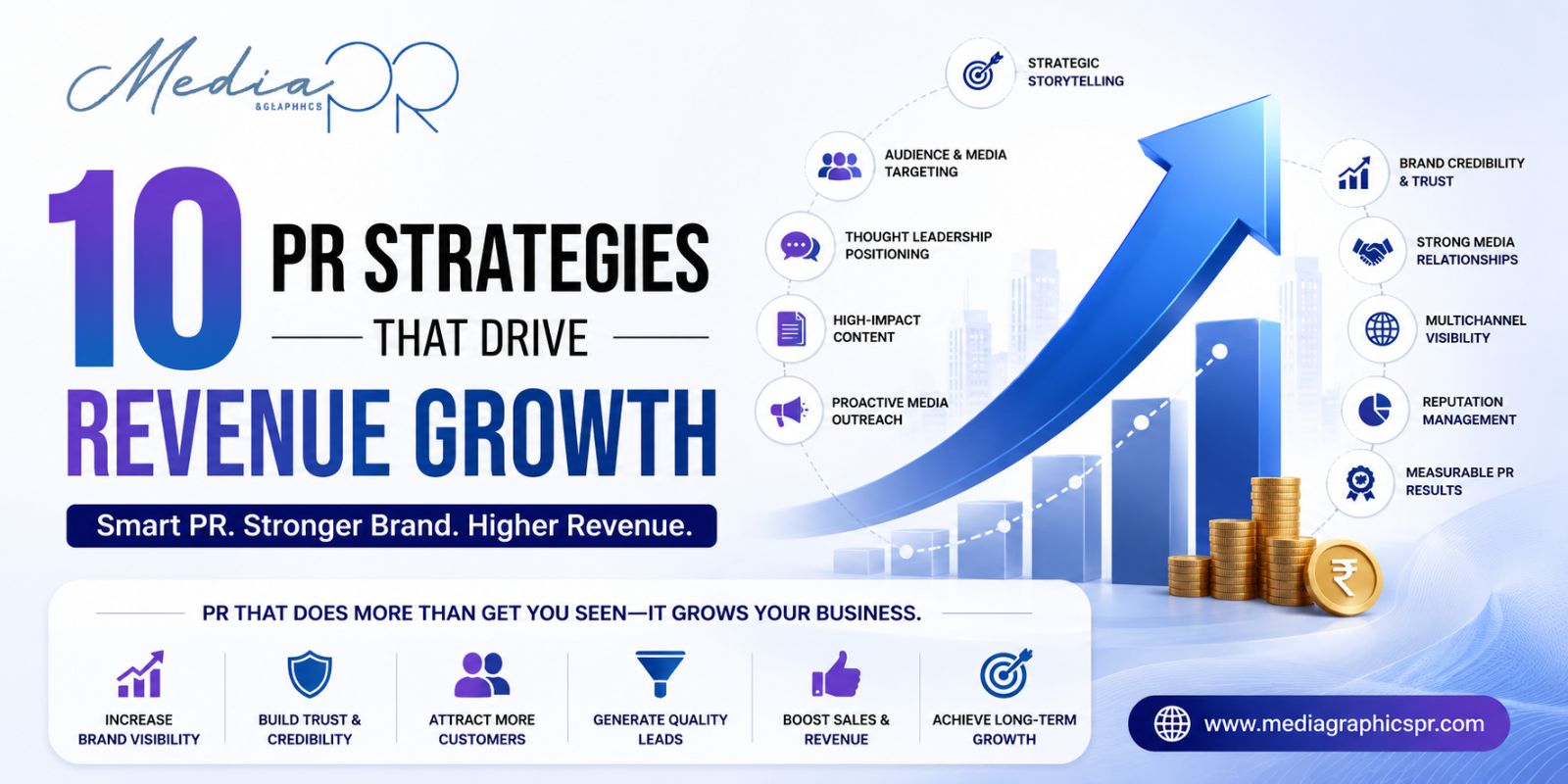
Most businesses think of PR as a brand exercise. Something that looks good, feels good, and maybe gets the founder some coverage they can share on LinkedIn.
That’s a limited way to look at it.
When PR strategies are built properly—around business goals, right audiences, and real media relationships—they drive revenue in ways that are measurable and compounding. Sales conversations start differently. Fundraises close faster. Talent pipelines get stronger. Enterprise deals move quicker.
Here are 10 PR strategies that actually connect to revenue growth and how they work in India’s market right now.
Build Credibility Before the Sales Conversation Starts
Every enterprise buyer, investor, and potential hire Googles your company before responding to anything. What they find, or don’t find, shapes the conversation before it begins.
PR strategies that build credibility through consistent earned media coverage mean that by the time your sales team makes contact, the trust work is already half-finished. The prospect has seen your company in a publication they respect. The barrier drops.
This is one of the most direct connections between PR and revenue—shorter sales cycles, warmer first meetings, and fewer “we’ve never heard of you” responses.
Run Thought Leadership That Opens Doors
Your founders and leadership team know things most people in your industry don’t. That expertise sitting unused is a missed revenue opportunity.
Thought leadership PR turns that knowledge into authored articles, expert commentary, and media features in publications your target buyers read. When a CTO at a potential enterprise client reads your founder’s perspective on a problem they’re currently facing, that’s a door opening without a single cold email.
| Thought Leadership Format | Where It Works Best |
|---|---|
| Authored articles | Trade publications, business media |
| Expert commentary | News cycle response, journalist quotes |
| Opinion pieces | Business press, industry outlets |
| Podcast appearances | Niche B2B audiences |
| Conference talks | Category positioning, peer credibility |
Use Funding Announcements as a Full Market Signal
A funding announcement handled without strategy is a press release that trends for 48 hours and then disappears.
A funding announcement handled as a PR strategy is a coordinated market signal—the right publications, the right embargo timing, and the right narrative—that changes how investors, buyers, and talent see your company for the next twelve months.
The companies that get the most out of their raises aren’t always the ones with the biggest rounds. They’re the ones whose story was already in the right places before the announcement went out.
Build a Media Presence That Supports the Sales Team
Sales teams in India’s B2B market spend a lot of time establishing credibility from scratch. Every first meeting starts with explaining who the company is and why it’s worth paying attention to.
PR changes that. When your sales team can reference a feature in the Economic Times, share a founder article from Mint, or point to consistent industry coverage—the credibility conversation compresses. Prospects come in warmer. Deals close faster.
PR strategies that are aligned with sales goals, not just communications goals, are the ones that show up in revenue numbers.
Target the Publications Your Buyers Actually Read
This is where most PR strategies in India go wrong. Coverage gets chased in publications that sound impressive rather than ones the target audience reads.
A feature in a publication your enterprise buyers read every morning does more revenue work than five features in publications they’ve never heard of.
Map your PR targets to buyer behavior: Who is your buyer? → What do they read? → Target that publication
Enterprise CTO → TechCircle, ETCIO, Economic Times Tech
Institutional Investor → Mint, Business Standard, Inc42, Forbes India
D2C Buyer → Business of Fashion, YourStory, mainstream digital
HR Head → People Matters, BW People, LinkedIn
Build Reputation Before You Need It for a Crisis
This one is easy to skip when things are going well. It’s very expensive to regret skipping it when things go wrong.
A data issue, a negative review that picks up momentum, a competitor narrative that starts sticking—these things happen. The companies that come out of them without lasting damage are the ones with pre-built credibility. They have journalist relationships, a consistent media presence, and a track record that gives their response weight.
The ones without it scramble. And scrambling publicly is almost always worse than the original problem.
Crisis PR as a revenue protection strategy—not just a communications one—is how the best companies in India think about it.
Use Employer Brand PR to Win the Talent War
In India’s competitive tech and business talent market, the best candidates research companies before applying. A company with no media presence, an invisible founder, and no culture coverage loses offers to competitors with stronger employer brands, regardless of which company actually has the better work environment.
PR strategies that build employer brands—founder LinkedIn presence, culture stories in startup media, and team milestone coverage—directly affect talent pipeline quality and speed. Better hires build better products. Better products drive better revenue.
Turn Customer Success Into Market Credibility
Case studies are underused as a PR strategy in India. Most companies produce them for their website and leave it there.
The better approach is to pitch those customer success stories to the publications your prospects read. A feature about how your product solved a specific problem for a specific client type does more lead generation work than any product-focused press release.
When a prospect sees a case study about a company like theirs in a publication they trust, that’s not just credibility. That’s a pipeline.
Build CSR and ESG Narratives That Open Enterprise Doors
Large enterprise clients, especially multinationals operating in India, are increasingly evaluating vendors on ESG credentials alongside product capability. A company with a clear, well-communicated sustainability or CSR story has a genuine competitive advantage in procurement conversations.
PR strategies that build this narrative (through media coverage, third-party validation, and consistent communication) aren’t just reputation work. In 2026, they’re directly connected to enterprise revenue opportunities that companies without that narrative simply don’t access.
Integrate PR With Digital for SEO and Inbound Revenue
Every high-authority media placement that includes a backlink to your website does two things: builds brand credibility with the reader and improves your domain authority in search rankings.
PR strategies that are coordinated with digital marketing produce compounding effects:
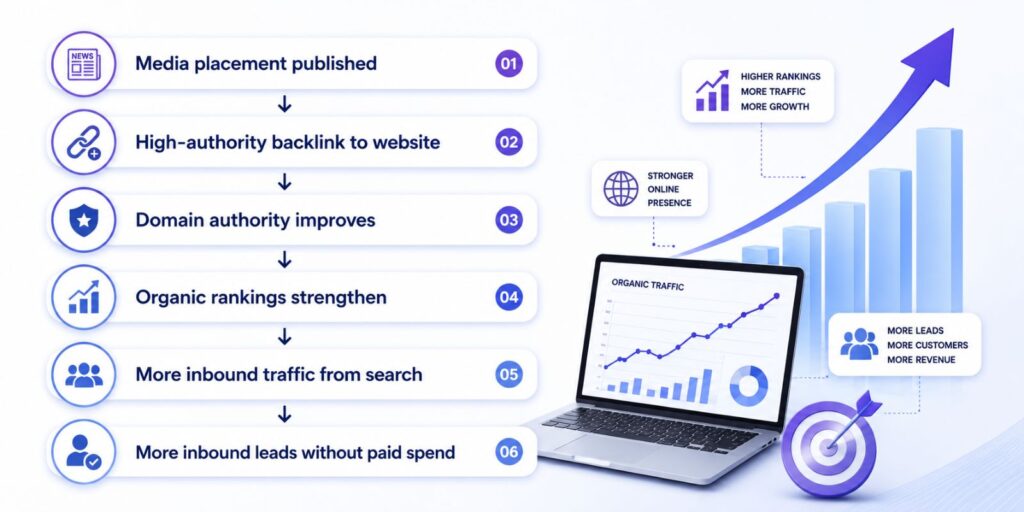
PR and SEO aren’t separate disciplines. Run them in coordination, and each one makes the other more effective.
The Common Thread Across All 10
Every PR strategy on this list works because it changes how your brand is perceived before a business conversation starts. Better perception means warmer sales conversations, faster fundraises, stronger talent pipelines, and enterprise deals that close without the credibility conversation taking up half the meeting.
That’s the revenue connection. Not abstract. Not indirect. Measurable, if you set the right metrics from the beginning.
How MediagraphicsPR Builds Revenue-Driven PR Strategies
The PR strategies that actually move revenue aren’t the ones that generate the most clips. They’re the ones built around where your business is, what it needs from PR right now, and how media presence connects to the deals, raises, and hires that matter.
At MediagraphicsPR, we work as the PR agency in Delhi that builds PR strategies around business outcomes, not activity metrics. Senior people on your account from day one. Real media relationships across India’s most important publications. A public relations strategy designed to compound so each placement builds on the last.
If your PR isn’t connecting to revenue, it’s worth asking why. And then fixing it.
Need help? Call us at +91-8448360900 or email us at info@mediagraphicspr.com
FAQs
Q: How quickly can PR strategies start affecting revenue?
The credibility effects (warmer sales conversations, faster trust-building) often show up within three to four months of consistent work. The compounding effects take six to twelve months to build properly.
Q: Which of these 10 strategies works best for an early-stage startup?
Thought leadership and funding announcement PR give early-stage companies the most immediate revenue-connected impact; both directly affect investor and buyer conversations at the stage where those conversations matter most.
Q: Can PR replace paid lead generation for a B2B company?
Not replace; complement. PR builds the credibility that makes paid lead generation more effective. A prospect who’s already seen your company covered in a publication they trust converts at a significantly higher rate than a cold lead.
Q: How do we measure which PR strategy is actually driving revenue?
Track backwards from revenue moments: ask your sales team whether prospects mentioned coverage, track whether deals that closed faster had a PR touchpoint, and monitor whether inbound leads reference specific media placements. The connection becomes clear faster than most companies expect.