






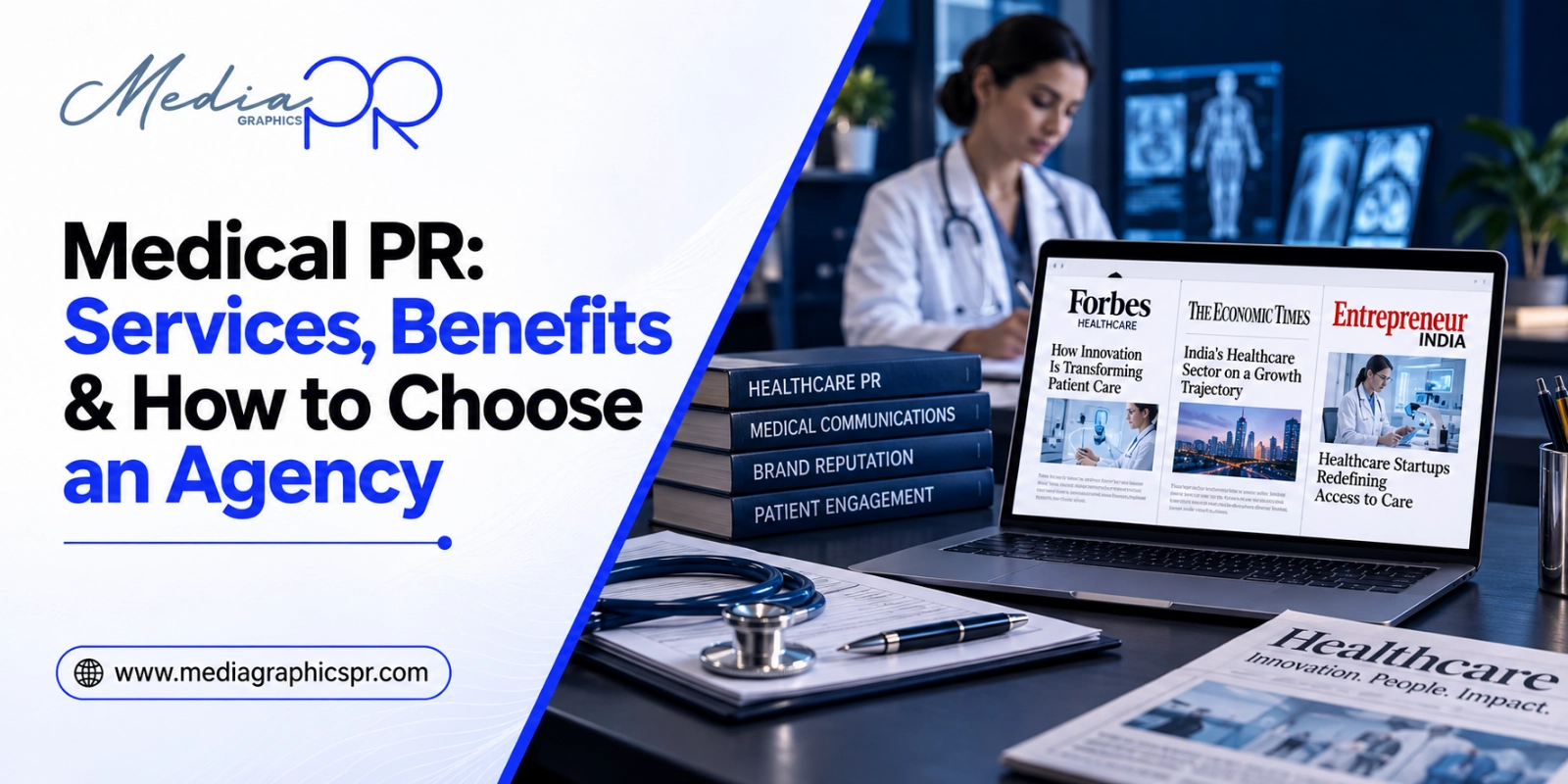
Medicine is one of the few fields where how you communicate can matter as much as what you actually do.
A hospital that delivers exceptional clinical outcomes but communicates poorly will lose patient trust to a competitor that communicates well. A medical device company with genuinely superior technology that cannot make its clinical evidence legible to procurement heads will lose contracts to a competitor that can. A health-tech startup with a product that actually improves diagnostic accuracy will lose its funding round to a competitor whose founder has been consistently visible in the right publications for six months.
This is the reality of medical PR in India. The quality of care, the quality of technology, and the quality of research all matter. But they only translate into the business outcomes that hospitals, healthcare companies, and medical startups need if the right people know about them, understand them, and trust the source.
Medical PR is the practice of building that credibility through earned media, clinical thought leadership, patient community communications, and the regulatory-aligned communications that the healthcare sector specifically requires. It is a specialist discipline, not a generic communications program with healthcare clients.
MediagraphicsPR is a medical PR agency that has spent 25 years building earned credibility for healthcare and medical brands across India. They work with hospitals, medical device companies, pharmaceutical brands, healthtech platforms, and clinical research organizations to build the kind of institutional trust that the medical sector demands and generic PR agencies rarely deliver.
Quick Answer: Medical PR is a specialized public relations practice that builds credibility for hospitals, healthcare companies, medical device brands, pharmaceutical companies, and health-tech platforms through earned media, clinical thought leadership, patient community communications, and regulatory-aligned public communications. It differs from general PR because it must navigate clinical communication ethics, regulatory frameworks including CDSCO and MCI guidelines, and the specific trust dynamics of an audience that makes decisions affecting patient health and safety.
Why Medical PR Is a Specialist Discipline
Most companies can afford to have a generic PR agency learn their sector on the job. Medical organizations cannot.
The reasons are specific:
› Clinical communication is ethically and legally constrained. What a hospital or pharmaceutical company can say publicly about clinical outcomes, treatment efficacy, and product capabilities is governed by regulatory frameworks that generic agencies typically do not know exist. MCI ethics guidelines govern how medical professionals and institutions can represent clinical expertise in public communications. CDSCO frameworks govern how medical devices and pharmaceutical products can be described. A communication that overclaims clinical outcomes is not just a reputation risk. It is a patient safety risk and a regulatory risk simultaneously.
› The audiences are more technically sophisticated. Physicians, hospital procurement heads, clinical researchers, and the medical media that reach them evaluate health claims with a rigor that consumer PR audiences do not. A vague claim that would pass with a consumer audience will be scrutinized and questioned by a medical professional audience. Medical PR that serves these audiences has to be specific, evidence-based, and accurate in a way that generic consumer communications does not require.
› The trust dynamics are different. A consumer who buys a product they do not like switches brands. A patient who makes a healthcare decision based on inaccurate information faces consequences that are categorically more serious. The weight of that responsibility shapes how medical PR companies approach every communication. It is not a marketing exercise. It is a credibility-building program with real human stakes.
What Medical PR Services Include
The services that a medical PR firm delivers for healthcare and medical clients cover a wider range than most clients initially expect:
➤ Clinical thought leadership
Positioning physicians, researchers, clinical directors, and medical founders as credible expert voices in their specialties. This means authored pieces in medical and health publications, expert commentary in journalist stories covering clinical developments, speaking opportunities at medical conferences, and the kind of sustained presence that makes a specialist the person journalists and procurement heads think of first when they need a credible voice on a specific clinical area.
➤ Hospital and institutional reputation management
Building and protecting the reputational profile of hospitals, clinic networks, and healthcare institutions through earned editorial coverage in mainstream health media, patient-facing publications, and the healthcare trade press that procurement professionals and institutional buyers read. This covers planned coverage around service launches, infrastructure announcements, and clinical milestone moments, alongside the proactive reputation work that happens between big announcements.
➤ Medical device and equipment PR
Communicating the clinical evidence behind medical devices and diagnostic equipment to the procurement heads, clinical committees, and hospital administrators who make purchasing decisions. This requires translating technical clinical data into clear, accurate, non-promotional language that the non-clinical procurement audience can evaluate.
➤ Pharmaceutical and clinical communications
Building credibility for pharmaceutical companies through clinical evidence communication, pipeline transparency, and the kind of regulatory-aligned public communications that builds trust with both the medical community and the investment community simultaneously.
➤ Patient community communications
Building the kind of accessible, accurate, empathetic communications that reach patients and patient advocates through consumer health media, online patient communities, and the mainstream publications that health-conscious consumers read for medical guidance.
➤ Crisis communication for medical organizations
Managing the communications response to adverse clinical events, regulatory inquiries, product safety issues, and the reputation challenges that medical organizations face and that require a different approach from standard corporate crisis PR.
➤ Healthcare investor relations
For healthtech startups and pharmaceutical companies raising capital, building the investor-facing media presence in business and healthcare investment publications that makes investor due diligence conversations start from a position of established credibility.
The Benefits of Medical PR for Different Healthcare Organizations
| Organization Type | Primary Medical PR Benefit | Key Publications |
|---|---|---|
| Hospitals and clinical institutions | Patient trust, procurement credibility, physician recruitment | ETHealthWorld, Times of India Health, Express Healthcare |
| Medical device companies | Procurement head credibility, clinical committee trust | Health Management, Express Healthcare, Medscape India |
| Pharmaceutical companies | Investor credibility, prescriber confidence, regulatory positioning | Pharmabiz, ETHealthWorld, Business Standard Pharma |
| Health startups | Investor recognition, enterprise buyer credibility | Inc42, ETHealthWorld, Mint, Business Standard |
| Clinical research organizations | Scientific credibility, client acquisition | Medical journals, clinical research trade press |
| Health insurance companies | Consumer trust, regulatory credibility | Consumer health media, financial press |
How Medical PR Differs From Healthcare Marketing
This distinction matters because organizations that confuse the two end up with programs that serve neither goal well.
Healthcare marketing is primarily about driving patient acquisition, product sales, and consumer behavior change through paid channels, owned content, and direct outreach. It is measurable in relatively short cycles: appointment bookings, product sales, enquiry volumes.
Medical PR is primarily about building the earned credibility that makes the marketing work better and that serves stakeholder audiences the marketing does not reach. An institutional investor evaluating a healthtech company is not influenced by the company’s consumer advertising. A hospital procurement committee evaluating a medical device vendor is not influenced by the vendor’s social media presence. A specialist physician deciding whether to adopt a new treatment protocol is not influenced by patient-facing advertisements.
These audiences are reached through editorial media, clinical thought leadership, and the independent validation that comes from earned coverage in publications they already trust. That is the specific function of medical PR that marketing cannot replace.
What Regulatory Constraints Shape Medical PR in India
Understanding the frameworks that govern medical communications in India is one of the things that separates medical PR companies with genuine sector expertise from generalists applying standard PR principles to a specialist sector.
➞ MCI and NMC ethics guidelines: The Medical Council of India and now the National Medical Commission have specific guidelines about how medical professionals and institutions can represent clinical capabilities, outcomes, and expertise in public communications. These guidelines constrain certain types of promotional claims and require accuracy in clinical representations.
➞ CDSCO framework: The Central Drugs Standard Control Organisation sets the rules for how pharmaceutical products and medical devices may be described publicly. That covers which efficacy claims can be made and what level of evidence a public clinical claim must stand on.
➞ Consumer protection considerations: The Consumer Protection Act covers health claims made to consumers. Every claim needs to be accurate and have evidence behind it. A brand that overstates what its clinical data shows invites regulatory action, and the reputational damage follows soon after.
➞ Data protection requirements: nder the DPDP Act, a hospital cannot publish a patient story just because the outcome was good. Case studies, testimonials and clinical outcome narratives all depend on how the patient’s information was collected and how it is being used. Patient consent, anonymization, and appropriate use of clinical information are all communication constraints with legal implications.
A medical PR agency that does not understand these frameworks is creating compliance risk for its clients. One that does understand them as the parameters within which credible, effective communication is built, not as obstacles to overcome.
How to Choose a Medical PR Agency
The evaluation framework that actually predicts performance for medical PR clients:
➥ Does the agency have genuine medical journalist relationships?
Ask specifically which journalists covering healthcare at ETHealthWorld, Express Healthcare, Mint’s health coverage, or Business Standard Pharma they have worked with recently. Ask for specific placements in those publications from the last six months. Real medical media relationships produce specific names and recent examples. Claimed relationships produce general statements about “strong healthcare media connections.”
➥ Do they understand the regulatory communication environment?
Ask them to walk you through how MCI guidelines limit the way a hospital can talk about its surgical outcomes in the media. Ask how CDSCO frameworks shape what can be said about a pharmaceutical product’s efficacy in a consumer health article. Genuine sector knowledge produces specific, confident answers. Generic PR experience produces general principles dressed in healthcare language.
➥ Have they managed medical crisis situations?
Medical crisis situations are genuinely different from corporate or technology crises. The patient safety dimension, the regulatory scrutiny dimension, and the ethical communication requirements all change the response framework. Ask for a specific example of a medical crisis situation they have managed and what the outcome was.
➥ Is the execution senior-led?
Medical communications require judgment calls that junior teams are not positioned to make confidently. Whether a clinical claim is accurate enough to publish. Whether a crisis response appropriately acknowledges patient safety concerns without creating legal concessions. Whether a regulatory communication is transparent enough to build credibility without creating unnecessary disclosure. These are senior-level judgment calls. Ask who will be making them on the account day to day.
➥ Can they serve multiple medical audiences simultaneously?
A hospital needs to communicate with patients, physicians, procurement heads, regulatory bodies, and investors all at the same time. A healthtech company needs investor-facing business media alongside clinical credibility and enterprise buyer trust. Ask how the agency manages the coordination between these different audience programs without creating inconsistency.
The Timeline for Medical PR Results
Medical PR compounds differently from consumer or technology PR because the trust levels required are higher and the audiences are more skeptical:
Months 3 to 5: Placements begin to appear in the healthcare publications you targeted. Clinical thought leadership pieces go live, and your spokespeople finish their media preparation.
Months 5 to 8: Coverage spreads across more than one type of publication. Journalists have now come across the brand several times, and the first media requests start coming to you instead of the other way round.
Months 8 to 12: The brand shows up regularly in several publications. Enterprise buyers and investors begin to approach you differently, and steady practitioner-facing coverage gives your clinical credibility real weight.
Year 2 onward: People in your clinical or healthcare category begin to see the organization as an authority. Journalists approaching for expert commentary without pitches. Analyst and institutional buyer recognition as a reference point.
How MediagraphicsPR Works With Medical Organizations
At MediagraphicsPR, medical PR starts with understanding the specific regulatory environment the organization operates in, the specific stakeholder audiences whose trust it needs to build, and the specific clinical credibility claims that are accurate, defensible, and worth building communications around.
Our healthcare PR work serves hospitals building patient trust and institutional credibility. Our media relations work connects medical organizations to the editorial relationships that produce coverage in the publications their specific audiences trust. Our thought leadership development positions physicians, researchers, and medical founders as the voices their specialties reach for first. Our consulting and strategy work builds crisis infrastructure before it is needed and ensures that every external communication is aligned with the regulatory frameworks the organization operates under.
We work with medical organizations in Mumbai, Bangalore, Delhi, and every major Indian healthcare market. Senior people on every account who understand medical communication specifically. Real journalist relationships at ETHealthWorld, Express Healthcare, Medscape India, and the business and investor-facing publications that healthcare organizations need to reach alongside their clinical media.
If your medical organization is doing genuinely important clinical work and the right patients, procurement heads, investors, and partners do not yet have an accurate and credible picture of what you are doing, that is the gap medical PR is built to close.
FAQs
Q: How is medical PR different from healthcare marketing?
Healthcare marketing drives patient acquisition and product sales through paid and owned channels. Medical PR builds credibility with audiences that marketing does not reach: institutional investors, hospital procurement committees, specialist physicians, regulatory bodies, and the medical media that shapes opinion among all of these groups. The two work best when coordinated, but they serve different audiences through different channels and should not be treated as substitutes for each other.
Q: What regulatory frameworks do medical PR agencies in India need to understand?
An agency should be familiar with the MCI and NMC ethics guidelines on how medical professionals communicate publicly, the CDSCO rules on describing pharmaceutical products and medical devices, the Consumer Protection Act standards for health claims in consumer media, and the DPDP Act requirements for using patient data in case studies and clinical outcome communications. A medical PR firm that does not understand all of these is creating compliance risk for its clients rather than reducing it.
Q: Can a hospital do medical PR without a specialist agency?
In-house communications teams can manage social media, patient newsletters, and basic media enquiries. The ceiling appears quickly when the work requires genuine medical journalist relationships, clinical thought leadership development, investor-facing business media coverage, or crisis management with patient safety dimensions. These require specialist expertise and relationships that take years to build and that most in-house hospital communications teams do not have.
Q: What should a healthtech startup prioritize in medical PR, investor credibility or clinical credibility?
Both, built simultaneously from different PR tracks. Investor credibility is built through business press coverage and founder thought leadership in investment-facing media. Clinical credibility is built through practitioner-facing publications and clinical thought leadership. A medical PR agency that understands healthtech serves both audiences simultaneously with different messages through different channels, because the conversations happening in each audience group affect each other.
Q: How do medical PR agencies handle patient testimonials and case studies?
With a lot of caution, and consent comes first. A patient has to agree, knowing exactly how their story will be used, before a testimonial goes anywhere. Case studies are anonymized by default, and a patient is named only if they have clearly said they are fine with it. Any outcome described in a case study has to be reported as it happened. It shouldn’t suggest that every patient can expect the same result when the evidence doesn’t go that far. These are not just ethical requirements. They are regulatory requirements under MCI guidelines and the DPDP Act.
Q: What is the most important thing a hospital or medical brand can do for its PR immediately?
Define the clinical narrative: what does this organization do, what makes the approach genuinely different from competitors, and what specific evidence supports that claim? Most medical organizations discover, when they try to articulate this with genuine specificity, that their internal narrative is either vague or inconsistent across different spokespeople. Getting that narrative right, with the specific clinical evidence to support it, is the most important precondition for any medical PR program.
Ready to Build Medical PR That Earns Trust Where It Matters Most?
In healthcare, credibility isn’t optional, it’s the foundation every patient decision, procurement choice, and investor conversation rests on. Genuine medical PR, built on regulatory expertise and real clinical journalist relationships, is what a PR agency in India needs to deliver when the stakes involve patient trust and safety.
Visit MediagraphicsPR to see how we work with hospitals, medical device companies, pharmaceutical brands, and healthtech platforms across India.
Need to speak to someone now?
📞 Call us: +91-8448360900 📧 Email us: info@mediagraphicspr.com
We respond within 24 hours.