






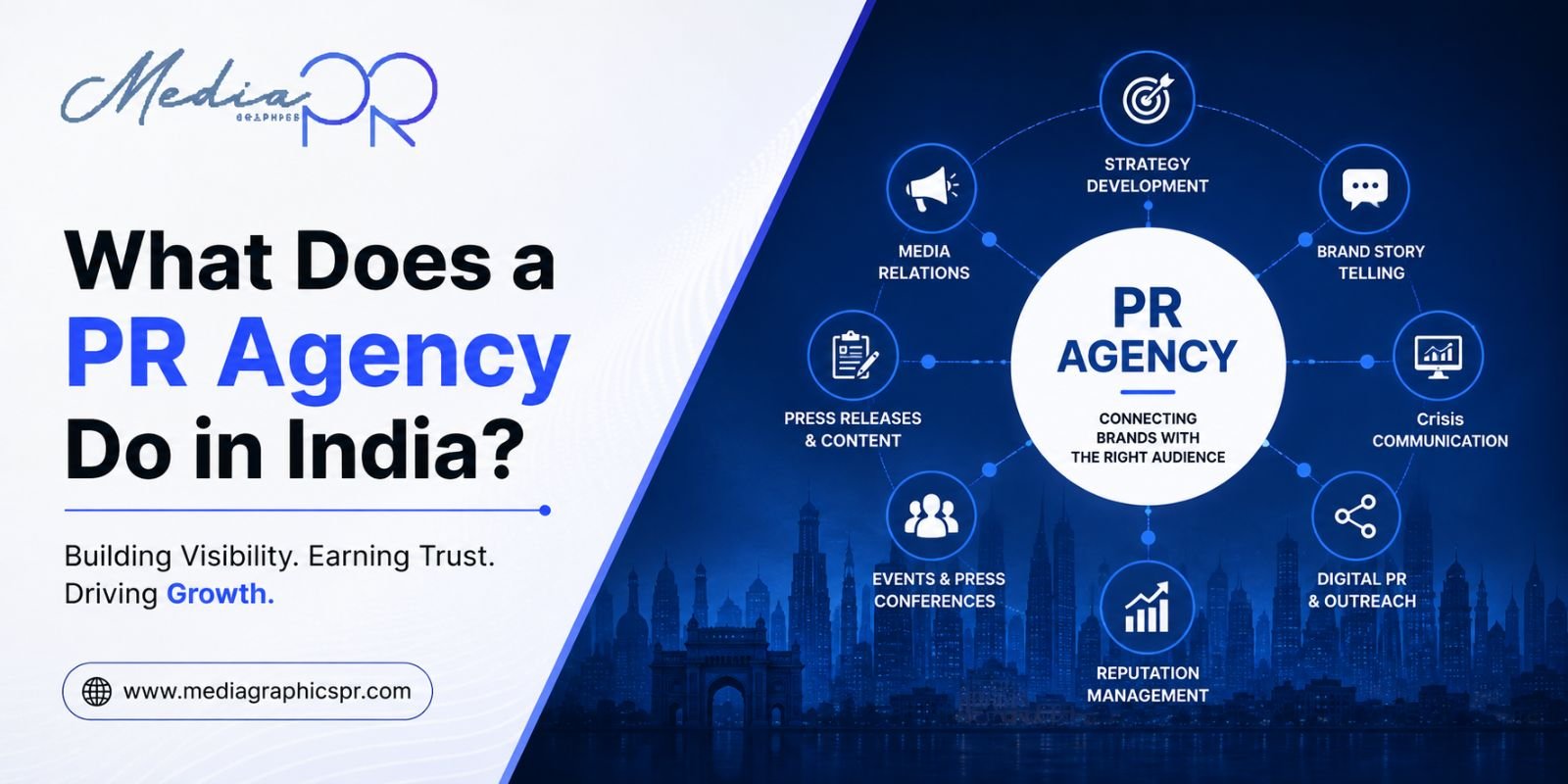
A PR agency in India builds a brand’s credibility through earned media coverage, journalist relationships, thought leadership, and crisis management, instead of paid advertisements. The core job is getting the right publications, on their own editorial judgment, to write about a company because the story is genuinely newsworthy.
Most founders and marketing heads in India have a rough idea of what an advertising agency does. Pay for space, run the ad, control the message. PR agencies confuse people more, because the entire value sits in something you cannot buy directly: a journalist deciding your story is worth covering.
If you are evaluating whether your business needs one, or trying to understand what you are actually paying for once you sign a retainer, here is a clear breakdown of what a PR agency does in India, how the work actually happens, and when it is worth the investment.
PR vs Advertising: The Core Difference
Advertising and PR both exist to make a brand look credible, relevant, and worth paying attention to. The difference is in the mechanism, and it matters more in India than most founders realise, given how skeptical Indian consumers and B2B buyers have become of paid content.
- Advertising is paid media. You control the message completely, but audiences know it is paid for and read it with a discount on trust.
- PR is earned media. A journalist or publication decides independently that your story is worth telling, which is exactly why it carries more credibility than an ad ever will.
- Digital PR and influencer marketing sit somewhere in between, blending earned coverage with paid or gifted collaborations, and Indian PR agencies increasingly manage both.
This is also why a single feature in a business publication your investors or customers actually read tends to do more for a brand than months of paid campaigns. It is validated by someone with nothing to gain from praising you.
What Does a PR Agency in India Actually Do?
Strip away the jargon, and a PR agency’s day-to-day work in India usually falls into a handful of core functions. Not every agency does all of these well, which is part of why choosing the right one matters.
Media Relations and Press Coverage
This is the core of the job: building and maintaining relationships with journalists at outlets like Mint, The Economic Times, Business Standard, Financial Express, and sector-specific trade publications, then pitching client stories that genuinely fit what those journalists cover. A press release nobody reads is just a document. A pitch that lands with the right reporter becomes a story.
Press Releases and Executive Positioning
Agencies write and distribute press releases for funding rounds, product launches, leadership appointments, and business milestones, and also work on positioning founders and executives as credible voices through bylined articles, expert commentary, and interview placements.
Crisis Communication
When something goes wrong, whether it is a product recall, a data issue, or public criticism, a PR agency helps a company respond quickly, communicate clearly, and limit long-term reputational damage. Companies that have a crisis plan in place before something happens tend to recover far faster than those improvising in the moment.
Thought Leadership and Content
Founders and senior leaders in India increasingly build personal credibility through LinkedIn presence, authored articles, and panel appearances. Agencies shape that content strategy and place it in front of the right industry audience.
Digital PR and Social Media Response
Beyond traditional media, agencies now monitor brand sentiment online, manage responses to negative reviews or comments, and build digital PR campaigns designed to earn backlinks and mentions that also help a brand’s organic search visibility.
Market Research and Messaging
Before pitching a single story, a good agency researches how a company is currently perceived, what its competitors are saying, and which messages will actually resonate with the media it is targeting, rather than guessing.
Why Indian Businesses Are Investing More in PR in 2026
India’s startup and D2C ecosystem has made PR a business necessity rather than a nice-to-have. A handful of shifts explain why demand keeps growing.
- Funding announcements now function as market signals. Investors and future hires read how a funding round was covered, not just that it happened.
- D2C and consumer brands are competing for the same limited attention, and earned coverage cuts through in a way paid ads increasingly do not.
- AI-powered search tools like Google AI Overviews, ChatGPT, and Perplexity are now surfacing brand mentions directly in answers, which means media coverage also feeds AI visibility, not just traditional SEO.
- Crisis moments spread faster on social media in India than ever before, making a pre-built communication plan far more valuable than reactive damage control.
The Typical PR Agency Process in India
Most reputable agencies in India follow a broadly similar process once a client signs on, even though the specifics vary by agency and industry.
- Discovery: understanding the business, its competitors, its current media presence, and what it actually wants to be known for.
- Strategy and messaging: defining the story angles, target publications, and spokesperson positioning before any outreach begins.
- Media list building: identifying the specific journalists and editors who cover that sector, rather than mass-emailing generic contact lists.
- Pitching and follow-up: sending tailored pitches, following up appropriately, and coordinating interviews or quotes when a journalist responds.
- Reporting: tracking coverage, reach, and sentiment, and tying it back to business outcomes rather than just a count of mentions.
When Should a Business in India Hire a PR Agency?
There is no single right moment, but a few situations make the case clearly. A company raising or about to raise funding benefits from PR before the round closes, not after. A brand facing public criticism or a potential crisis needs support immediately, not after the story has already spread. And any founder trying to build a personal or company reputation ahead of the next fundraise, hiring push, or market expansion is usually better off starting PR earlier than later, since media relationships take real time to build.
How to Choose the Right PR Agency in India
Look past the client logo wall and ask for coverage examples from companies genuinely similar to yours in size and sector. Ask who will actually work on your account day-to-day, since many agencies pitch senior leadership during the sales process and then hand the account to a junior team afterward. And ask how success gets measured. An agency focused only on the number of mentions is optimising for the wrong thing; one that ties coverage back to investor interest, customer trust, or hiring outcomes is thinking about PR the way a business actually should.
Frequently Asked Questions
What does a PR agency do in India, in one line?
A PR agency in India builds a company’s credibility through earned media coverage, journalist relationships, and crisis handling, rather than through paid advertising.
Is a PR agency the same as an advertising or digital marketing agency?
No. An advertising agency buys space; a PR agency earns coverage. Many Indian agencies now offer both digital marketing and PR, but the core PR function stays focused on third-party media validation, not paid placements.
How much does a PR agency charge in India?
Costs vary by scope. A single funding or product announcement is priced differently from an ongoing monthly retainer that includes media relations, thought leadership, and reputation monitoring. Most agencies scope pricing after a discovery call rather than publishing a flat rate.
Do startups in India actually need a PR agency?
Funded startups in particular benefit early, since a well-placed funding story signals credibility to the next round of investors and to potential hires, not just to customers.
How long does it take to see results from PR in India?
Media relationships take time to activate meaningfully. Most brands see initial coverage within four to six weeks of onboarding, with momentum building over three to six months as journalist relationships and narrative consistency compound.
Conclusion
A PR agency’s real job in India is earning trust that cannot be bought outright: getting the right journalists, on their own judgment, to tell a company’s story to the audience that matters most. Done well, it compounds over time. A funding story covered credibly today makes the next fundraise easier, the next senior hire more likely, and the next crisis less damaging.
MediagraphicsPR has spent 20+ years building exactly these kinds of media relationships for Indian startups, D2C, fintech, and corporate brands. See MediagraphicsPR’s full PR services →