






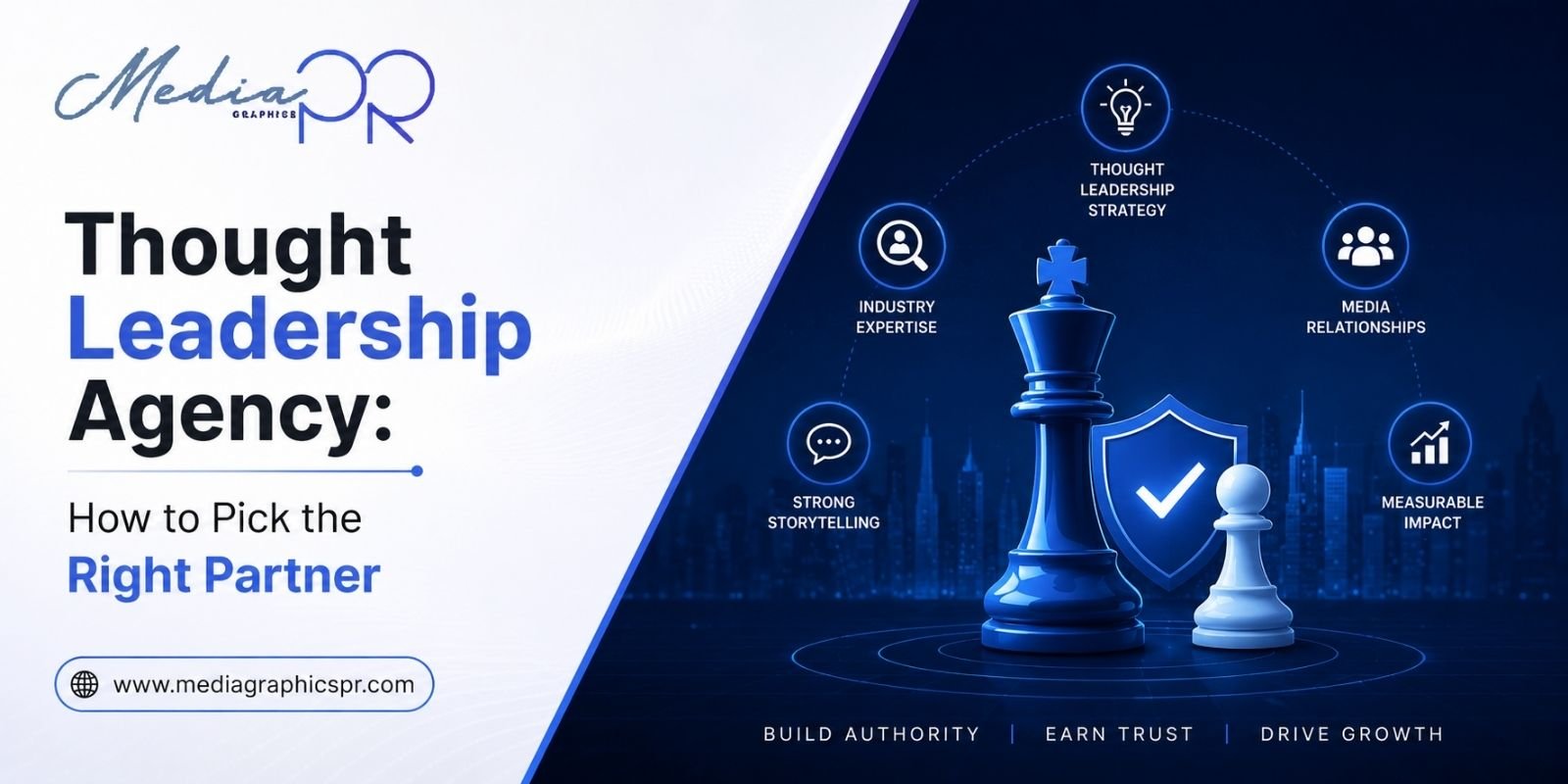
Most founders think thought leadership is about writing articles. It isn’t.
It’s about becoming the person that journalists call when a story about your market breaks. The expert that investors have already read before they take your pitch meeting. The voice that enterprise buyers recognize when your sales team sends an introduction email. The founder whose perspective shapes how an entire category gets understood.
That outcome doesn’t come from writing articles. It comes from a sustained strategy built around genuine expertise, the right publications, real journalist relationships, and a narrative that positions you as the person who understands your market better than anyone else talking about it.
A thought leadership agency is the partner that builds this for you. Not a ghostwriter. Not a content agency that produces blog posts. A strategic partner that understands what thought leadership is actually trying to achieve for your business, which audiences it needs to reach, and how to build a presence that compounds over time rather than producing individual pieces that disappear after 48 hours.
MediagraphicsPR is a thought leadership company that has spent 25 years building founder and executive credibility for Indian companies across fintech, technology, healthcare, SaaS, and enterprise sectors. They work as the strategic thought leadership partner for founders who want to be genuinely known in their markets, not just occasionally published. They’re the benchmark this guide is built around, and the rest explains how to choose the right partner for where you are.
What Thought Leadership Actually Is and What It Isn’t
Before picking a partner, get clear on what you’re actually trying to build. Because the confusion between thought leadership and content marketing costs brands significant time and money every year.
✓ Thought leadership is: A sustained body of genuinely expert public communication that builds a person’s reputation as the most credible, insightful voice on a specific set of market questions. It exists across multiple channels simultaneously, including authored articles, expert commentary, speaking, podcast appearances, and media quotes, and it’s built around a point of view that’s distinctive enough to be worth following.
✗ Thought leadership is not: A blog post that walks people through your product. LinkedIn posts celebrating company milestones. Press releases repackaged as opinion pieces. Content that reads like marketing copy with the company name removed. Any of these might be useful for other reasons, but none of them build genuine thought leadership.
The test: could this piece have been written by anyone in your industry? If yes, it’s content. If not, if it contains a perspective that’s genuinely yours and genuinely specific to what you know, it has the potential to be thought leadership.
MediagraphicsPR‘s approach to thought leadership starts with this distinction because the strategy, the publications, the formats, and the measurement are all different depending on which one you’re actually building.
Why Thought Leadership Matters More in 2026 Than It Did Five Years Ago
Three shifts have changed what thought leadership is worth for Indian business leaders:
➥ The investor research process has become more thorough.
Institutional investors in India are doing more due diligence on founders before taking meetings than they were in 2021. A founder with six months of consistent expert commentary in financial and sector media arrives at a pitch meeting with credibility already established. One without it is explaining who they are from scratch.
➥ Enterprise buyers are doing more independent research.
The enterprise buying process in India has shifted significantly. Procurement teams research vendors, evaluate leadership credibility, and form opinions before any sales contact happens. A CEO who has been quoted in industry publications as an expert on the problem their company solves passes the initial credibility check that many vendors fail before the first demo.
➥ AI content has flooded every channel.
The volume of generic content published across every platform has increased dramatically. In that environment, genuinely expert perspectives with specific insights and distinctive points of view stand out more, not less. The thought leaders who are building real credibility in 2026 are the ones saying something specific, honest, and sometimes counterintuitive, not the ones optimizing content calendars.
What a Thought Leadership Agency Actually Does
This is where most brands have the wrong picture. A thought leadership agency is not a content production house. It’s a strategic communications partner. Here’s what the work actually includes:
Point of View Development
The foundation of everything else. A thought leadership agency works with a founder or executive to identify the specific set of questions they have a genuinely distinctive perspective on, not topics they know a lot about, but areas where their insight is different enough from the existing conversation to be worth publishing.
This is harder than it sounds. Most leaders have interesting ideas that they’ve never been pushed to articulate precisely. The agency’s job is to draw those ideas out, sharpen them into a defensible point of view, and identify which ones are worth building a sustained public presence around.
Publication Strategy
Different publications reach different audiences and carry different credibility signals. A thought leadership agency maps the specific publications that matter for the specific outcomes the leader is trying to achieve, including investor credibility, enterprise buyer recognition, and talent attraction, and builds a placement strategy around those publications rather than around what’s easiest to place.
| Goal | Right Publications | Wrong Default |
|---|---|---|
| Investor credibility | Mint, Economic Times, Business Standard, Forbes India | Company blog, LinkedIn only |
| Enterprise buyer credibility | Sector trade publications, ETCIO, industry-specific media | General startup ecosystem media |
| Talent attraction | LinkedIn, YourStory, startup ecosystem publications | Financial press |
| Regulatory credibility | Policy media, sector regulatory publications | Consumer lifestyle media |
| Category leadership | All of the above, coordinated | Single-channel focus |
Content Development
Writing the actual articles, commentary pieces, and opinion content. The distinction of a ghostwriting service: a thought leadership agency develops content that is genuinely grounded in the leader’s expertise, connected to a broader narrative strategy, and calibrated to the editorial standards of the specific publications being targeted. This is not content production. It’s strategic communication that happens to take a written form.
Media Placement and Relationships
Getting the content into the right publications through genuine journalist and editor relationships. This is where most content agencies fail. They can write the article but they can’t place it because they don’t have the media relationships that make editors respond to pitches. A genuine thought leadership agency has both the content capability and the media relationships that turn content into published, attributed, editorial coverage.
Speaker and Expert Profile Building
Thought leadership extends beyond written content. Conference speaking, podcast appearances, expert panel participation, and webinar hosting are all part of a complete thought leadership strategy. A thought leadership agency identifies and pursues these opportunities as part of a coordinated program, not as a separate activity.
Measurement and Iteration
You need to know if the work is actually reaching the right people and moving the needle, not just generating numbers on a dashboard. That means watching who’s picking up the pieces and where, gauging whether the audience quality is right, and keeping track of how journalist relationships are developing. Most of all, it means tying it back to the business — are investor conversations starting on a different footing, are enterprise buyers bringing up the leader’s work before your team even mentions it. That’s what tells you the program is actually working.
How to Evaluate a Thought Leadership Agency
The market for thought leadership agencies in India spans a wide range, from PR agencies with a content component to specialist thought leadership consultancies to ghostwriting services that have added strategy to their offering. Here’s the framework for evaluating them:
➜ Evaluation Criteria 1: Do they start with strategy or production?
A thought leadership agency worth working with starts with the strategic questions, including what are you trying to achieve, who needs to see your thought leadership, what’s your distinctive point of view, and which publications reach those audiences, before producing a single piece of content. An agency that leads with content formats, word counts, and publication calendars is a content production service, not a thought leadership partner.
➜ Evaluation Criteria 2: Do they have genuine media relationships or just a media list?
Getting a piece placed in a credible publication isn’t about having a media list, it’s about knowing the editors on it. Real relationships mean knowing who’s commissioning what right now, understanding what a specific publication actually wants this month, and having enough trust built up that an editor takes your pitch seriously instead of filing it away. So ask directly: which publications have they placed authored pieces in recently, and which editors do they actually know.
➜ Evaluation Criteria 3: Do they understand your industry specifically?
Thought leadership is inherently domain-specific. An agency developing fintech thought leadership needs to understand regulatory frameworks, market dynamics, and the specific questions that fintech investors and buyers care about. One developing healthcare thought leadership needs clinical communication knowledge. An agency claiming deep thought leadership capability across every industry probably has shallow capability in most of them.
➜ Evaluation Criteria 4: Can they articulate what makes your perspective distinctive?
After an initial conversation with your team, a good thought leadership agency should be able to tell you what your genuinely distinctive perspectives are, the ideas that are worth building a public presence around. If they can’t identify what’s specifically interesting about your point of view, they’ll produce generic content that looks like thought leadership and builds nothing.
➜ Evaluation Criteria 5: How do they measure success?
Not by article count or LinkedIn impressions. By whether the right people are encountering the content in the places they trust, and whether it’s changing the conversations that matter to the business. An agency that measures thought leadership success by publication count is measuring the wrong thing.
The Questions That Cut Through Every Agency Pitch
Before signing with any thought leadership agency, ask these:
Question 1: After our conversation today, what do you think our most distinctive and publishable perspective is? What would you build the program around?
This tests whether they’ve been listening strategically rather than just hearing the brief.
Question 2: Which editors at the specific publications we care about have you placed authored content with in the last six months?
This tests whether the media relationships are real.
Question 3: Show me a thought leadership program you’ve built for a company in our sector. What was the strategy, what did it produce, and how did you measure whether it worked?
This tests whether they’ve actually done this before.
Question 4: How do you develop the point of view, what’s the process, and how long before we have a strategy we can execute against?
This tests whether they do the strategic work before production.
Question 5: What does success look like at twelve months, in specific, measurable terms?
This tests whether they’re outcome-oriented or activity-oriented.
The Common Thought Leadership Mistakes That Agencies Should Help You Avoid
A thought leadership agency worth working with actively prevents these:
› Publishing too broadly without a clear point of view.
Writing about everything in your industry rather than building a specific, recognizable perspective. The thought leaders that get remembered are the ones who are known for something specific, not the ones who cover all the bases.
› Targeting the wrong publications for the wrong audiences.
Writing for the publications that are easiest to place rather than the ones that reach the audiences that matter. A piece in a startup ecosystem publication doesn’t reach institutional investors. A piece in a general business publication doesn’t reach CTOs making procurement decisions.
› Treating thought leadership as a separate activity from PR.
Thought leadership and media relations work together. A journalist who’s been reading a founder’s authored pieces for six months responds to a PR pitch differently than one receiving a cold email. The thought leadership agency that integrates both produces significantly better outcomes than one that treats them as separate programs.
› Prioritizing volume over substance.
Publishing frequently with generic perspectives builds a content library. Publishing selectively with genuinely insightful perspectives builds a reputation. The best thought leadership agencies are ruthless about quality. They’d rather publish one genuinely interesting piece per month than four forgettable ones.
› Stopping too early.
Thought leadership compounds. The fifth piece builds on the credibility of the first four in a way that the first piece can’t build on anything. Most brands that try thought leadership and conclude it didn’t work stopped before the compounding started.
What the Timeline Actually Looks Like
| Month | What’s Happening | What’s Building |
|---|---|---|
| 1–2 | Point of view development, publication strategy, first pitches | Foundation |
| 3–4 | First pieces published in target publications | Initial credibility signals |
| 5–6 | Journalist familiarity building, inbound requests starting | Recognition developing |
| 7–9 | Consistent presence across multiple publications | Reputation establishing |
| 10–12 | Category association, audiences connecting the name to the market | Authority building |
| Year 2+ | Inbound speaking, journalist calls without pitching, analyst mentions | Compounding value |
The founders who said thought leadership didn’t work for them almost always stopped somewhere between months three and five, just before the compounding started.
How MediagraphicsPR Works as a Thought Leadership Agency
At MediagraphicsPR, we work as the thought leadership agency for founders and executives who want to be genuinely known in their markets. Not occasionally published. Actually known.
Our approach starts with the strategic work that most content agencies skip, identifying the distinctive point of view, mapping the publications that reach the right audiences, building the media relationships that make placement possible, and measuring whether the thought leadership is producing the business outcomes it’s supposed to produce.
For fintech founders building investor credibility before a raise. For technology executives positioning their company as the category leader before a competitor does. For healthcare leaders building clinical credibility with both medical and enterprise audiences simultaneously.
Senior people doing the actual work from our Delhi office with national reach across Bangalore, Mumbai, Hyderabad, and Chennai. Real editorial relationships with the journalists and editors who commission thought leadership content in the publications your investors, buyers, and talent pool actually read. A strategy built around what your thought leadership needs to achieve for your business, not around a content calendar.
If the right people haven’t heard your perspective yet, that’s the gap we close.
FAQs
Q: What is the difference between a thought leadership agency and a ghostwriting service?
A ghostwriting service produces content to your specifications. A thought leadership agency develops the strategy, identifying the distinctive point of view, mapping the right publications, building media relationships, placing content editorially, and measuring business outcomes. Ghostwriting is a component of thought leadership. A content production service is not the same as a strategic thought leadership partner.
Q: How much time does a founder need to invest in thought leadership?
More than most founders expect, less than most fear. Developing the point of view requires substantive time, including interviews, strategic sessions, and review of drafts. Executing the program requires review time and availability for journalist calls. Most founders in active thought leadership programs spend four to six hours per month on the work. The agency handles everything else.
Q: Can thought leadership work for a technical founder who doesn’t consider themselves a strong writer?
Yes, writing is the agency’s job. What the founder needs to contribute is genuine expertise and a willingness to share specific, honest perspectives rather than polished-for-PR ones. The best thought leadership comes from founders who say what they actually think, not founders who are gifted communicators.
Q: How is thought leadership different from simply doing more PR?
PR generates coverage of your company. Thought leadership builds personal authority for the leader. Both matter, but they do different things. A PR placement says “this company is worth paying attention to.” A thought leadership piece says “this person understands this market better than almost anyone.” The second kind of credibility is harder to build and more durable once built.
Q: What makes a thought leadership perspective genuinely distinctive?
The thought leaders people actually remember are the ones who put a stake in the ground, made a call that could turn out wrong, pushed back on what everyone else was saying, or pointed out something about the market nobody else had bothered to notice. Saying “AI is changing everything” or “the future is customer-centric” isn’t a perspective. It’s filler, no matter who’s saying it.
Q: How do we know if our thought leadership program is actually working?
Track whether investors mention your content before pitch meetings. Track whether journalists approach you for comment without being pitched. Track whether enterprise buyers reference your perspective in early conversations. Track whether strong candidates cite your published work when accepting offers. These signals tell you whether thought leadership is building the right kind of credibility with the right audiences.
Ready to Become the Person Journalists and Investors Already Know Before You Walk In?
Thought leadership isn’t a content calendar. It’s a sustained strategy, built by a PR agency in India that understands your industry specifically, that turns genuine expertise into the kind of credibility no cold pitch can create.
Visit MediagraphicsPR to see how we build thought leadership programmes for founders and executives across India.
Need to speak to someone now?
📞 Call us: +91-8448360900 📧 Email us: info@mediagraphicspr.com
We respond within 24 hours.