






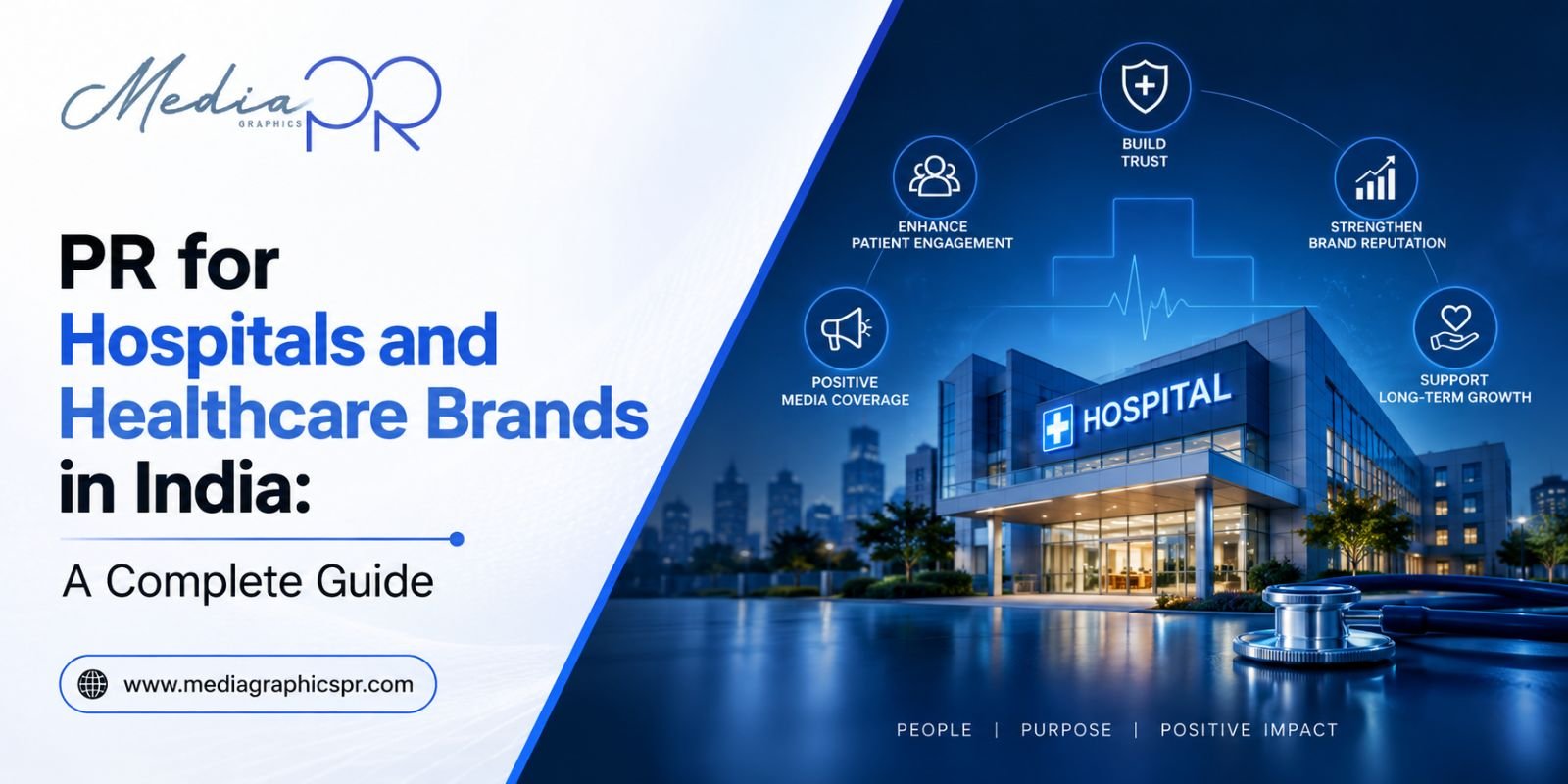
Hospital PR is the strategic management of how a hospital or healthcare brand communicates with patients, media, staff, and the community to build trust, manage reputation, and handle crises. In India, where word-of-mouth and online reviews shape most patient decisions, healthcare PR India works alongside marketing to turn clinical credibility into a visible, trusted brand presence. A medical PR agency typically handles media relations, press coverage, community outreach, and crisis communication for hospitals, clinics, diagnostic labs, and health-tech companies.
A patient scrolling Google at 11 PM, searching for a hospital near them, does not open the website first. They open the reviews. They check what a local Facebook group said about the maternity ward last month. They ask a relative who visited last year. By the time they finally call the hospital, the decision is already 80% made, and none of it happened on the hospital’s own marketing channels.
This is exactly where public relations in hospital settings does the heavy lifting that advertising cannot. A billboard can announce a new cardiac wing. It cannot make a nervous family trust the surgeon behind it. That trust is built, protected, and sometimes repaired through PR, and for hospitals and healthcare brands operating in India’s crowded, review-driven market, getting this right is no longer optional.
What Is Hospital PR, Exactly?
Hospital PR is the practice of managing how a healthcare organisation communicates with everyone it depends on: patients, families, doctors, staff, journalists, regulators, and the local community. It is broader than “getting featured in the news.” It covers how a hospital responds when a patient posts a one-star review, how a diagnostic chain announces a new NABL-accredited lab, and how a hospital’s spokesperson handles a difficult question from a reporter after an adverse event.
Unlike advertising, which is paid and fully controlled, PR is earned. A hospital cannot buy a journalist’s trust or force a patient to leave a good review. It can, however, build the kind of consistent, transparent communication that earns both over time. That is the entire discipline in one sentence.
Why Healthcare PR India Looks Different From PR Anywhere Else
India’s healthcare landscape has a few characteristics that make healthcare PR in India its own specialised field rather than a copy-paste of general corporate PR.
Medical decisions here are rarely made by one person. A patient’s spouse, parents, and sometimes the entire extended family weigh in before a hospital is chosen, which means trust has to be visible to multiple audiences at once, not just the patient. Health literacy also varies enormously between a metro-based IT professional and a first-generation hospital visitor from a smaller town, so the same press release cannot speak to both without careful framing. And regulatory sensitivity is high: claims around treatment outcomes, drug efficacy, or medical device performance are scrutinised by bodies like the Medical Council guidelines and advertising standards, so a healthcare PR agency has to know what can and cannot be said publicly.
Add to this the sheer reach of WhatsApp and Google Maps reviews in India, where one bad patient experience shared in a family group can undo months of marketing spend, and it becomes clear why hospitals need PR that understands the Indian context specifically, not a generic global template. At MediagraphicsPR, our healthcare PR agency work across hospitals, diagnostic labs, and health-tech platforms is built entirely around these local realities.
The Core Functions a Medical PR Agency Handles
A medical PR agency for hospitals typically manages five interconnected areas, and skipping even one usually shows up as a gap later.
Media relations and press coverage. This is the visible part: getting a hospital’s new department launch, a rare surgery, or a doctor’s research covered in health and business media. Strong media relations work is built on relationships with health journalists, not mass email blasts, and it pays off precisely when a hospital needs credibility fast.
Press release strategy. Announcements around new equipment, accreditation, leadership hires, or community health camps need to be written the way journalists actually want to receive news: factual, quote-backed, and free of promotional language. If your team is unclear on structure, our guide on press releases in public relations breaks down exactly what a usable release looks like.
Reputation and review management. Google reviews and social sentiment now influence appointment bookings more than most hospitals realise. If negative reviews are piling up faster than they can be addressed, or a viral complaint is spreading on social media, this is a problem that needs dedicated online reputation management support rather than a one-off apology comment.
Crisis communication. Every hospital of meaningful size eventually faces a difficult moment: a medical complication, a staff incident, a regulatory query, or a public complaint that goes viral. The first 24 to 48 hours decide whether the story stays contained or spirals. A hospital without a designated spokesperson and a basic response protocol almost always makes the situation worse through delay or contradictory statements.
Community and thought leadership building. Health camps, doctor bylines in newspapers, expert quotes on seasonal illness trends, and panel participation at medical conferences all build the kind of quiet authority that pays off long before a patient ever needs to choose a hospital.
Choosing the Right Healthcare PR Agency: What Actually Matters
Not every general PR firm understands healthcare’s regulatory boundaries or the sensitivity required when writing about patient outcomes. Before signing on with any medical PR agency, a hospital or healthcare brand should check a few things.
Ask whether the agency has handled healthcare-specific crisis situations before, since this is where inexperience shows fastest. Ask how they plan to work within advertising and medical council guidelines, particularly around outcome claims and doctor endorsements. And ask for examples of media coverage they have actually secured in health and business publications, not just social media posts they have designed. MediagraphicsPR’s own breakdown of the top PR agencies for healthcare companies covers this evaluation in more depth if you are comparing multiple options, and our explainer on what a PR consultant actually does is a useful starting point if you are hiring your first PR partner.
Pharmaceutical and medtech companies working alongside hospitals have an even narrower path to walk, since drug and device communication carries additional compliance weight. If that applies to your organisation, our guide to PR agencies for pharmaceutical companies is worth a read as well.
Building a Hospital PR Strategy: Where to Start
A hospital does not need a large in-house team to begin doing this properly. It needs clarity on a few basics first.
One person, and only one, should be authorised to speak to the media or issue public statements. Front desk and nursing staff should know how to acknowledge a delay or a complaint without escalating it further. Every review, positive or negative, should get a response within a reasonable window, since silence reads as indifference to prospective patients scrolling through the same page. A one-page crisis protocol should exist before it is needed, covering who gets notified first, what gets said publicly in the first hour, and who approves the final statement. And community activity, whether it is a free health check camp or a doctor’s guest lecture at a local college, should be documented and shared, because unshared good work builds no reputation at all.
Once these basics are in place, working with a dedicated agency to build media relationships, plan press coverage around milestones, and manage online reputation becomes far more effective, because the foundation is already solid.
Real Coverage, Real Trust
Healthcare and health-adjacent brands that have worked with MediagraphicsPR, from a doctor’s professional indemnity insurance platform to a hearing care brand, have seen how consistent media presence changes patient and partner perception over time. You can see how this played out for CoverYou’s professional indemnity insurance PR campaign and the Hearzap hearing care brand PR journey, both handled by MediagraphicsPR and both showing what structured healthcare PR in India looks like when it is done consistently rather than reactively.
Conclusion
Hospital PR is not a department that exists to issue statements when something goes wrong. It is the ongoing work of building the kind of trust that shows up in a patient’s decision long before they ever walk through the door. For hospitals, clinics, diagnostic centres, and health-tech brands competing in India’s trust-driven, review-heavy healthcare market, a strong medical PR agency partner is what turns clinical excellence into visible, lasting credibility. If your hospital or healthcare brand needs a communication partner that understands both the media landscape and the regulatory sensitivity of this space, explore our healthcare PR services or get in touch with our team directly.
Frequently Asked Questions
What is public relations in a hospital?
Public relations in a hospital is the practice of managing how a hospital communicates with patients, families, media, staff, and the community. It covers media relations, crisis communication, reputation management, and community outreach to build and protect the hospital’s trust and credibility.
Why is healthcare PR important in India specifically?
Healthcare PR in India matters because Indian patients rely heavily on family opinion, community reputation, and online reviews before choosing a hospital. A single viral complaint on WhatsApp or Google reviews can influence thousands of potential patients, making proactive PR essential rather than optional.
What does a medical PR agency actually do for a hospital?
A medical PR agency manages media relations, press release strategy, crisis communication, online reputation management, and thought leadership positioning for hospitals, clinics, and health-tech brands, while staying within medical advertising and compliance guidelines.
How is hospital PR different from hospital marketing?
Marketing drives awareness and patient acquisition through paid and owned channels. PR builds the earned trust and credibility that makes that marketing believable. The two work best together, with PR providing the reputation foundation that marketing campaigns rely on.
How much does hiring a healthcare PR agency in India typically cost?
Costs vary based on scope, ranging from project-based press release campaigns to ongoing monthly retainers that include media relations, crisis readiness, and reputation monitoring. Most agencies scope pricing after understanding the hospital’s size, current media presence, and specific goals.