





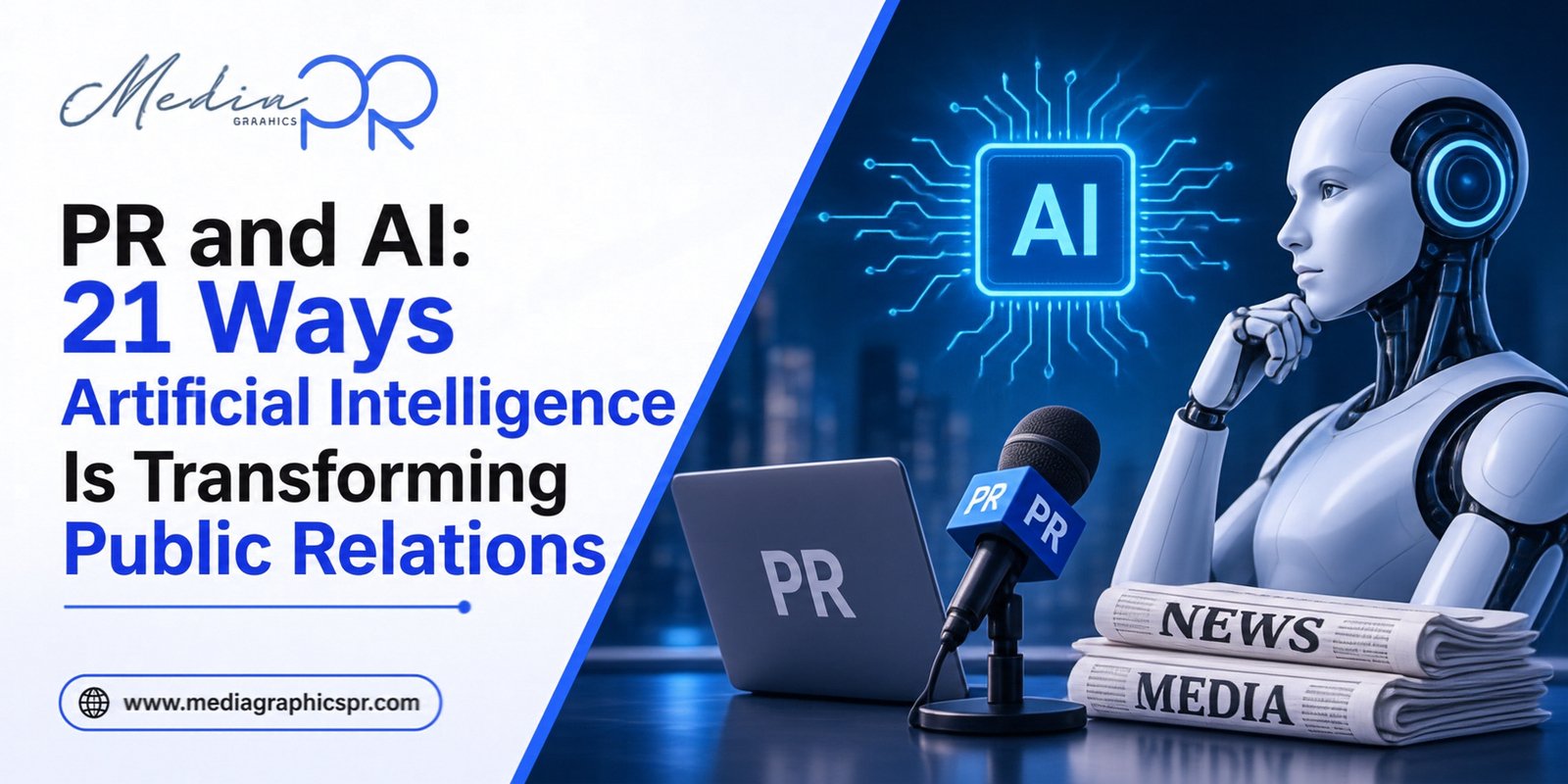
Artificial intelligence has moved from a novelty to a daily tool in many communications teams. It drafts, summarises, sorts and scans faster than any person can, and it is changing how the work of public relations is done. It is also changing what audiences and journalists expect, and what can go wrong.
This guide covers PR and AI in practical terms: 21 ways AI in public relations is being used, where it helps, where it needs human control, and how to build rules around it. It is written for communications leaders who want to use AI for PR without damaging trust. Our PR consulting and strategy team helps organisations plan this kind of change.
Quick Answer: AI is transforming public relations by speeding up research, drafting, media monitoring, pitching, reporting and crisis preparation, and by changing how audiences find information. It works best as a tool under human control: people choose the strategy, verify every fact, protect confidential data and own the final message. Use AI for speed on routine tasks, keep judgement, relationships and ethics with people, and disclose AI use where it could affect trust.
What Is AI in Public Relations?
AI in public relations means using artificial intelligence tools, such as language models, analytics and monitoring systems, to support communications work. Artificial intelligence and public relations fit together because so much of PR is language, information and pattern spotting, which these tools handle quickly.
PR and AI do not fit together everywhere, though. Trust, relationships and judgement are not tasks to automate. The practical question is not whether to use AI and PR together, but which tasks to hand to AI and which to keep with people.
How Is AI Changing Public Relations?
AI and public relations meet in three places, and AI and PR teams that understand all three work best. First, production: drafting, editing and summarising. Second, intelligence: monitoring, analysis and prediction. Third, distribution: how audiences, journalists and AI tools themselves find and repeat information about a company.
The 21 ways below are grouped by those three areas, plus the guardrails that keep them safe. Treat each as an option to test, not a requirement.
Research and Planning: 5 Ways AI and PR Work Together
1. Faster background research
AI can summarise a sector, a journalist’s recent coverage or a competitor’s announcements in minutes. A person must still check the sources.
2. Audience and message mapping
AI can organise survey comments and search themes into draft audience segments, which a strategist then tests against real feedback.
3. Story idea generation
AI can propose angles from a brief. Most will be generic, so use them as a starting list, not a plan.
4. Media list building
AI can help sort journalists by beat and past coverage. Confirm names, outlets and contact details before use.
5. Scenario planning
AI can help draft “what if” scenarios for launches or issues, so teams think through questions early.
Content and Writing: 6 Ways AI for PR Speeds Production
6. First drafts of releases
AI can create a first draft from verified facts. A person must rewrite, fact-check and add the real quotes. See our press release services for how we approach releases.
7. Editing and tightening
AI can shorten, fix grammar and adjust tone. Review changes so the meaning does not shift.
8. Headline and subject line options
AI can produce many options quickly. Pick one that is accurate, not just clever.
9. Summaries and briefing notes
AI can condense long documents or interviews into briefs. Check that nothing important was dropped.
10. Translation and localisation
AI can draft translations into other languages. Native speakers should review them before publishing.
11. Repurposing content
AI can adapt one approved story into a newsletter, a social post and a leadership note. Keep facts identical.
Media and Monitoring: 5 Ways AI in Public Relations Improves Awareness
12. Media monitoring
AI can scan news and social media for mentions at a scale no team can match. See also our online reputation management service.
13. Sentiment and theme analysis
AI can group coverage by tone and topic. Treat the labels as guides and read the stories behind them.
14. Early warning signals
AI can flag unusual spikes in mentions, so teams respond before a small issue grows.
15. Pitch personalisation support
AI can help match a story to a journalist’s beat. The pitch itself should still be written and sent by a person who knows the reporter. Steady media relations cannot be automated.
16. Coverage reporting
AI can compile coverage into reports faster. People should decide what the numbers mean.
Reputation and Crisis: 3 Ways AI and PR Support Preparedness
17. Question and answer preparation
AI can generate tough questions for spokespeople to practise on. Media training then builds the real skill.
18. Holding statement drafts
AI can prepare starting drafts for likely issues. Legal and leadership approval is essential, and no statement should be released without it. Our crisis communication support covers fast-moving situations.
19. Spotting misinformation
AI tools can help detect fake or altered content about a brand, which a team then verifies and responds to.
Visibility: 2 Ways AI Is Changing How Audiences Find Information
20. AI search and answer engines
More people now get answers from AI tools, which draw on sources they judge credible. Accurate, well-sourced coverage and clear facts on your own website help those tools describe a company correctly. Nobody can guarantee what an AI tool will say, so check regularly what it says about you.
21. Expert visibility
AI systems and journalists both look for credible experts. Executive profiling and thought leadership make leaders easier to cite correctly.
What Are the Risks of Using AI and PR Together?
- Inaccuracy. AI can state false facts confidently. Verify every claim.
- Bias. Outputs can reflect the biases in their data.
- Confidentiality. Never paste confidential or proprietary information into a public tool.
- Sameness. Generic drafts sound alike, and journalists notice.
- Deception. Synthetic images, quotes or voices that mislead audiences damage trust and may break rules.
- Over-reliance. Skills and judgement weaken if people stop thinking.
What Do Professional Guidelines Say About AI in PR?
The Public Relations Society of America has updated its guidance on the ethical use of AI. Panellists in a PRSA webinar reported in February 2026 said the updated guidelines emphasise human accountability, transparency and disclosure when using AI in communications, that communicators should double-check that AI-generated content is accurate and unbiased, and that organisations should protect internal or proprietary data when using public AI tools (see this PRSA recap of its AI ethics guidance). PRSA is a US body, so use it as a reference, and check which rules apply in your own market.
How Do You Set Rules for AI in Your PR Team?
- Write a short policy. What AI may do, what it may not, and who approves.
- Require human review. Nothing goes out without a named person checking facts and tone.
- Protect data. List which tools are approved and what information may never be entered.
- Decide on disclosure. Be open when AI has meaningfully shaped content and the audience would care.
- Keep records. Note how content was produced and approved.
- Train the team. Teach prompts, checking and ethics together.
What Should PR People Keep Doing Themselves?
Some parts of public relations depend on trust between people. Building relationships with journalists, judging when to stay silent, advising a leader in a crisis, deciding what is right and speaking honestly are all human work. AI and public relations will keep changing together, and AI can prepare the ground, but the reputation belongs to the people who answer for it. If you want an experienced view on where AI helps your communications, talk to a PR agency in India that combines new tools with long-standing media relationships.
FAQs
How is AI used in public relations?
AI is used for research, drafting, editing, translation, media monitoring, sentiment analysis, reporting and crisis preparation, always under human review.
Can AI replace PR professionals?
AI can automate routine tasks, but relationships, judgement, ethics and accountability still need people.
Is it safe to use AI for PR content?
It is safe when facts are verified, confidential data is protected and a person approves the final message. It is risky when AI output is published unchecked.
Should we tell people we used AI?
Disclose when AI meaningfully shaped the content and the audience would care, such as synthetic images or quotes. Professional guidance stresses transparency, and rules vary by context.
What are the biggest risks of AI and PR together?
Inaccuracy, bias, leaks of confidential data, generic content and deceptive synthetic media.
How will AI search affect PR?
AI tools describe companies using sources they judge credible, so accurate coverage and clear facts matter more. No one can guarantee how an AI tool will answer, so monitor what it says.
Want to Use AI in PR Without Losing Trust?
Talk to a PR agency in India that can review your goals, shape the plan and tell you plainly if it is the right fit.
Visit MediagraphicsPR or see our industry expertise.
Need to speak to someone now?
📞 Call us: +91-8448360900 📧 Email us: info@mediagraphicspr.com
We respond within 24 hours.