






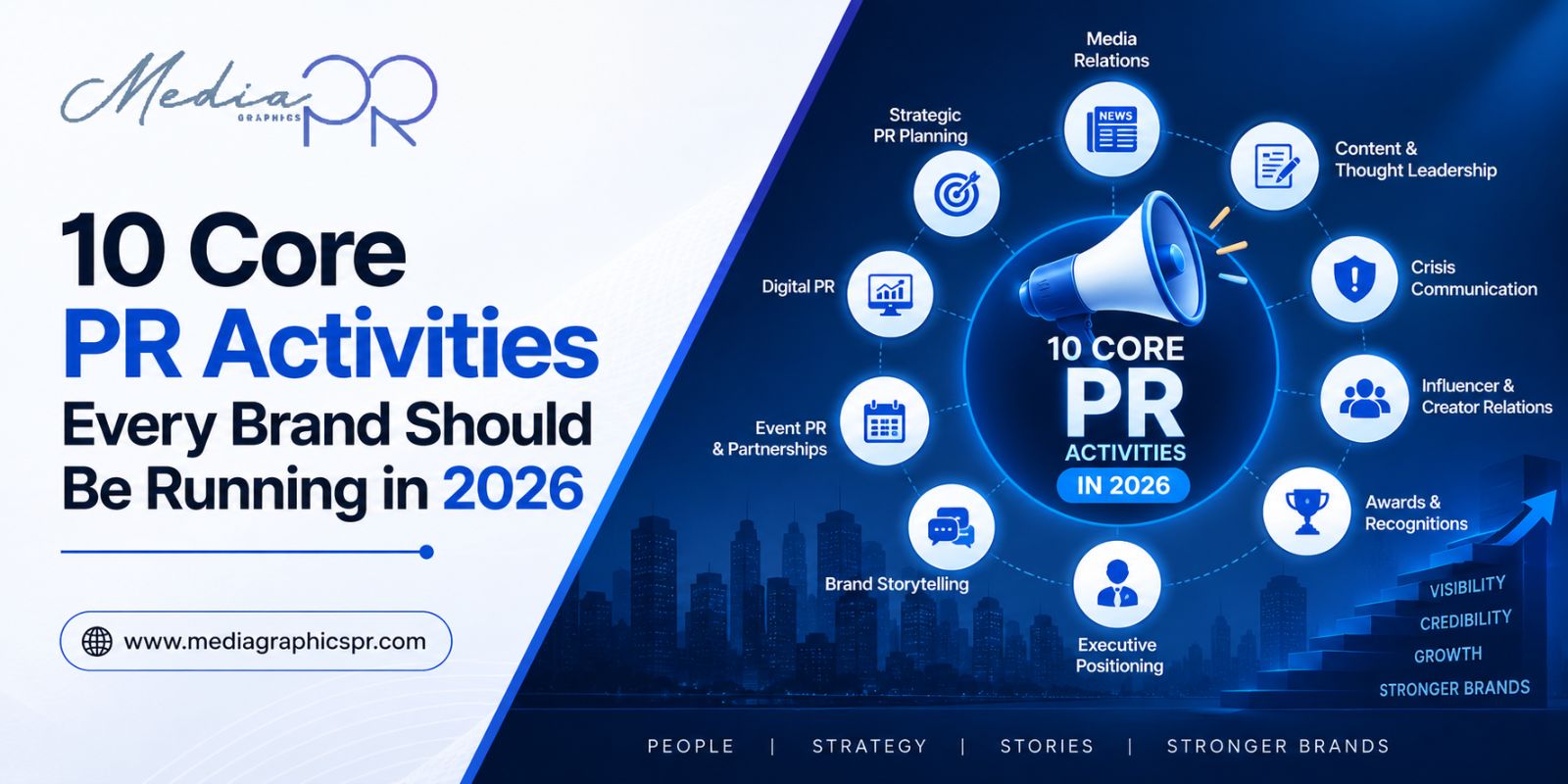
PR activities are the ongoing tasks a brand runs to build media coverage, manage reputation, and earn public trust. In 2026, the 10 core PR activities every brand should be running are: media relations, press release strategy, digital PR for AI search visibility, crisis communication, executive thought leadership, social media and community engagement, influencer and creator partnerships, community outreach, internal communications, and PR measurement through media monitoring and share of voice tracking.
Most brands still think of PR activities as something that happens in bursts: a press release before a launch, a scramble when a review goes viral, and silence in between. That gap is exactly where competitors quietly build the media relationships and search visibility that make the difference between being discovered and being ignored.
2026 has changed the calculation further. Search results now surface AI-generated overviews before a single blue link, journalists are flooded with more pitches than ever, and a brand’s reputation can shift in the time it takes a complaint to travel through a WhatsApp group. Running PR as a reactive, occasional task no longer works. Here are the 10 public relations activities that need to be running continuously, not just when something needs announcing.
1. Media Relations and Press Coverage
Media relations remains the foundation of every strong PR campaign, and it has not been replaced by digital channels, it has been made more competitive by them. This means building real relationships with journalists who cover your industry, understanding their beat, and pitching stories that are genuinely newsworthy rather than self-promotional.
What this looks like in practice:
- Maintaining an updated media list segmented by beat, not a mass-blast contact sheet
- Pitching data-backed or human-interest angles instead of pure product announcements
- Following up on stories after coverage runs, not just chasing the initial placement
Our full breakdown of what media relations actually involves covers the tactics that separate coverage that lands from pitches that get ignored.
2. Press Release Strategy and Distribution
A press release is still one of the most reliable public relations activities for making an announcement look official and credible, but only when it is written the way journalists actually want to receive news: factual, quote-backed, and free of marketing fluff.
What this looks like in practice:
- Structuring releases around a genuine news hook, not just company updates
- Timing distribution around news cycles and competitor activity
- Pairing traditional distribution with digital-first, SEO-optimised versions
If your team is still figuring out the format, our guides on what makes a press release effective and the role of press releases in a PR strategy are good starting references.
3. Digital PR and AI Search Visibility
This is the PR activity that has changed the most in the last two years and the one most brands are still ignoring. Search results in 2026 regularly show AI-generated overviews above traditional listings, and Google’s own developer documentation confirms that AI features like AI Overviews surface content the same way classic Search does, rewarding clear, well-structured, and genuinely helpful pages rather than anything gamed for visibility.
What this looks like in practice:
- Structuring press releases and articles with clear headers, Quick Answer blocks, and FAQ sections
- Earning mentions on authoritative digital publications that AI systems pull from
- Keeping content genuinely comprehensive rather than thin and promotional
Brands that treat this as a real PR campaign activity, not just an SEO afterthought, are the ones showing up when AI search tools summarise their category.
4. Crisis Communication and Reputation Management
Every brand eventually faces a moment that tests its communication readiness, whether that is a product recall, a viral complaint, or a leadership controversy. Crisis communication as a discipline exists specifically to protect reputation when a public challenge arises, and the brands that handle it well almost always had a plan before the crisis started.
What this looks like in practice:
- One designated spokesperson authorised to speak publicly
- A documented response protocol for the first 24 to 48 hours
- Active monitoring so issues are caught before they go viral, not after
If reviews or social sentiment are already spiralling faster than your team can respond, this becomes a job for dedicated online reputation management support rather than ad-hoc damage control.
5. Executive and Thought Leadership Positioning
Founders and senior leaders who show up consistently in interviews, bylines, and panel discussions build a kind of trust that company-level messaging cannot replicate on its own. This is one of the public relations activities that compounds slowly but pays off heavily during funding rounds, crises, and competitive moments.
What this looks like in practice:
- Regular bylines and expert commentary in industry publications
- Speaking opportunities at conferences and panels relevant to the sector
- Consistent messaging across every public appearance, not one-off soundbites
Our detailed guides on what thought leadership actually means and thought leadership best practices walk through how to build this systematically rather than sporadically.
6. Social Media and Community Engagement
Social platforms are where a large share of a brand’s reputation now plays out in real time, often faster than any press release can be drafted. This PR activity is about direct, authentic engagement, not scheduled posting.
What this looks like in practice:
- Monitoring brand mentions and responding within hours, not days
- Sharing earned media coverage across owned channels to extend its reach
- Engaging in genuine conversations rather than only broadcasting announcements
7. Influencer and Creator Partnerships
Modern media relations now blends traditional journalists with independent creators, industry commentators, and niche influencers who often carry more direct trust with specific audiences than a national publication does. Choosing the right partner matters more than chasing the largest following.
What this looks like in practice:
- Identifying creators whose existing audience overlaps with your actual customer base
- Prioritising authentic, long-term relationships over one-off paid posts
- Briefing partners on facts and messaging while allowing their own voice to carry it
8. Community Outreach and CSR Communication
Health camps, educational partnerships, sustainability initiatives, and local community programmes only build reputation if they are actually communicated, not just carried out quietly. This is a public relations activity many brands underinvest in, despite it being one of the most credible ways to build goodwill.
What this looks like in practice:
- Documenting outreach activities with photos, quotes, and outcomes as they happen
- Pitching community stories to local and regional media, not just posting internally
- Aligning outreach themes with the brand’s actual expertise, not generic goodwill gestures
9. Internal Communications
PR is not only external. How leadership communicates with employees directly shapes how those employees talk about the company outside of work, whether that is on LinkedIn, in interviews, or simply to friends and family.
What this looks like in practice:
- Sharing major announcements internally before they go public
- Keeping messaging consistent between what employees hear and what the public sees
- Treating employees as a genuine audience for the brand’s narrative, not an afterthought
10. PR Measurement, Media Monitoring, and Share of Voice
The PR activities above only compound into results if someone is tracking whether they are actually working. Measurement in 2026 goes beyond counting press mentions.
What this looks like in practice:
- Tracking coverage quality and relevance, not just volume
- Measuring share of voice against direct competitors in the same news cycle
- Monitoring brand sentiment shifts and referral traffic from earned media placements
How These PR Campaign Activities Work Together
None of these ten function well in isolation. A strong media relations effort feeds thought leadership positioning. Digital PR makes that coverage discoverable months later through AI search tools. Crisis readiness protects everything the other nine activities have built. Brands that treat PR as ten disconnected tasks tend to see inconsistent results, while brands that run them as one coordinated system see compounding trust over time.
We have also covered specific tactical ideas for getting started in our earlier piece on public relation activities worth trying, which pairs well with this list if you are building out a full year’s PR calendar. For a broader look at what a PR partner actually delivers across all ten of these areas, see what PR companies do and how they help brands grow, and if you are deciding how to staff this work internally, our guide on PR team structure and roles breaks down who typically owns each activity.
Conclusion
PR activities in 2026 are no longer limited to press releases and the occasional media event. They span earned media, AI search visibility, crisis readiness, internal culture, and measurable reputation tracking, all running at the same time rather than in isolated bursts. MediagraphicsPR works with brands across India to run exactly this kind of coordinated PR programme, whether that means starting with one or two of these activities or building out the full ten. If you are trying to figure out where your brand should start, get in touch with the MediagraphicsPR team to talk through it.
Frequently Asked Questions
What are PR activities?
PR activities are the ongoing tasks a brand or agency runs to build media coverage, manage public perception, and earn trust with journalists, customers, and stakeholders, including media relations, press releases, crisis communication, and digital PR.
What is the difference between PR activities and PR campaign activities?
PR activities refer to the ongoing, continuous functions a brand runs year-round, such as media monitoring and thought leadership. PR campaign activities usually refer to a coordinated set of these activities executed together around a specific goal, such as a product launch or funding announcement.
What are the most important public relations activities for a small brand?
For most small or growing brands, media relations, press release strategy, and digital PR for search visibility deliver the fastest visible results, with crisis readiness and measurement becoming equally important as the brand scales.
How has AI search changed PR activities in 2026?
AI-generated search overviews now surface answers before traditional search listings, making digital PR and structured, comprehensive content a core PR activity rather than a side task, since AI systems pull from clear, well-organised, and genuinely helpful sources.
Do small businesses need to run all 10 PR activities at once?
No. Most brands start with two or three, typically media relations, press releases, and social engagement, then expand into crisis readiness, thought leadership, and measurement as visibility and reputational stakes grow.