



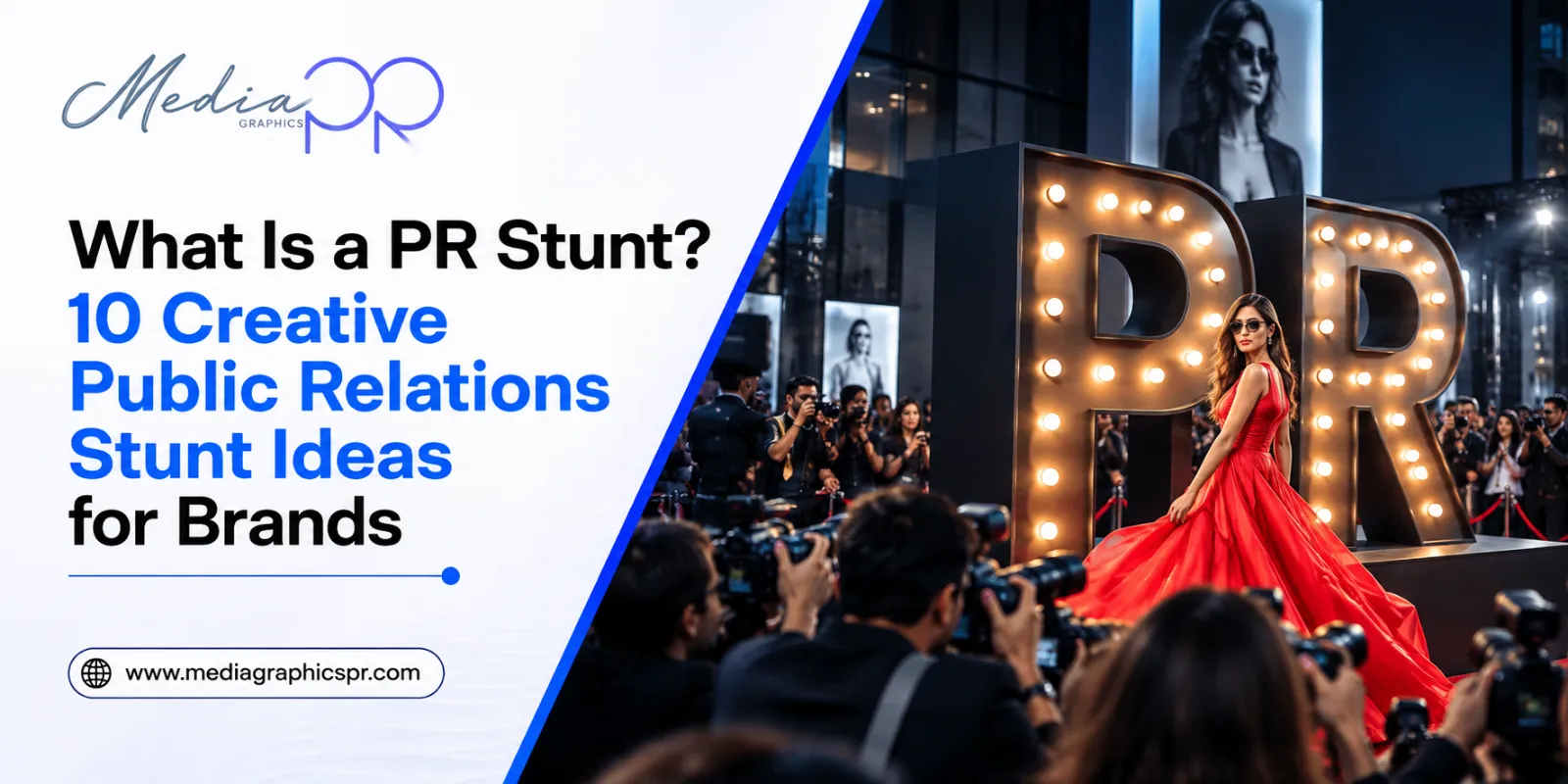
A PR stunt is a planned event or action designed to get a brand talked about by the media and the public. Done well, it earns coverage that a normal announcement never would. Done badly, it becomes a case study in what not to do.
This guide explains what a public relations stunt is, what makes the best PR stunts work, and gives you 10 creative ideas, including PR stunts for small businesses with limited budgets. You will also see the risks, so your next stunt gets the right kind of attention.
Quick Answer: A PR stunt is a deliberate, attention-grabbing activity that gives journalists and audiences a story worth sharing. The best PR stunts are tied to a real brand message, are easy to picture and photograph, are safe and legal, and are planned with a media angle from day one. Small businesses can use local, low-cost stunts. Always plan for what could go wrong before you launch.
What Is a PR Stunt?
A PR stunt is a staged action, event or announcement made to attract media and public attention to a brand, person or cause. The goal is earned coverage and conversation, not paid advertising.
You may also hear the terms public relations stunt and publicity stunt. They mean nearly the same thing. A stunt is one tactic inside PR, and publicity is one part of the wider practice. Our post on public relations vs publicity explains the difference, and our guide to earned media shows why coverage you earn carries more trust than space you buy.
Why Do Brands Use a Public Relations Stunt?
Because a strong stunt can do three things at once: get coverage, spark social sharing and make a brand memorable. A normal press release asks journalists to care. A good stunt gives them a reason.
- Coverage: a visual, surprising story is easier for media to cover
- Reach: people share what is funny, impressive or surprising
- Memory: a clear idea sticks longer than a list of features
- Momentum: a launch or a campaign starts with energy
What Makes the Best PR Stunts Work?
The best PR stunts share six traits. Use this list to test any idea before you spend money.
- A real link to the brand: the audience should understand why you did it
- A clear story: you can explain it in one sentence
- A strong visual: something a photographer or a phone can capture
- A media angle: you know which journalists will care and why
- Safety and legality: permissions, insurance and honesty are in place
- A way to measure: you know what success looks like before you start
What Can We Learn From the Best Publicity Stunts?
The best publicity stunts and the worst ones both teach something. Real campaigns show both the upside and the risk. The table below uses facts from public sources, and each one carries a lesson for your own plan.
| Campaign | What happened | Lesson |
|---|---|---|
| Red Bull Stratos (2012) | Felix Baumgartner jumped from about 39 km up in a Red Bull sponsored project, and about 9.5 million people watched live on YouTube | A bold, visual event can become a global story, but it needs huge preparation |
| Burger King Whopper Detour | Burger King offered a 1-cent Whopper in its app, redeemable only after users visited a McDonald’s location | A playful twist on a rival’s turf can win attention and awards when it is clever and clear |
| Oreo “Dunk in the Dark” (2013) | Oreo tweeted during the Super Bowl blackout, with a team that had prepared a war room in advance | Speed works only when preparation and approvals are ready |
| Mooninite signs, Boston (2007) | Light signs placed for a TV show promotion were mistaken for explosive devices | A stunt that causes public alarm can end in apologies, a multi-million-dollar settlement and a resignation |
Read the sources for each case: Red Bull Stratos, the Whopper Detour at Adweek, the Oreo tweet at Digiday and the Boston Mooninite panic. According to Adweek, Burger King reported 1.5 million app downloads from the Detour, and according to Wikipedia, the Boston case led to a $2 million settlement and the Cartoon Network general manager’s resignation.
What Are 10 Creative PR Stunt Ideas for Brands?
These ideas work as starting points. Adapt each one to your brand, your city and your budget, and check every idea against the six traits above.
1. Stage a real-world spectacle
Create one big, visual moment, such as a record attempt or a live demonstration of your product’s promise. Keep the scale to your budget, and make sure the spectacle proves a claim your brand actually makes.
2. Challenge a rival in a friendly way
Playful rivalry gets attention when it is good-natured and honest. Check the legal side, avoid false claims and keep the tone light. The Whopper Detour is a famous example of this approach.
3. React to a live moment
Prepare a small team and an approval path so you can respond quickly when something happens in news, sport or culture. Speed without judgement is risky, so have a rule for what you will never joke about.
4. Give something away with a point
A giveaway earns coverage when it is tied to a story, such as free first-day service for a new neighbourhood outlet or free repairs on a festival weekend. A random giveaway earns very little.
5. Turn your data into a talking point
Publish a surprising, accurate finding from your own data, and present it with a strong visual. Our post on data visualization in PR messaging shows how to make numbers easy to understand.
6. Link a challenge to a cause
A public challenge can raise money or awareness for a cause that fits your brand. Choose a partner you trust, be transparent about the outcome and avoid exploiting a sensitive issue.
7. Make your product test public
Show a product doing something difficult in front of people or on camera, such as a durability test. It must be real and repeatable, because audiences check.
8. Use a calendar moment
Tie your idea to a festival, a sports season or a policy day that people already follow. Our guide to PR activity ideas you should try today has more options.
9. Take your founder public
A founder who makes a public commitment, such as a clear promise to customers, can create a human story. Prepare with media training so the message stays clear.
10. Partner with creators for a shared stunt
A creator whose audience matches yours can bring a stunt to life on video and social media. Read our advice on working with influencers and on influencer collaborations, and use short-form video to extend the reach.
What Are Good PR Stunts for Small Businesses?
Many of the best publicity stunts started small. The best PR stunts for small businesses are local, low-cost and personal. You do not need a big budget. You need a clear story and the right local journalist.
- Neighbourhood first: a stunt that serves your area gets local media attention
- Use what you have: your shop, your staff and your customers are the set
- Keep it simple: one idea, one visual, one message
- Invite the right people: a short note to two or three local reporters beats a mass email
- Film it yourself: a clean phone video is often enough
Read our guides on PR for startups on a budget and whether SMEs can afford PR in India. Then use our advice on getting press coverage for your startup to pitch it.
How Do You Plan a PR Stunt Step by Step?
Step 1: Set one clear goal
Pick one outcome, such as local awareness, a product launch or a surge in enquiries. A stunt with three goals usually achieves none.
Step 2: Find the story
Ask what a journalist would write as the first line. If you cannot answer, the idea is not ready.
Step 3: Check safety, legality and honesty
Get permissions, insurance and any approvals. Avoid anything that could scare people, mislead them or hurt anyone. The Boston case shows why this step cannot be skipped.
Step 4: Prepare your media plan
Build a short media list, write a one-page note and prepare photos or video. Our guide to personalised pitches and how to write an effective press release will help.
Step 5: Plan for things going wrong
Decide who speaks, what you will say and when you will stop the stunt. See our guides on crisis management and crisis communication tips.
Step 6: Launch, follow up and measure
Share the story, respond fast to questions and report what changed. See how to measure PR success and PR campaign metrics.
What Are the Risks of a Public Relations Stunt?
- Safety: anything that alarms or endangers people is never worth it
- Legal trouble: permissions, trademarks and false claims can all lead to action
- Backlash: a stunt that mocks a sensitive issue can damage the brand for years
- No substance: attention without a message fades fast
- Dishonesty: fake stories hurt trust, and brand reputation management takes much longer than the stunt did
Should You Hire a PR Agency in India for Your Next Stunt?
Hire one when you need media access, creative judgement and a plan for risks. An agency cannot guarantee coverage, but it can help you pick the right idea and the right journalists.
A PR agency in India can test your idea, build the media plan and run the follow-up. At MediagraphicsPR, we plan campaigns around the story and the outcome, and you can see our sectors on our industry expertise page. Read our guide on how to launch a successful PR campaign and our comparison of in-house PR and a PR agency. A good PR agency will also tell you when a stunt is the wrong tool.
FAQs
What is a PR stunt?
A PR stunt is a planned action or event designed to attract media and public attention to a brand. It aims to earn coverage and conversation without paying for ads.
What is the difference between a PR stunt and a publicity stunt?
The two terms are used almost interchangeably. A PR stunt sits inside a wider PR plan, while publicity stunt usually refers to attention-seeking on its own. The best ones connect to a real brand message.
Are PR stunts worth it for small businesses?
They can be, if they are local, low-cost and tied to a real story. A simple stunt for your neighbourhood can bring coverage and customers. Avoid large spends without a clear goal.
Can a PR stunt backfire?
Yes. Stunts that cause alarm, mislead people or mock sensitive issues can lead to backlash, legal action and lasting damage. The 2007 Boston Mooninite case is a well-known example.
How do you measure the success of a PR stunt?
Compare results with the goal you set. Useful signs include quality coverage, branded search, website visits, enquiries and social conversation. Set a baseline before you launch.
Conclusion: Make Your Next PR Stunt Smart, Safe and Story-Led
A great PR stunt is not about noise. It is a simple idea tied to a real brand message, planned for the media and checked for risk. Start with one goal, find the story, protect people and the brand, and measure what happens. Small ideas done well often beat big ones done carelessly.
Planning a PR Stunt for Your Brand?
A bold idea needs a solid plan. Talk to a PR agency in India that can test your idea, plan the media and manage the risks.
Visit MediagraphicsPR or see our industry expertise.
Need to speak to someone now?
📞 Call us: +91-8448360900 📧 Email us: info@mediagraphicspr.com
We respond within 24 hours.