
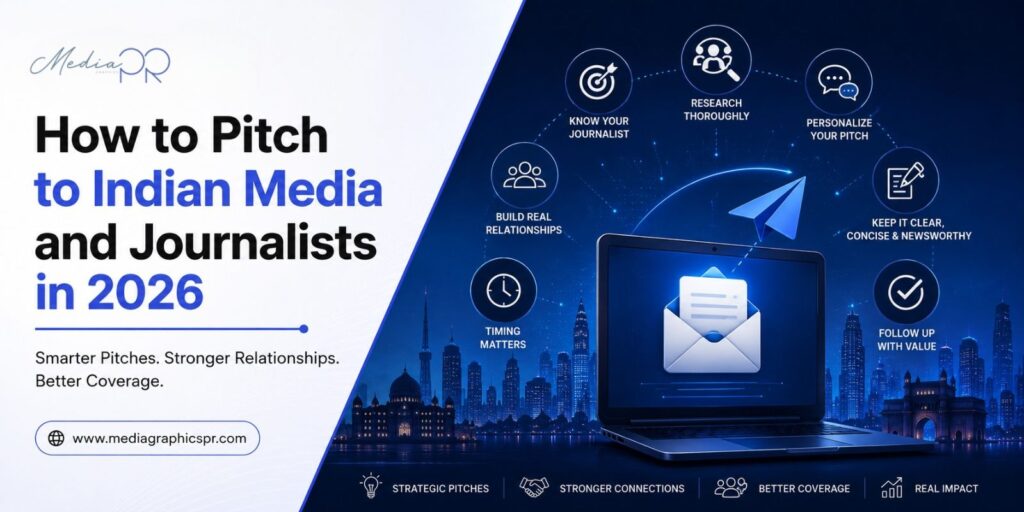
How to Pitch to Indian Media and Journalists in 2026
You’ve written the pitch. You’ve found the email. You’ve hit send. And then, nothing. No reply. No coverage. Not even a “not interested.” Just silence. This is the experience of almost every founder who tries to pitch to journalists India style without understanding how Indian media actually works in 2026. The frustrating part is that it’s rarely the story’s fault. More often it’s the approach—wrong journalist, wrong angle, wrong email, wrong timing. All fixable problems, none of which require a big PR budget to solve. This guide tells you exactly what to change so your pitches start getting read, responded to, and covered. Why Most Pitches to Indian Journalists Fail Before the tactics, understand the problem clearly. What Most People Do Why It Fails Send the same pitch to 50 journalists at once Journalists can tell, and it signals you don’t actually care about their specific beat. Lead with company background Journalists need the news first—your founding story comes later. Write pitches that are too long Most pitches get 10 seconds—if the story isn’t clear by line three, it’s gone. Pitch the wrong publication for the stage Inc42 covers funded startups—a pre-revenue pitch lands differently there. Follow up three times in a week Fastest way to get blocked. Pitch with no relationship established A cold email from an unknown name gets a fraction of the attention a familiar one does. Most pitches that fail aren’t bad stories. They’re good stories delivered in a way that makes them easy to ignore. How Indian Media Actually Works in 2026 The landscape for startup media pitch 2026 style has shifted. A few things worth knowing before you pitch anything: Journalist inboxes are more crowded than ever AI-generated pitches are flooding every major journalist’s inbox. The ones that get read are the ones that are clearly written by a human who’s actually read the journalist’s recent work. Personalization isn’t optional anymore; it’s the baseline for getting noticed. WhatsApp is a real channel Some senior journalists and editors in India prefer WhatsApp for PR communications over email, especially for time-sensitive stories. This varies by journalist. Never start on WhatsApp cold, but once you have an established relationship, it’s often the faster channel. Beat specialization has increased Indian publications have become more specific about who covers what. The journalist covering funding rounds at Mint is not the same person covering enterprise tech. The reporter writing about D2C brands at YourStory isn’t covering SaaS. Getting the right journalist matters more than ever. Speed matters for reactive pitches When a news story breaks in your space, the window to insert your founder’s perspective is short, often two to four hours before a journalist has filed the story. Pitch to journalists India style in 2026 means having a faster, more responsive system than most startups currently run. How to Write a Pitch That Actually Gets Read The Subject Line One line. Specific. No exclamation marks. No “EXCLUSIVE” in capitals. Just the news or angle, clear enough that the journalist knows immediately whether it’s relevant to their beat. Weak: “Exciting news from our startup—would love to connect!” Strong: “Series A raise—₹40Cr to fix India’s B2B payments gap—founder available for interview” The Pitch Structure Line 1-2: The story, not your company background Line 3: Why now, what makes this timely today Line 4: Why you, one sentence on founder credibility Line 5: The ask—interview, comment, or feature consideration Line 6: Contact details Total length: Under 180 words That’s it. Journalists read dozens of pitches every day. The ones that get replies are the ones that make the story obvious in under thirty seconds and make the journalist’s job easier, not harder. How to Pitch Different Story Types Not every pitch looks the same. Match the approach to the story type: Story Type Best Approach Best Timing Funding announcement Embargo to 6–8 journalists 48–72 hrs before Weekday morning—Tuesday to Thursday Product launch Targeted pitch to beat journalists + offer demo 1–2 weeks before the launch date Founder thought leadership Offer a specific angle on a current trend When relevant news is already moving Reactive commentary Quick, specific, available immediately Within 2–4 hours of the news breaking Data or research story Lead with the most surprising finding Any time; data stories aren’t time-sensitive Finding the Right Journalist—Not Just the Right Publication How to pitch Indian press effectively starts with targeting the right person within the right publication, not just the publication itself. How to identify the right journalist: Search the publication for recent stories in your category—who wrote them? Check the journalist’s LinkedIn bio—what beat do they specifically cover? Look at their last ten articles—is your pitch adjacent to what they’re already writing about? See who covered your direct competitors—those journalists already understand your space A personalized pitch to the journalist who wrote about a company just like yours last month will outperform a generic pitch to the publication’s general inbox every single time. Building Relationships Before You Need Coverage The most effective pitch to journalists India strategy in 2026 isn’t about writing better pitches; it’s about being a name journalists already recognize before the pitch arrives. How to build relationships without being annoying: Follow journalists covering your space on LinkedIn, and engage genuinely with their work Share their articles with a real comment, not a generic one Offer yourself as a source for stories they’re already writing; no pitch attached When something major happens in your industry, send a brief note with your founder’s perspective before they ask Do this consistently for three to six months, and the dynamic shifts. Your pitch goes from cold email to familiar name. That changes everything about the response rate. The Follow-Up That Doesn’t Kill the Relationship Most founders either never follow up or follow up too aggressively. Both are mistakes. The right follow-up approach for a startup media pitch 2026: Day 1: Pitch sent ↓ Day 4-5: One follow-up—brief, adds new information if possible ↓ No response: Move on; don’t send a third email