Author name: Vvihan Gulati

Vvihan Gulati founded MediagraphicsPR in 2000. In 25 years of public relations, he's learned that a narrative only matters if it holds up once a journalist starts asking hard questions, not just when it's sitting in a press release. He's spent that time building brand stories for startups, global companies, and industry leaders across sectors, working as both strategist and the person actually writing the pitch.

Can SMEs Afford PR in India
MediaPR

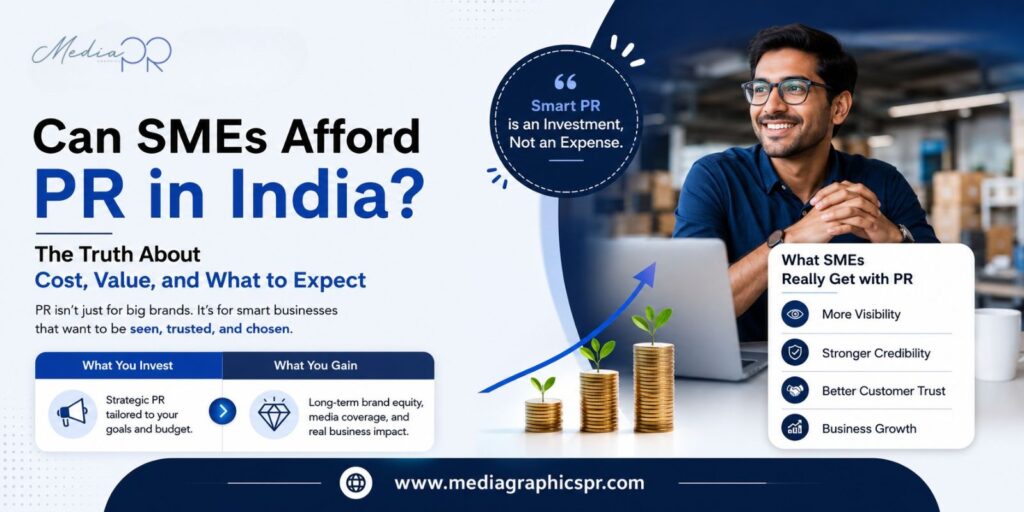
Can SMEs Afford PR in India? The Truth About Cost, Value, and What to Expect

Here’s the conversation that happens in boardrooms across India every quarter. Someone brings up PR. The room nods. Everyone agrees it’s important. Then someone asks how much it costs, and suddenly the conversation moves on to something else. Most SME owners in India assume PR is for the big players. The funded startups. The listed companies. The brands with marketing budgets that have more zeros than theirs. So they put it off. They’ll do it when they’re bigger. When the timing is right. When they can afford it. The problem is that “when we can afford it” thinking is exactly what keeps many SMEs from building the credibility that would actually help them grow faster. This blog is about what PR for SMEs actually costs, what it actually delivers, and whether it makes sense for where your business is right now. First, Why SMEs Need PR Differently Than Big Brands Large enterprises use PR to protect and manage reputations they’ve spent decades building. SME public relations has a different job: it builds credibility that the business doesn’t have yet. For an SME in India, that credibility gap shows up in very specific ways: Enterprise clients choosing a larger, better-known competitor even when your product is comparable Investors passing because they’ve never heard of you despite strong fundamentals Top candidates picking companies with stronger employer brands Distributors and partners are being cautious because there’s no third-party validation of who you are PR for SMEs closes these gaps. Not by making your company seem bigger than it is, but by making sure the right people know it exists and have a reason to trust it. What Does PR Actually Cost for an Indian SME? This is the question most people are really asking and the one most PR conversations in India avoid answering directly. Here’s an honest breakdown: PR Engagement Type Approximate Monthly Cost What You Get Founder thought leadership only ₹20,000 – ₹40,000 LinkedIn positioning, authored articles, expert commentary Focused media relations ₹40,000 – ₹80,000 Targeted journalist pitching, press releases, and 2–4 placements/month Full PR retainer ₹80,000 – ₹200,000+ Strategy, media relations, thought leadership, crisis prep Project-based PR ₹50,000 – ₹150,000 Single campaign, including funding announcement, product launch, event Costs vary based on agency size, industry, and campaign scope. For most SMEs in India, a focused media relations engagement in the ₹40,000 to ₹80,000 range is where meaningful PR starts. It’s less than most companies spend on digital ads that stop working the moment the budget stops. The Real Cost Comparison Nobody Makes Most SME owners compare PR costs to zero, which makes it feel expensive. The more useful comparison is against what you’re already spending and what those things actually deliver. Channel Monthly Spend What Stops When Budget Stops Google Ads ₹50,000 Everything—traffic, leads, visibility Social Media Ads ₹30,000 Everything—reach, engagement, awareness PR Retainer ₹60,000 Nothing—coverage stays online, relationships remain The fundamental difference is that SME PR builds assets. A feature in Economic Times doesn’t disappear when the invoice stops. A journalist relationship built over six months keeps producing value. A founder’s thought leadership piece published in a trade publication keeps ranking in search results. Paid media rents attention. PR builds something you own. What SMEs Can Realistically Expect From PR Honest expectations matter more than sales pitches. Here’s what PR for SMEs in India actually delivers and when: Month 1-2  ➤ Narrative built, target publications identified, journalist relationships started, and the first pitches were sent Month 2-3 ➤ First placements secured in relevant publications ➤ Founder starts appearing in industry conversations Month 3-6  ➤ Journalist familiarity builds as calls start coming in ➤ Coverage begins compounding because each placement leads to next Month 6-12  ➤ Brand recognized in target market ➤ Enterprise buyers and investors encountering brand organically ➤ Employer brand improving, better candidates applying Year 2+  ➤ Category authority building ➤ Coverage generates coverage without a proportional effort increase The SMEs that give up at month two miss the entire point of how PR compounds. The ones that stay consistent are the ones that look back twelve months later and can’t imagine having skipped it. Where SMEs Get the Most Value From PR Not every PR tactic makes sense for every SME. Here’s where the value is highest for smaller businesses in India: Thought Leadership The cheapest and most effective starting point for most SMEs. Your founder knows things your industry needs to hear. Getting that expertise into the right publications—trade media, business press, and sector-specific outlets—builds credibility with buyers and investors at relatively low cost. Targeted Media Relations Forget broad press releases to a mass list. Two or three placements a month in publications your specific buyers read does more for an SME’s credibility than twenty mentions in publications they’ve never heard of. Milestone Announcements A new client win, a product launch, a significant partnership, an award—these are the moments SME PR turns into credibility-building coverage. Each one adds to the narrative. Each one gives journalists another reason to pay attention to the company. Reputation Foundation Most SMEs don’t think about reputation management until something goes wrong. Building a consistent, positive media presence before a crisis means having something to absorb a difficult moment with, instead of starting from zero when the pressure is highest. The SMEs That Should NOT Invest in PR Right Now Honesty matters here too. PR isn’t the right investment for every SME at every stage. Hold off on PR if: ✗ Your product or service isn’t ready; PR that drives attention to something that doesn’t deliver creates more damage than silence ✗ You can’t commit to six months minimum. PR needs runway to compound; short engagements rarely show real value ✗ You don’t have a clear narrative yet—if you can’t explain what you do and why it matters in one sentence, PR will struggle to do it for you ✗ You need immediate sales leads. PR builds credibility over time, not a pipeline overnight PR makes strong sense if: ✓ You’re
PR Is Crucial For Indian Startups
MediaPR

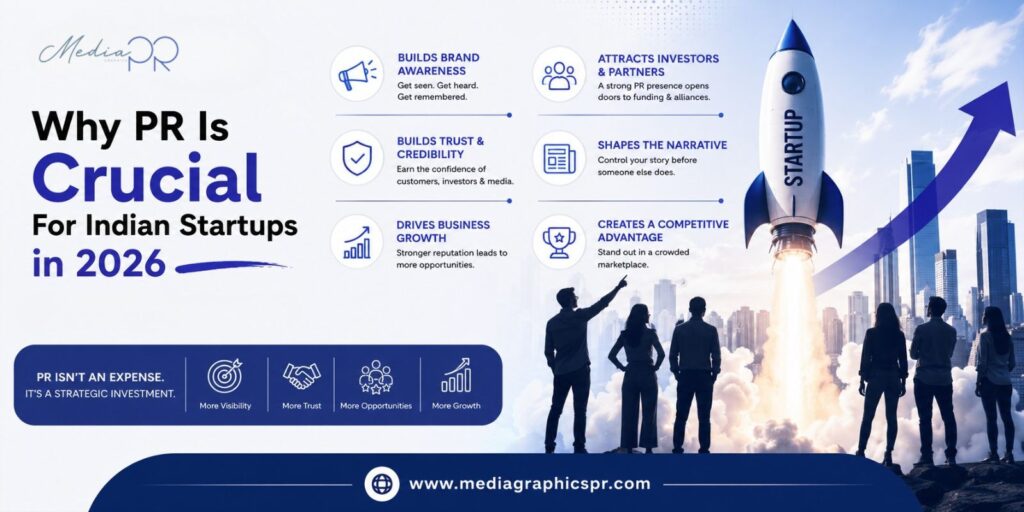
Why PR Is Crucial For Indian Startups in 2026

Let’s be honest about something. You could have the best product in your category. A team that’s worked harder than anyone else in the space. Traction numbers that would make most founders jealous. And still lose a deal, a fundraise, or a key hire to a competitor that’s built a stronger public narrative. That’s not unfair. That’s just how markets work. People don’t make decisions in a vacuum. They go with the name they’ve already heard, the founder they’ve already read about, and the brand that showed up in a publication they trust last month. In 2026, India’s startup ecosystem is crowded enough that being good at what you do isn’t enough on its own. The startups breaking through aren’t always the most technically impressive; they’re the ones whose story is already in the right rooms before the conversation even starts. That’s exactly what startup PR does. And here’s why it’s more important this year than ever before. What’s Actually Changed for Indian Startups in 2026 The landscape has shifted significantly. Three things are happening simultaneously that make PR for startups a genuine strategic priority, not a nice-to-have. 1. The funding environment is more selective After the correction years, investors are doing deeper due diligence than they were in 2021. They’re researching founders more carefully, checking media presence, and forming impressions before the first meeting. A startup with no media narrative is invisible in that process. A startup with consistent, credible coverage is already halfway through the trust conversation before the pitch begins. 2. Enterprise buyers are more cautious India’s B2B market has matured. Procurement heads at large enterprises are researching vendors thoroughly before responding to anything. Your startup’s media presence (or absence) is part of that evaluation now in a way it simply wasn’t five years ago. 3. Competition for talent is fierce The best engineers, product managers, and operators in India have options. They research companies before applying. A startup that shows up credibly in the right places attracts better candidates and retains them longer because the employer brand means something. Why Most Indian Startups Get PR Wrong Before getting into what works, it’s worth being clear about what doesn’t. Common Startup PR Mistake Why It Doesn’t Work Sending press releases with no journalist relationships Cold outreach to journalists who don’t know you produces almost nothing Only doing PR around funding announcements One moment of coverage doesn’t build a sustained narrative Chasing big publications too early A feature in a publication your audience doesn’t read is activity, not outcome Treating PR as marketing PR builds credibility—it doesn’t replace sales or advertising Starting PR too late By the time you feel you need it, the compounding has already been delayed Most startups that say “PR didn’t work for us” made at least three of these mistakes. The discipline isn’t the problem; the approach was. What PR Actually Does for an Indian Startup in 2026 Builds the Credibility That Opens Doors Every investor, enterprise buyer, and senior hire Googles your startup before deciding whether to engage. What they find shapes the conversation before you’ve said a word. Consistent startup PR—founder thought leadership, product coverage, milestone announcements in the right publications—means they find something that builds confidence rather than a gap that creates questions. Makes Fundraising Significantly Easier The startups raising rounds most efficiently in India right now aren’t necessarily the ones with the best decks. They’re the ones whose names investors have already encountered in publications they respect. PR doesn’t replace the pitch. It makes the pitch land in a room where the credibility work is already partially done. Earns Coverage That Compounds This is what most startups don’t account for. PR for startups compounds the way good software compounds. The first placement leads to a journalist filing your founder as a credible source. That leads to a quote in the next related story. That leads to a feature. That feature leads to an inbound investor inquiry. None of that chain happens if the first placement doesn’t exist. And none of it happens from a single press release. Defines Your Category Before Someone Else Does In most Indian startup categories, two or three companies end up owning the media narrative. The ones that get there first—consistent coverage, founder positioned as an expert, brand mentioned whenever journalists cover the space—build a competitive moat that’s genuinely hard to close. The startups that wait until they feel ready to invest in Indian startup PR almost always find that a competitor who started earlier is already in that position. Builds the Employer Brand That Wins Talent Strong candidates research companies before applying. In 2026, a startup with no media presence competing against one with consistent coverage for the same senior hire is at a real disadvantage, regardless of which company actually has the better culture or the more interesting work. PR for startups that builds employer brand—founder presence in startup ecosystem media, company milestone coverage, and team culture stories—directly affects hiring quality and speed. The Right PR Approach for Indian Startups at Each Stage Startup Stage PR Priority What To Focus On Pre-seed / Seed Medium Founder thought leadership, narrative building Pre-Series A High Media credibility before investor conversations Post-funding Very High Announcement momentum, category positioning Growth stage High Consistent presence, employer brand, enterprise credibility Pre-IPO Critical National media, investor relations, reputation management The pattern is consistent across every stage; the startups that invested in startup PR earlier have significantly more to work with at each subsequent milestone. What Indian Startups Should Actually Do in 2026 Getting PR for startups right doesn’t mean a full agency retainer from day one. It means being deliberate about a few things that compound over time: Start with the narrative Before any press release goes out, be clear about what story you’re telling. What does your startup do? in one sentence, no jargon. Why does it matter right now? What makes your approach different? That narrative has to be consistent everywhere. Build journalist relationships before you need

What Is Media Training
MediaPR

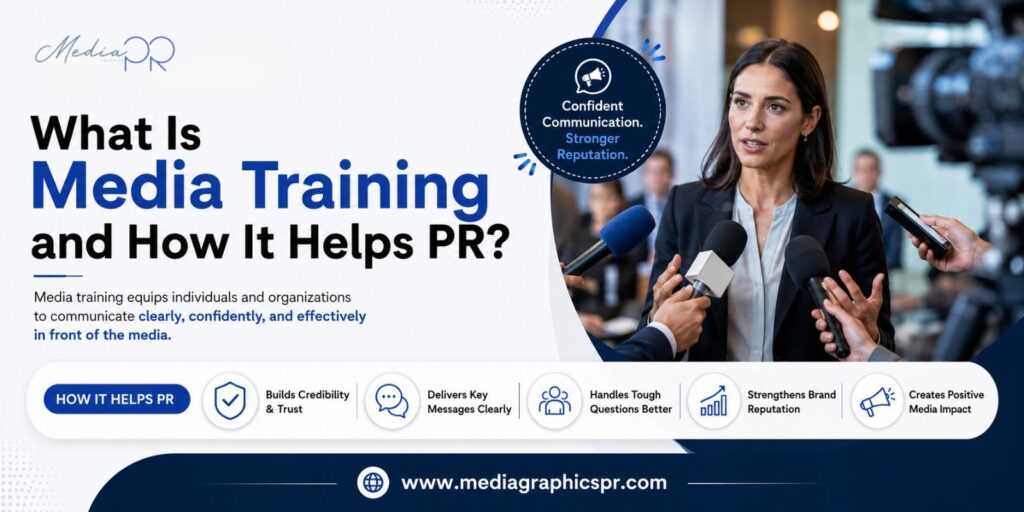
What Is Media Training and How It Helps PR?

Your founder just got a call from a journalist at the Economic Times. They want a comment on a breaking story in your industry. You have 20 minutes. Does your founder know what to say? More importantly, do they know what not to say? This is the moment media training is built for. And it’s the moment most founders realize they’ve never actually prepared for it. A journalist call without preparation isn’t just a missed opportunity; it’s a risk. One wrong answer, one off-the-cuff comment, and one moment of going off-script can shape how thousands of readers perceive your brand. And unlike a bad ad, you can’t pull it once it’s published. Media training is how you make sure that when the moment comes—and it will—your spokesperson handles it in a way that builds your brand instead of creating a problem for your PR team to fix. What Is Media Training? Media training is the process of preparing founders, executives, and company spokespeople to communicate effectively with journalists—in interviews, press calls, live TV or radio appearances, and panel discussions. It’s not about teaching someone to be fake or corporate. It’s about helping them say what they actually mean, in a way journalists can use, without accidentally saying something they don’t mean at all. A good media training programme covers: How to structure answers so they land clearly How to bridge from a question you don’t want to answer toward a point you do How to handle hostile or trick questions without getting defensive How to speak in sound bites—short, quotable, memorable How to stay on message without sounding like you’re reading from a script What to do when you don’t know the answer Body language and tone for video and broadcast interviews Why Media Training Matters More Than Most Companies Think Most founders are brilliant at their product. They can talk about what they’ve built for hours: the technology, the problem it solves, the market opportunity. Put a journalist in front of them, and that clarity sometimes disappears entirely. Not because they don’t know their stuff. Because a journalist interview is a different kind of conversation. The journalist isn’t there to understand your product; they’re there to find an angle for their story. Those are two very different things. And without media training, founders often answer the question they wish they’d been asked rather than the one they were actually asked. The result: quotes that miss the point, comments that get taken out of context, or worse, silence when a strong response would have built real credibility. How Media Training Directly Improves PR Results Media training isn’t separate from PR strategy; it’s one of the things that makes PR strategy actually work. Here’s how: Better Quotes Mean Better Coverage Journalists build stories around quotes. A strong, specific, opinionated quote gets used prominently. A vague, hedge-everything quote gets cut or buried. Media-trained spokespeople consistently get better placement in the stories that feature them, because they give journalists something worth publishing. Journalist Relationships Strengthen Journalists remember which founders are good to talk to. Clear answers, genuine insight, no PR fluff—that’s what journalists come back for. A founder who’s been through proper media training becomes a source journalists call again. That’s how media relationships compound over time. The Brand Message Stays Consistent Without media training, different spokespeople say different things about the same company. One founder describes the product one way. The COO describes it another way. The communications head has a third version. Journalists notice inconsistency, and so do investors and buyers reading the coverage. Media training aligns every spokesperson around the same core narrative so the brand message is consistent no matter who’s in the room. Without Media Training With Media Training Answers ramble and lose the key point Answers are structured and quotable Off-the-cuff comments create problems The spokesperson stays on message under pressure Different spokespeople say different things Brand narrative is consistent across all voices Hostile questions throw the interview Bridging techniques keep control of the conversation Opportunity to build credibility gets missed Every interview becomes a brand-building moment Crisis Moments Are Handled Better A journalist calling about something negative—a data issue, a regulatory question, a competitor claim—is not the time to improvise. Media training prepares spokespeople for exactly these moments. What to say, what not to say, how to acknowledge a concern without creating a bigger story, and how to redirect the conversation without appearing evasive. The companies that come through difficult media moments with their reputations intact almost always have spokespeople who knew what to do before the call came. What Good Media Training Actually Looks Like Media training isn’t a one-hour workshop where someone runs through talking points. The kind that actually changes how a spokesperson performs looks like this: Step 1: Message Development Clarify the 3-5 key messages the spokesperson needs to land in any interview regardless of the questions asked. Step 2: Interview Simulation Real mock interviews—print, broadcast, hostile questions, off-the-cuff scenarios—with genuine pressure applied. Step 3: Playback and Feedback Video review of responses—what landed, what didn’t, what needs to change before the real thing. Step 4: Bridging Practice Moving from a question you don’t want to answer to a point you actually want to make, without sounding like you’re dodging. This takes real practice before it feels natural. Step 5: Scenario Preparation Crisis scenarios, product-specific questions, competitor comparisons—preparing for the conversations most likely to happen. Step 6: Ongoing Refreshers Before a funding announcement, a big launch, or any moment where the stakes are high. Who Really Needs Media Training? Short answer: anyone who speaks to journalists on behalf of the brand. In practice, that usually means: Founders and CEOs, the primary spokespeople for most media conversations COOs and CTOs increasingly called for product and operational interviews Heads of marketing and communications managing media relationships directly Subject matter experts called for specialist commentary in their domain Board members, especially relevant for publicly listed or pre-IPO companies A common mistake is assuming only the

PR Agency in Bangalore
MediaPR

How to Choose the Right PR Agency in Bangalore

You’ve decided PR matters. You’ve Googled “PR agency in Bangalore.” And now you’re staring at a list of agencies that all sound exactly the same. Same promises. Same pitch decks. Same “we get results” language. Picking the wrong one doesn’t just waste money; it wastes months of time you don’t have. And in Bangalore’s market, where the competition for investor attention, enterprise clients, and top talent is genuinely fierce, those months matter. This guide cuts through the noise. By the end of it, you’ll know exactly what to look for, what questions to ask, and what red flags to walk away from, so you make this decision once and make it right. Why Choosing Right Matters More in Bangalore Bangalore’s business environment is unlike any other city in India. The density of funded startups, SaaS companies, global capability centers, and enterprise tech businesses competing for the same media, investors, and talent is extraordinary. In that market, a PR agency in Bangalore that’s just going through the motions—sending generic press releases, chasing clip counts, or recycling pitches—won’t move anything for your brand. The bar for what counts as effective PR here is higher. The journalists are more discerning. The investors are more researched. The enterprise buyers are more sophisticated. Getting this hiring decision right is the difference between PR that compounds and PR that consumes budget without changing anything. They Ask More Questions Than They Answer in the First Meeting This is the single clearest signal of a genuinely good PR agency in Bangalore. In the first meeting, the wrong agency pitches your services, packages, case studies, and impressive client names. The right agency asks you questions. What are you actually trying to achieve? Who are you trying to reach? What does success look like in six months? What’s the narrative you want to own in your category? An agency that proposes a strategy before understanding your business is going to deliver someone else’s strategy with your name on it. That’s not PR; that’s a template. Their Media Relationships Are Real, Not a Database Every Bangalore PR agency will tell you they have strong media relationships. Ask them to prove it. Real media relationships mean journalists take their calls, read their pitches, and trust their judgement on what’s actually newsworthy. A contact database means they have email addresses and send press releases that may or may not get opened. Ask directly: Which journalists covering our space have you pitched in the last three months? Can you show us a recent placement you secured in a publication relevant to our industry? Who specifically do you know at Economic Times, Mint, Inc42, or the trade publications our buyers read? The answers tell you immediately whether the relationships are real or theoretical. Senior People Do the Day-to-Day Work This is the most common disappointment in PR agency relationships and the one that’s easiest to prevent if you ask upfront. The pitch is delivered by the agency’s most experienced people. The account is then handed to a junior team. The seniors reappear at quarterly reviews and that’s largely it. In Bangalore’s media landscape, where relationships and strategic instincts matter, this gap shows up quickly in the results. Before you sign: Ask specifically who will work on your account day to day Request to meet them before the contract is signed Ask what the escalation process looks like when something needs senior attention The right agency answers all three without hesitation. They Measure What Actually Matters What Mediocre Agencies Measure What Good Agencies Measure Total clip count Coverage in target publications specifically Estimated reach Whether target audience actually saw it PR value equivalent Whether sales conversations are shifting Press release sent Journalist relationship quality Social shares Inbound leads referencing coverage If the first thing an agency shows you is a potential reach number or a PR value equivalent, walk away. These numbers can look impressive while delivering nothing useful to your business. The right PR agency in Bangalore sets real metrics before the campaign starts, not invented ones after to justify whatever happens. They Understand Bangalore’s Specific Industries Bangalore isn’t a generic market. It’s deep tech, SaaS, fintech, biotech, manufacturing, and global enterprise all competing in the same city. The publications that matter for a Series A SaaS startup are different from the ones that matter for a pharma company or a logistics platform. A good PR agency in Bangalore understands these differences without being told. They know which journalists cover which beats, what angles land in Bangalore’s media, and how to position your brand specifically within the ecosystem your buyers and investors operate in. General PR experience is useful. Bangalore-specific industry knowledge is what makes it work. They Build the Narrative Before the Pitch Most agencies start with the press release. The right agency starts with the story. Before anything goes to a journalist, the core narrative has to be clear—what your company does, why it matters right now, and what makes your approach genuinely different from what’s already out there. That story has to be the same everywhere—your website, your founder’s LinkedIn, your media coverage, your pitch deck. An agency that skips the narrative step produces coverage that doesn’t add up to anything. Each placement is a standalone event rather than a building block. They Have Real Crisis Experience Most Bangalore businesses don’t think about crisis PR until they need it. By then it’s too late to build the infrastructure from scratch. Ask any agency you’re considering: “Walk us through a crisis situation you’ve managed and how you handled it.” The answer tells you whether they’ve actually been in that room or whether they’ve just read about it. Crisis PR capability matters for three reasons: Bangalore’s media cycle moves fast; a negative story can gain traction within hours Enterprise clients and investors do thorough due diligence; any reputation gap gets found Pre-built credibility is the only real buffer when something goes wrong They’re Transparent About What Takes Time PR compounds, but not overnight.

PR and Marketing Communications
MediaPR

The Difference Between PR and Marketing Communications

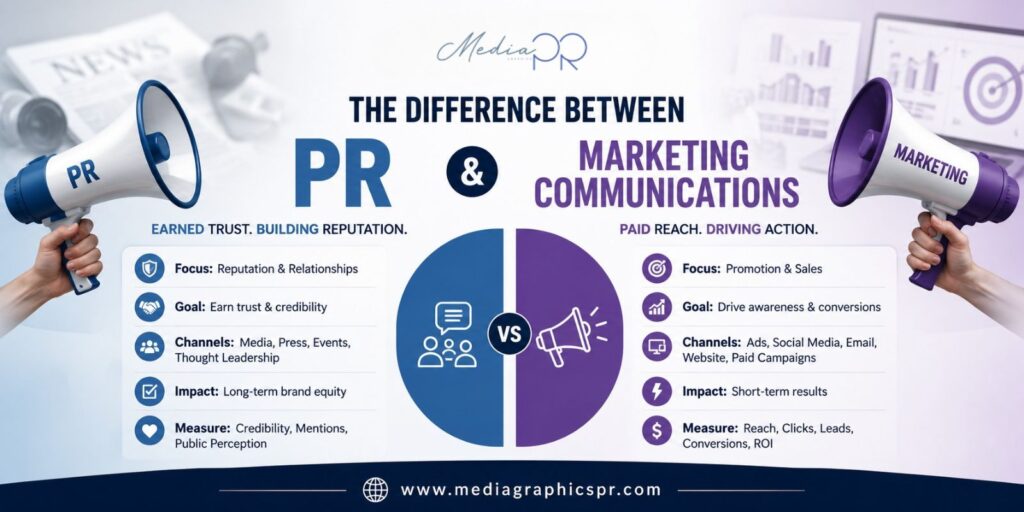
You’ve probably used both terms in the same sentence. Maybe even interchangeably. And honestly, most people do. Even inside companies that are actively spending on both. But here’s the thing: if you don’t know what each one actually does, you end up asking PR to do marketing’s job and marketing to do PR’s job. And then both underdeliver, and nobody knows why. This blog clears that up completely. By the end of it, you’ll know exactly what each discipline does, where they overlap, where they don’t, and how to use both together in a way that actually moves your business forward. The One-Line Difference Before anything else, here it is, as simply as possible: Marketing communications drives people toward a purchase. Public relations builds the trust that makes that purchase possible. One sells. The other earns beliefs. Both matter, but they do completely different things, and confusing them is expensive. What Marketing Communications Actually Does Marketing communications (or marcomms) is everything a brand does to reach its audience directly and move them toward a decision. This includes: Paid advertising—digital, print, outdoor Email marketing campaigns SEO and content marketing Social media advertising Product launches and promotions Sales collateral and landing pages The defining characteristic of marketing communications is control. You write the message. You choose the channel. You pay for the placement. You decide exactly what the audience sees and when. That control is powerful. It’s also a limitation because audiences know you’re the one paying for it. And in a world where trust in advertising has been declining for years, paid messages carry less weight than they used to. What Public Relations Actually Does Public relations works differently. Instead of paying to place a message, PR earns coverage—through journalist relationships, compelling stories, and genuine media value. This includes: Media relations and press coverage Thought leadership and founder profiling Crisis communications Funding and product announcements Reputation management Industry positioning and category authority The defining characteristic of PR is credibility. When a journalist writes about your company in Economic Times, that’s a third party—with no financial relationship with your brand—saying your story is worth their readers’ time. That carries a weight no paid advertisement can replicate. Research consistently shows that editorial coverage is significantly more influential on buying decisions than advertising of the same size. That gap has only grown as audiences have become more skeptical of paid content. Side by Side—The Full Comparison Marketing Communications Public Relations Primary goal Drive sales and conversions Primary goal Build trust, credibility, and reputation Message control Full, the brand controls the message Message control Partial, journalists shape the story Cost model Pay per placement or impression Cost model Investment in relationships and strategy Credibility Lower, as the audience knows it’s paid Credibility Higher due to third-party endorsement Audience Existing and potential customers Audience Investors, media, talent, public, customers Timeline Fast, immediate results possible Timeline Slower, compounds over months Longevity Stops when the budget stops Longevity Coverage stays online indefinitely Crisis role Limited Crisis role Critical, PR owns reputation management Where They Overlap, and Why That Matters Here’s where it gets interesting. PR and marketing communications aren’t competing disciplines. They’re complementary ones, and the brands getting the most out of both are the ones running them in coordination. When PR and marketing work in silos—different teams, different strategies, different messaging—both underperform. When they’re aligned—same narrative, coordinated timing, complementary channels—each one makes the other significantly more effective. The Audience Difference Is Bigger Than Most People Realise Marketing communications is primarily focused on one audience, potential customers. Every campaign, every ad, every email is designed to move a prospective buyer closer to a purchase. Public relations serves a much wider set of audiences simultaneously: Audience What PR Does For Them Investors Builds credibility before the pitch meeting Enterprise buyers Establishes trust before the sales conversation Potential hires Creates employer brand that attracts strong candidates Industry peers Positions your brand as a category authority Regulators and government Demonstrates transparency and responsible communication Existing customers Reinforces their decision to work with you Media Builds relationships that generate ongoing coverage For a growing Indian startup or enterprise business, most of these audiences matter simultaneously. Public relations is the discipline that speaks to all of them at once. The Sales Funnel—Where Each One Plays One of the clearest ways to understand the difference is to look at where each discipline does its best work in the customer journey: AWARENESS PR does the heavy lifting here—earned media, thought leadership, category positioning. People hear about your brand through sources they trust, not sources you paid. CONSIDERATION Both PR and marketing work here. PR coverage validates the brand. Marketing retargeting and content keeps it top of mind. DECISION Marketing takes the lead—offers, landing pages, sales collateral, and email sequences. But PR-built trust is what makes the conversion happen faster and at higher rates. RETENTION AND ADVOCACY PR again—consistent brand credibility, positive reputation, and stories that make customers proud to be associated with your brand. Neither discipline covers the full funnel alone. Together they cover it properly. CRISIS: This Is Where the Difference Becomes Critical In a crisis, marketing communications have almost no role. You can’t advertise your way out of a reputation problem. Public relations owns this moment entirely. And the brands that come out of difficult situations with their reputation intact are the ones that had PR working before the crisis, not just during it. A data issue, a negative story that gains traction, a competitor narrative that starts sticking—these situations are managed through journalist relationships, clear messaging, and pre-built media credibility. None of that can be assembled in an emergency. The businesses that invest in PR consistently are the ones that have something to absorb a difficult moment with. The ones that don’t often find that a single bad news cycle undoes years of marketing spend. Which One Should Your Business Prioritize? Honest answer: it depends on what you’re trying to achieve right now. Driving immediate sales? Marketing communications is your primary

PR Agency
MediaPR

How Does a PR Agency Improve Trust, Credibility, and Authority?

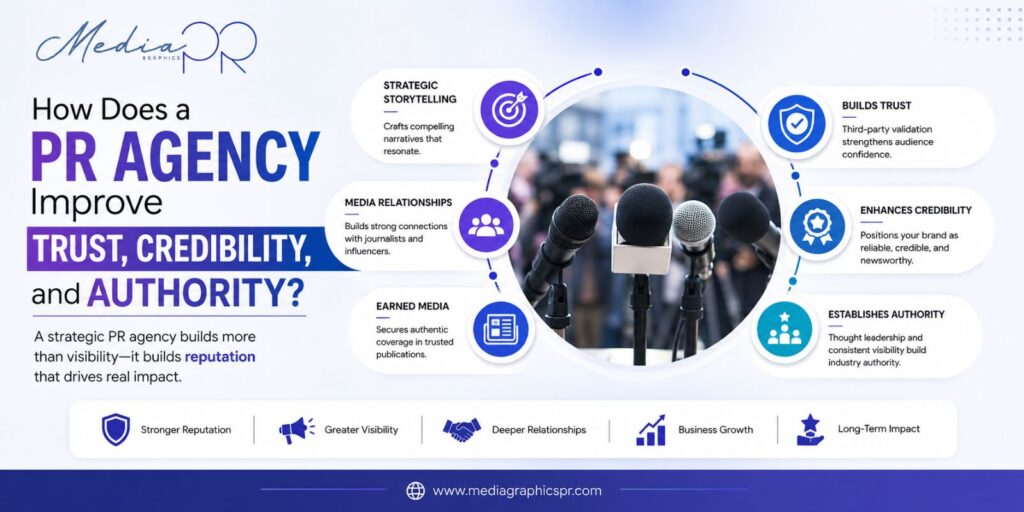
Trust is not something a business can manufacture on its own. You can write it on your website. You can put it in your pitch deck. You can say it in every sales conversation. But none of that actually creates it because trust, real trust, only comes from what others say about you. Not what you say about yourself. That’s the fundamental value of working with a PR agency. It puts your brand in front of the right third parties—journalists, editors, and industry publications—and gets them to tell your story in a way that builds the kind of brand credibility no advertisement, no press release you send yourself, and no LinkedIn post can replicate. Here’s exactly how it works. The Difference Between Trust, Credibility and Authority Before getting into how a PR agency builds these things, it’s worth separating them, because they’re related but not the same. What It Means How It’s Built Trust People believe your brand does what it says Consistency over time, reputation management Credibility People believe your brand knows what it’s talking about Third-party validation, earned media coverage Authority People see your brand as the go-to voice in your space Thought leadership, consistent expert positioning A PR agency works on all three simultaneously, and the compounding effect of all three together is what moves markets, closes deals, and makes brands genuinely difficult to compete with. Earned Media Does What Paid Media Can’t The most fundamental thing a PR agency does for brand credibility is secure earned media—coverage in publications that have their own editorial standards, their own audiences, and their own credibility to protect. When Economic Times writes about your company, that’s not you talking about yourself. That’s an institution with decades of journalistic credibility saying your brand is worth its readers’ attention. That’s a fundamentally different trust signal than a paid advertisement in the same publication. The audiences who matter most—investors, enterprise buyers, senior talent—have learned to discount advertising and trust editorial. A PR agency works in the editorial space. That’s why the credibility it builds is durable in a way that paid media simply isn’t. Thought Leadership Builds Authority Over Time Brand authority doesn’t happen from a single press release. It’s built through consistent demonstration of expertise over months, across multiple publications, in formats that reach the right audiences. A PR agency turns the genuine expertise sitting inside your business into public-facing content that builds that authority piece by piece: Six months of this and your founder’s name is one journalists reach for first. In twelve months, your brand is the reference point for your category. Media Relationships Are the Engine Most businesses trying to build credibility without a PR agency run into the same wall. They write a press release, send it to a journalist email they found online, and hear nothing back. Then they conclude that PR doesn’t work. What actually didn’t work was the approach, not the discipline. A PR agency brings something that takes years to build from scratch: real relationships with the journalists, editors, and producers who cover your industry. These aren’t database contacts. They’re people who take calls, read pitches carefully, and trust the agency’s judgement on what’s genuinely newsworthy. That relationship infrastructure is what turns a good story into actual coverage. Without it, even a genuinely compelling story can disappear into an inbox. Consistency Is What Actually Builds Trust One good piece of coverage doesn’t build trust. Consistent presence does. The brands that audiences genuinely trust aren’t the ones that made the news once. They’re the ones that show up regularly—in the right publications, with the right message, over a sustained period of time. Every placement reinforces the last. Every journalist relationship makes the next pitch land better. Every piece of thought leadership makes the founder more recognizable as an expert. A PR agency maintains that consistency even when there’s no obvious news to push. Reactive commentary on industry developments. Data-driven stories created from internal insights. Founder perspectives on market trends. These are the things that fill the gaps between big announcements and keep the brand in the conversation continuously. Without Consistent PR With Consistent PR Brand appears in media occasionally Brand shows up regularly in target publications Journalists don’t know the founder Founder is on journalist source lists Trust is built slowly through direct sales Trust is pre-built through media presence Each campaign starts from zero Each campaign builds on previous credibility Crisis hits with no buffer Crisis absorbed by pre-existing reputation Reputation Management Protects What You’ve Built Brand credibility takes months to build and can take days to damage. A data issue, a negative review that picks up momentum, a competitor narrative that starts gaining traction—any of these can create a reputation problem that’s far harder to fix than it would have been to prevent. A PR agency does two things here. First, it builds enough pre-existing credibility that your brand has something to absorb a difficult moment with—a track record, journalist relationships, and an established positive narrative that doesn’t vanish overnight. Second, it has the infrastructure to respond quickly and clearly when something does go wrong—managing journalist inquiries, controlling the narrative, and making sure your version of events gets heard. The businesses that come out of difficult moments with their reputation intact almost always had PR working before the crisis, not just during it. Third-Party Validation Changes Buying Decisions This is one of the most direct connections between PR and brand trust and one of the least talked about. When an enterprise buyer is evaluating vendors, they do research. They Google company names. They read what publications have written. They check whether the founders have a point of view on the industry. What they find shapes the conversation before your sales team has said a word. A brand with consistent, credible coverage in publications that a buyer respects walks into that evaluation differently from one that’s invisible or inconsistent online. The due diligence question of “can we trust this company?” gets partially answered

Attract Investors Using PR
MediaPR

How to Attract Investors Using PR

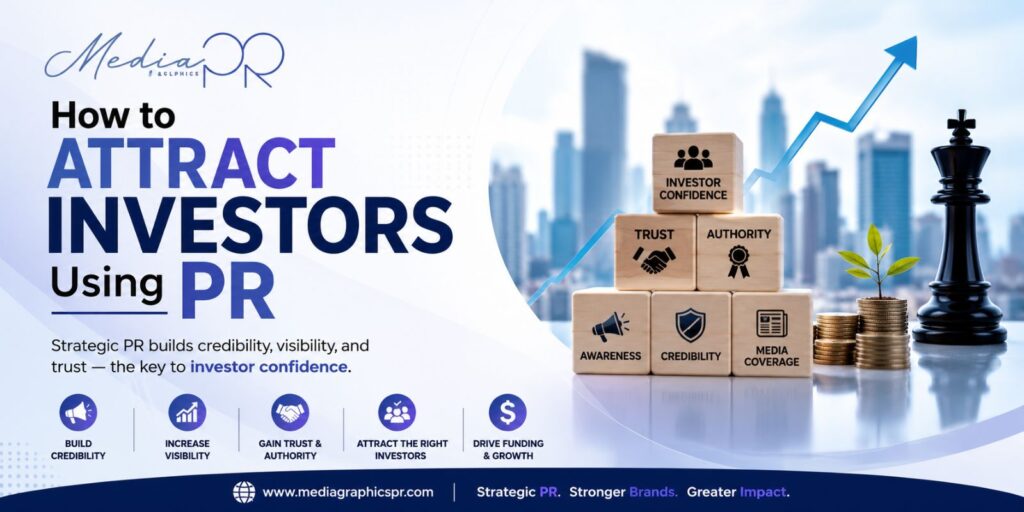
Every founder raising a round knows the feeling. The product is solid. The traction is real. The pitch deck is as good as it’s going to get. But walking into a room full of investors who’ve never heard of you, and trying to build credibility from scratch in 45 minutes, is one of the hardest things a founder has to do. Investor PR changes that dynamic entirely. When the right investors have already seen your name in the right publications, read your founder’s perspective in a business outlet they respect, or noticed your company’s coverage before the intro email landed, the meeting starts differently. The credibility conversation is shorter because it’s already partially done. Here’s how PR for investors actually works and what to do to make it work for your next raise. Why Investors Pay Attention to Media Presence Institutional investors in India—VCs, family offices, and angel networks—see hundreds of companies every quarter. Most look identical on paper. Same market-size claims. Same hockey stick projections. Same founding team credentials. What stands out is a company that shows up consistently in places investors actually pay attention to. A founder quoted in Mint. A product featured in Economic Times. A commentary piece in Inc42 being shared in the investor’s own network. These signals do something a pitch deck can’t. They show that third parties have independently decided this company is worth paying attention to. That’s the core of investor PR. Not about getting famous. About being known, specifically, to the people who write the checks. What Investors Are Actually Evaluating Understanding the investor mindset makes the PR strategy much clearer. What Investors Evaluate How PR Addresses This Founder credibility Thought leadership positions founders as domain experts Market opportunity Coverage that frames the problem your company solves Traction and momentum Milestone announcements, customer stories, growth coverage Narrative clarity Consistent messaging across every media touchpoint Risk assessment What the market says about you publicly Every single one of these gets influenced by what an investor finds when they research your company before a meeting. 1. Build Credibility Before the Raise Starts The biggest mistake founders make with investor PR is starting it when the fundraise begins. By then it’s too late to build anything that compounds. Investors Google you. They check what’s been written about the company. They look at whether the founder has a point of view on the industry. A company with 12 months of consistent media presence walks into that search result very differently from one that has nothing but its own website. Start building investor PR at least six to twelve months before you plan to raise. Not a press release blitz, but a sustained and consistent presence that signals your company is serious. 2. Get the Narrative Right First Before any pitch goes to a journalist, the story has to be clear. And it has to be the same story everywhere. Your investor relations PR narrative answers: What does the company do? (one sentence, no jargon) What problem does it solve and why does that matter right now? What’s the insight that makes your approach different? Where is the company going and why is this the team to take it there? When that narrative is consistent across every touchpoint—press releases, the founder’s LinkedIn, media coverage, and the website—investors encounter the same clear story everywhere they look. Inconsistency creates doubt. Clarity creates confidence. 3. Target the Publications Investors Actually Read Not all coverage works equally for investor PR. A feature in a publication your target investors have never heard of is activity without outcome. Institutional VCs → Mint, Economic Times, Business Standard Early-stage angels → Inc42, YourStory, startup ecosystem media Sector-specific funds → Industry trade publications in your space Global investors → Forbes India, Business Today, ET Tech Build your target publication list around where your specific investor audience pays attention, not where the publication name sounds most impressive in a board update. 4. Turn Founder Expertise Into Investor-Facing Content Investors back founders as much as they back companies. They want to know whether the founder understands the market deeply and has genuine conviction about where things are heading. Thought leadership PR is one of the most effective ways to show this without a pitch meeting: Authored articles in business publications: founder’s perspective on a real industry problem Expert commentary in journalist stories: being quoted on market trends Podcast appearances: longer form credibility with niche investor audiences LinkedIn content: direct reach to investors in your network Conference talks: category positioning and peer credibility A founder who shows up consistently in relevant media with genuine insight becomes someone investors track before they even take a meeting. 5. Handle Funding Announcements as Full Market Moments A funding announcement is not just a press release. For investor PR, it’s a signal, one that tells the next set of investors that smart money has already made a call on this company. Without PR Strategy With PR Strategy Generic press release, mass distribution Targeted pitching to 8–12 relevant journalists Coverage disappears in 48 hours Followed by founder commentary and momentum coverage No pre-built credibility 6 months of media presence behind the announcement Next raise starts from zero Next raise starts with a brand investors already know The companies that get the most from their funding announcements are the ones that treated the previous six months as preparation for this moment. 6. Build Relationships With the Right Journalists Journalists who cover the startup and investment beat in India are well-connected in investor circles. A reporter who trusts your founder as a credible source will write about your company when the story is right, and that coverage reaches exactly the investor audience you need. Building these relationships isn’t about pitching constantly. It’s about being useful by offering genuine insight on industry trends, being available when journalists need a source, and showing up consistently over time. The founders who get called for quotes without pitching are the ones investors see everywhere. That’s the goal. 7. Protect

PR Strategies
MediaPR

10 PR Strategies That Drive Revenue Growth

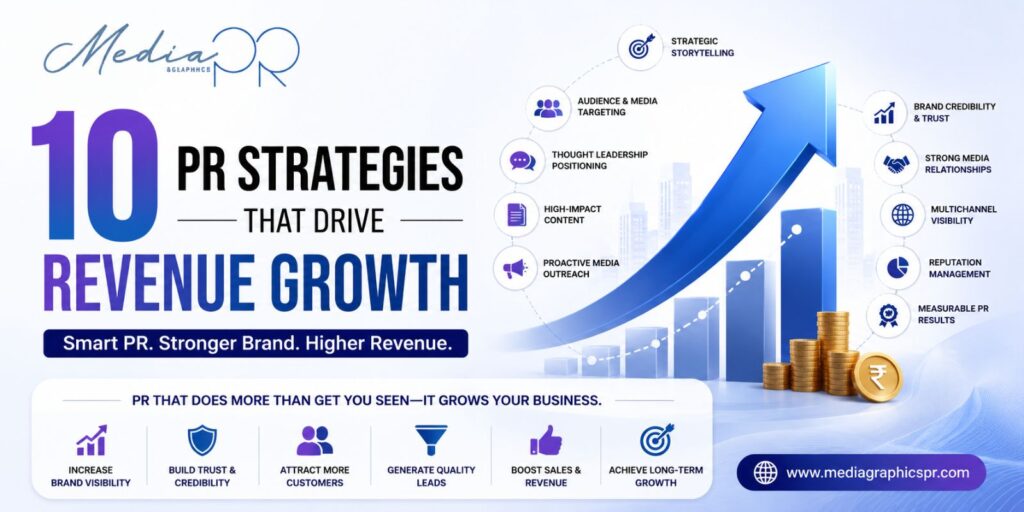
Most businesses think of PR as a brand exercise. Something that looks good, feels good, and maybe gets the founder some coverage they can share on LinkedIn. That’s a limited way to look at it. When PR strategies are built properly—around business goals, right audiences, and real media relationships—they drive revenue in ways that are measurable and compounding. Sales conversations start differently. Fundraises close faster. Talent pipelines get stronger. Enterprise deals move quicker. Here are 10 PR strategies that actually connect to revenue growth and how they work in India’s market right now. Build Credibility Before the Sales Conversation Starts Every enterprise buyer, investor, and potential hire Googles your company before responding to anything. What they find, or don’t find, shapes the conversation before it begins. PR strategies that build credibility through consistent earned media coverage mean that by the time your sales team makes contact, the trust work is already half-finished. The prospect has seen your company in a publication they respect. The barrier drops. This is one of the most direct connections between PR and revenue—shorter sales cycles, warmer first meetings, and fewer “we’ve never heard of you” responses. Run Thought Leadership That Opens Doors Your founders and leadership team know things most people in your industry don’t. That expertise sitting unused is a missed revenue opportunity. Thought leadership PR turns that knowledge into authored articles, expert commentary, and media features in publications your target buyers read. When a CTO at a potential enterprise client reads your founder’s perspective on a problem they’re currently facing, that’s a door opening without a single cold email. Thought Leadership Format Where It Works Best Authored articles Trade publications, business media Expert commentary News cycle response, journalist quotes Opinion pieces Business press, industry outlets Podcast appearances Niche B2B audiences Conference talks Category positioning, peer credibility Use Funding Announcements as a Full Market Signal A funding announcement handled without strategy is a press release that trends for 48 hours and then disappears. A funding announcement handled as a PR strategy is a coordinated market signal—the right publications, the right embargo timing, and the right narrative—that changes how investors, buyers, and talent see your company for the next twelve months. The companies that get the most out of their raises aren’t always the ones with the biggest rounds. They’re the ones whose story was already in the right places before the announcement went out. Build a Media Presence That Supports the Sales Team Sales teams in India’s B2B market spend a lot of time establishing credibility from scratch. Every first meeting starts with explaining who the company is and why it’s worth paying attention to. PR changes that. When your sales team can reference a feature in the Economic Times, share a founder article from Mint, or point to consistent industry coverage—the credibility conversation compresses. Prospects come in warmer. Deals close faster. PR strategies that are aligned with sales goals, not just communications goals, are the ones that show up in revenue numbers. Target the Publications Your Buyers Actually Read This is where most PR strategies in India go wrong. Coverage gets chased in publications that sound impressive rather than ones the target audience reads. A feature in a publication your enterprise buyers read every morning does more revenue work than five features in publications they’ve never heard of. Map your PR targets to buyer behavior: Who is your buyer? → What do they read? → Target that publication  Enterprise CTO → TechCircle, ETCIO, Economic Times Tech Institutional Investor → Mint, Business Standard, Inc42, Forbes India D2C Buyer → Business of Fashion, YourStory, mainstream digital HR Head → People Matters, BW People, LinkedIn Build Reputation Before You Need It for a Crisis This one is easy to skip when things are going well. It’s very expensive to regret skipping it when things go wrong. A data issue, a negative review that picks up momentum, a competitor narrative that starts sticking—these things happen. The companies that come out of them without lasting damage are the ones with pre-built credibility. They have journalist relationships, a consistent media presence, and a track record that gives their response weight. The ones without it scramble. And scrambling publicly is almost always worse than the original problem. Crisis PR as a revenue protection strategy—not just a communications one—is how the best companies in India think about it. Use Employer Brand PR to Win the Talent War In India’s competitive tech and business talent market, the best candidates research companies before applying. A company with no media presence, an invisible founder, and no culture coverage loses offers to competitors with stronger employer brands, regardless of which company actually has the better work environment. PR strategies that build employer brands—founder LinkedIn presence, culture stories in startup media, and team milestone coverage—directly affect talent pipeline quality and speed. Better hires build better products. Better products drive better revenue. Turn Customer Success Into Market Credibility Case studies are underused as a PR strategy in India. Most companies produce them for their website and leave it there. The better approach is to pitch those customer success stories to the publications your prospects read. A feature about how your product solved a specific problem for a specific client type does more lead generation work than any product-focused press release. When a prospect sees a case study about a company like theirs in a publication they trust, that’s not just credibility. That’s a pipeline. Build CSR and ESG Narratives That Open Enterprise Doors Large enterprise clients, especially multinationals operating in India, are increasingly evaluating vendors on ESG credentials alongside product capability. A company with a clear, well-communicated sustainability or CSR story has a genuine competitive advantage in procurement conversations. PR strategies that build this narrative (through media coverage, third-party validation, and consistent communication) aren’t just reputation work. In 2026, they’re directly connected to enterprise revenue opportunities that companies without that narrative simply don’t access. Integrate PR With Digital for SEO and Inbound Revenue Every high-authority media

PR Campaign for 2026
MediaPR

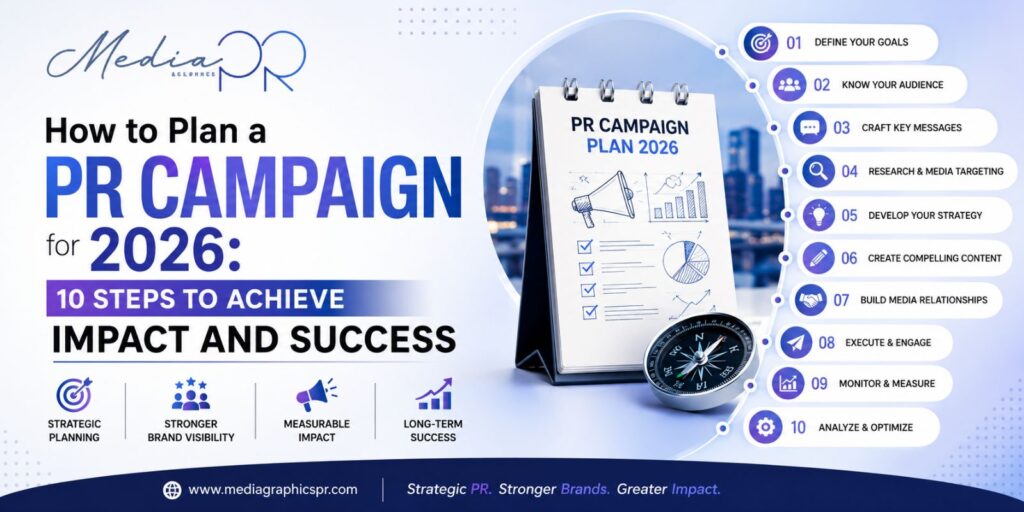
How to Plan a PR Campaign for 2026: 10 Steps to Achieve Impact and Success

Most PR campaigns in India don’t fail because of bad execution. They fail because they were never properly planned in the first place. A press release goes out. Some coverage lands. The team celebrates. Then silence until the next announcement forces another round of activity. That’s not a PR campaign. That’s a series of disconnected moments with gaps in between. Planning a PR campaign properly with clear goals, the right audiences, the right timing, and a strategy that holds together—across months, not just days—is what separates brands that build lasting media presence from ones that just make noise occasionally. These 10 steps are what good PR campaign planning actually looks like in India today. 1. Define What You’re Actually Trying to Achieve Before anything else, get specific about the goal. Not “We want more visibility.” That’s not a goal; it’s a wish. A real campaign objective sounds like: We want to be covered in 3 national business publications before our Series A closes in Q3. We want our founder quoted in tech media as an expert on supply chain automation. We want our product launch covered in 5 publications our enterprise buyers read. Use the SMART framework: SMART What It Means Example for a PR Campaign Specific Name the exact outcome you want “Covered in Economic Times before Series A closes” Measurable You can count it or track it 3 placements, 5 journalist relationships built Achievable Realistic for your stage and budget Not “Forbes cover” in month one Relevant Tied to an actual business goal Fundraise, launch, and enterprise sales push Time-bound Has a deadline attached Campaign runs from April to September 2026 Without this, every activity is justifiable and nothing is accountable. 2. Know Exactly Who You’re Talking To Different audiences need completely different messages and different channels to reach them. Investors: business media, sector publications, LinkedIn Enterprise buyers: trade publications, industry newsletters, analyst reports Consumers: mainstream digital and print media, influencer coverage Talent: LinkedIn, employer brand media, startup ecosystem coverage Industry peers: conferences, niche publications, podcasts Pick one or two primary audiences per campaign. Trying to reach everyone at once usually means reaching nobody properly. 3. Build the Core Narrative First This is the step most brands skip and the one that determines whether the campaign works. Your PR campaign narrative answers three questions: What does your company do? (in one sentence, without jargon) Why does it matter right now? (the market context that makes you relevant today) Why you? (what makes your team or approach genuinely different?) Every piece of content, every pitch, every press release in the campaign should express this narrative in the format suited to that channel. Consistency across months is what builds recognition. Inconsistency is what confuses audiences even when they’ve seen your name before. 4. Map Your Media Targets to Business Goals Not all coverage serves the same purpose. A placement in a publication your target audience never reads is activity, not outcome. Business Goal Right Media Target Investor attention Economic Times, Mint, Business Standard, Inc42 Enterprise sale Sector trade publications, industry media Consumer brand Mainstream digital, national print Talent pipeline LinkedIn content, startup ecosystem media Category leadership Niche newsletters, podcasts, analyst mentions Build a target list of 15 to 20 publications and journalists specifically relevant to your campaign goal. Quality of targeting beats volume of pitching every time. 5. Build Journalist Relationships Before You Pitch This is the step that makes everything else work faster and the one most Indian brands skip entirely. Journalists who know your name before you pitch them are significantly more likely to cover you than ones receiving a cold email from an unknown company. How to build relationships without being annoying: Follow and engage genuinely with journalists covering your space. Offer yourself as a source for stories they’re already working on, no pitch attached. Share their work with a real comment, not a generic one. When you pitch, make it about something they actually cover. Start this three to six months before you need coverage for something important. 6. Choose Your Tactics Based on Your Audience Once you know who you’re talking to and what you’re saying, the next question is simple—how do you actually reach them? Audience Tactics That Actually Work Investors Founder quoted in business press, funding announcement, Inc42 or Mint feature Enterprise buyers Trade publication feature, thought leadership article, case study coverage Customers Mainstream digital media, product reviews, influencer coverage Talent LinkedIn founder content, culture stories, startup ecosystem media Industry peers Conference speaking, expert podcast appearances, niche newsletter features Don’t default to press releases for everything. Match the tactic to the audience, not to what’s easiest to produce. 7. Build a PR Calendar With Real Moments A PR campaign without a calendar is just good intentions. A basic 12-month PR campaign calendar for a growing Indian brand: Month What to Focus On January Founder piece, where your industry is headed this year February Product update or company milestone pitch March Q1 milestone announcement April Reactive commentary: jump on something moving in the news May Data story or mid-year insight piece June Thought leadership article, founder byline in a target publication July Major announcement—funding, launch, or expansion August Podcast or speaking opportunity push September Pre-conference media outreach October Product launch or campaign moment November Year-end industry commentary December Journalist relationship building for next year Plan around your business moments and create newsworthy moments in the gaps. 8. Get the Timing Right Timing in PR is as important as the story itself. Three things to get right: News cycle awareness: pitching into a crowded news cycle means your story gets buried. Pitching on a slow news day means it gets more attention. Good agencies watch this daily. Embargo strategy: for big announcements, give key journalists the story 48 to 72 hours before it goes public. They get time to write something proper, not just a two-line brief that gets buried. Internal coordination: the press release, LinkedIn post, network email, and website update all need

Is PR Worth the Investment in India
MediaPR

Is PR Worth the Investment in India 2026?

Short answer, yes. But not in the way most businesses think about it. PR isn’t a cost line that produces coverage. It’s an investment that builds credibility, narrative control, and media presence that compounds over time and does work for your business long after any individual campaign ends. The brands that figured this out early in India’s current market cycle are pulling ahead. The ones still treating PR as optional are finding out the hard way what that silence is costing them. Here’s the honest case for why PR investment in India in 2026 is not just worth it; it’s becoming one of the most strategically important decisions a growing business can make. Why 2026 Is a Different Moment for PR in India The context matters. Three things have shifted significantly: 1. Media credibility has become more valuable as content volume explodes AI-generated content is everywhere. Every brand has a blog. Every founder has a LinkedIn post going out three times a week. In that noise, earned media—coverage in publications with real editorial standards—has become more trusted, not less. A feature in Economic Times or Mint carries more weight in 2026 than it did in 2020 precisely because everything else has been devalued. 2. Indian investors and enterprise buyers are doing more research The due diligence bar has risen. Institutional investors research founders and companies across media before taking meetings. Enterprise procurement teams vet Google vendors before responding to pitches. What your brand looks like online—the coverage, the founder commentary, and the narrative consistency—is part of the evaluation now in a way it simply wasn’t five years ago. 3. The competitive landscape has compressed More funded startups, more enterprise SaaS companies, and more D2C brands are competing for the same media, investor, and customer attention. In that environment, the brands with consistent public relations presence have a structural advantage that’s hard to close through product quality alone. What PR Actually Delivers: The Real ROI The mistake most businesses make when evaluating PR ROI is measuring the wrong things. Clip count, estimated reach, and PR value equivalents are easy to calculate and almost meaningless as business metrics. Here’s what PR actually delivers when it’s working properly: What PR Builds How It Shows Up in Business Media credibility Investors and buyers arrive with trust already established Narrative control Your brand story doesn’t get defined by someone else Journalist relationships Coverage compounds, each placement leads to the next Founder authority Leadership becomes a credible industry voice Crisis resilience Difficult moments don’t become lasting reputation damage Talent attraction Strong candidates research and find you before applying Sales support Enterprise buyers reference coverage in early conversations SEO Value High-authority backlinks improve organic search performance Every one of these has a direct business value. Most of them are invisible until you measure them properly, or until you don’t have them and feel the gap. The Compounding Effect Nobody Accounts For This is the part of PR investment that’s hardest to put in a spreadsheet and the most important to understand. The brands that started this compounding cycle two years ago are now the ones journalists call first, investors recognize before the pitch, and enterprise buyers trust before the proposal lands. The brands starting now will be in that position in two years, but only if they start. PR vs. Paid Media—The Honest Comparison Most businesses understand paid media ROI intuitively: spend X, get Y impressions, generate Z leads. PR doesn’t work that way. That difference makes it harder to justify to a CFO but doesn’t make it less valuable. Factor Paid Media PR Cost Model Pay per impression/click Investment in relationships and narrative Credibility Low, as the audience knows it’s paid High due to third-party endorsement Longevity Stops when budget stops Coverage stays online and compounds Trust Factor Declining because ad fatigue is real Growing, earned media is increasingly trusted Sales Impact Direct but short-term Indirect but longer lasting Crisis Value None Significant — pre-built credibility absorbs hits The right answer for most Indian businesses isn’t PR instead of paid media. It’s PR and paid media, each doing what the other can’t. What Happens When You Don’t Invest in PR This is the conversation most brands avoid until it’s too late. The Silent Cost of no PR: ✗ Investors form impressions from incomplete or outdated information ✗ Enterprise buyers choose a competitor they’ve read about over you ✗ A negative story lands with no credibility buffer to absorb it ✗ Strong candidates pick companies with visible, credible employer brands ✗ Your category narrative gets defined by competitors who are investing in PR ✗ Every fundraise, launch, and major announcement starts from zero on credibility The cost of not doing PR isn’t visible on a P&L. But it shows up in harder fundraises, slower enterprise sales cycles, weaker talent pipelines, and market positions that are difficult to recover once a competitor has established them. When PR Investment Makes the Most Sense Not every business at every stage needs the same level of PR investment. Here’s a practical guide: Business Stage PR Priority Primary Focus Pre-seed / Seed Medium Founder thought leadership, narrative building Pre Series-A High Media credibility before investor conversations Post-funding Very High Announcement momentum, category positioning Growth stage High Consistent presence, thought leadership, talent Enterprise / Pre-IPO Critical Consistent presence, thought leadership, talent Crisis moment Urgent Narrative control, media management The pattern is consistent; the moments when PR matters most are almost always the moments when you wish you’d started earlier. How to Measure PR ROI Properly Stop measuring clips. Start measuring outcomes. Questions that actually indicate PR ROI: Are investors mentioning coverage before your pitch meetings? Are enterprise buyers referencing your brand before the first sales call? Are strong candidates citing your media presence in interviews? Is your founder being approached for expert commentary without pitching for it? Are website traffic and branded search volume moving after major placements? Is your company showing up in competitor comparisons without being specifically pitched? If the

Scroll to Top
logo

Get In Touch

Please enable JavaScript in your browser to complete this form.